

How to deal with difficult people without losing your cool: 6 effective psychology-based tips
Life constantly puts us in contact with people who challenge our patience—an argumentative colleague, a passive-aggressive family member, or someone who thrives on conflict. While you cannot control others, you can control how their behavior affects your mental and emotional state. Psychology shows that staying calm around difficult people is not about suppression, but regulation. These science-backed strategies will help you protect your peace, respond with clarity, and stay emotionally grounded—without getting pulled into unnecessary drama.
1. Talk it out with safe people
Bottling emotions intensifies stress, but venting to the wrong person can make it worse. The key is who you talk to. Choose emotionally safe people—those who listen without judgment, validate your feelings, and don’t escalate the situation.
Psychological studies show that sharing emotions with supportive listeners can significantly reduce stress hormones like cortisol. This emotional release helps your nervous system reset. Think of it as mental decluttering: once your feelings are acknowledged, your mind becomes clearer and calmer.
Avoid gossip loops. Instead, talk to people who help you reflect, laugh, or gain perspective—so you return stronger, not angrier.
2. Prepare mentally before interactions

Most difficult people behave in predictable ways. Recognizing their patterns prepares your mind in advance and reduces emotional shock. When your brain expects a trigger, the amygdala (fear center) becomes less reactive.
Mental preparation creates psychological distance. You stop taking things personally and start seeing behavior for what it is—a reflection of them, not you.
Before engaging, remind yourself:
“I don’t need to win. I need to stay calm.”
This single intention can change the entire interaction.
3. Choose to respond, not react
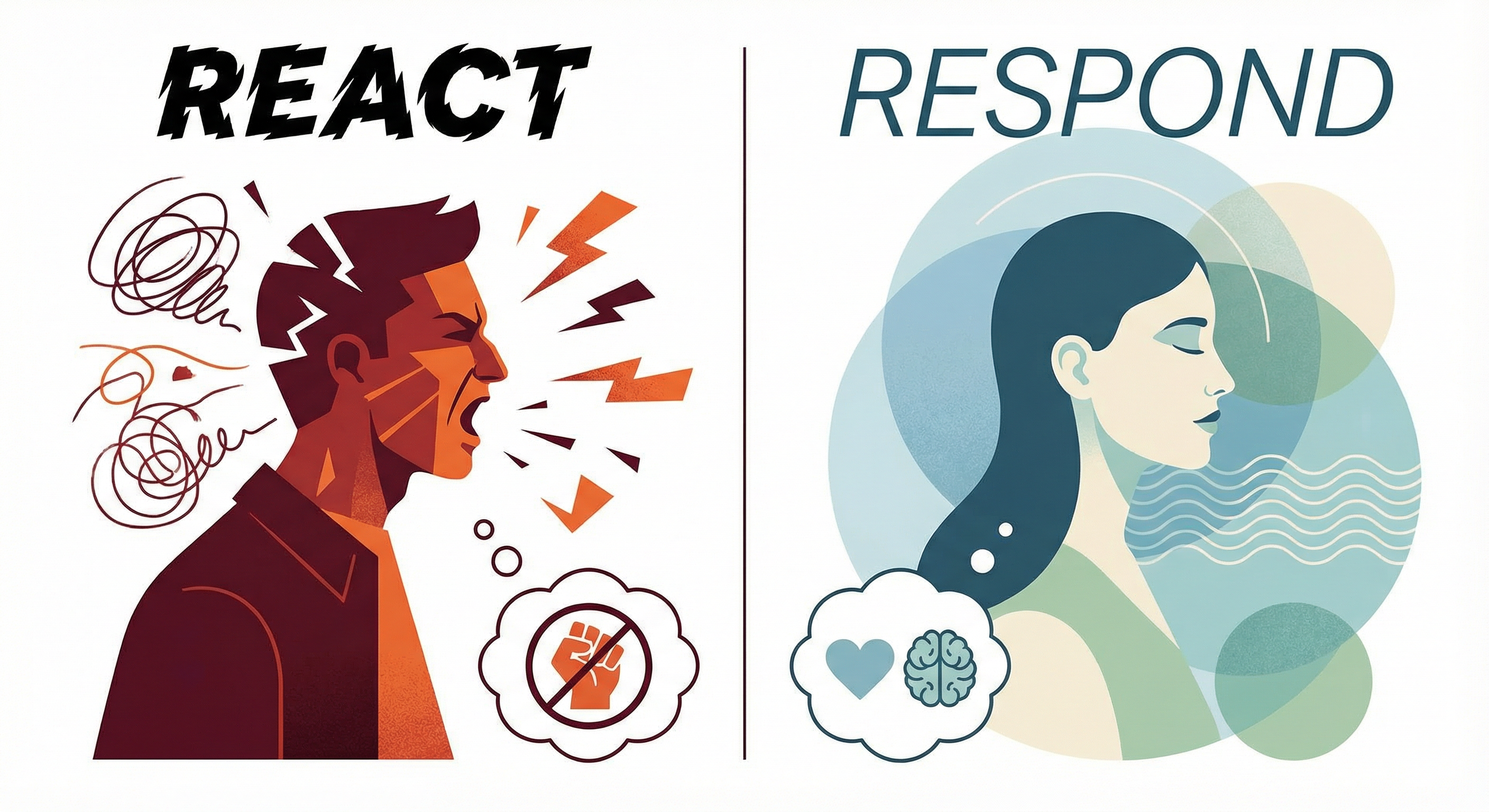
Reactivity is automatic. Response is conscious.
When someone makes a sharp comment, pause. Take a slow breath. That brief space interrupts emotional hijacking and brings your rational brain back online. Silence is not weakness—it is emotional intelligence.
Psychology calls this emotional contagion: calm behavior can subconsciously lower the intensity of others. Instead of matching their energy, anchor yours. Asking neutral questions like “Can you clarify what you mean?” shifts the tone and puts you back in control.
Not every comment deserves a reply. Protect your energy wisely.
4. Set boundaries with clarity and calm

Difficult people often push limits—intentionally or unconsciously. Boundaries are not confrontations; they are instructions for how others can interact with you.
Say “no” without guilt. Speak firmly without aggression. Clear boundaries reduce future conflicts because they eliminate ambiguity.
Psychologically, boundaries reinforce self-respect. When you honor your limits, others learn how to treat you—or lose access to you.
5. Their emotions are not your responsibility

You are not responsible for managing other people’s moods. Anger, frustration, or irritation belongs to the person experiencing it—not to you.
Trying to fix someone’s emotional state drains your mental resources and creates emotional exhaustion. Instead, focus on regulating your inner state. Emotional maturity means allowing others to self-regulate.
You are responsible for your peace, not their healing.
6. Use sound and frequency to stay centered
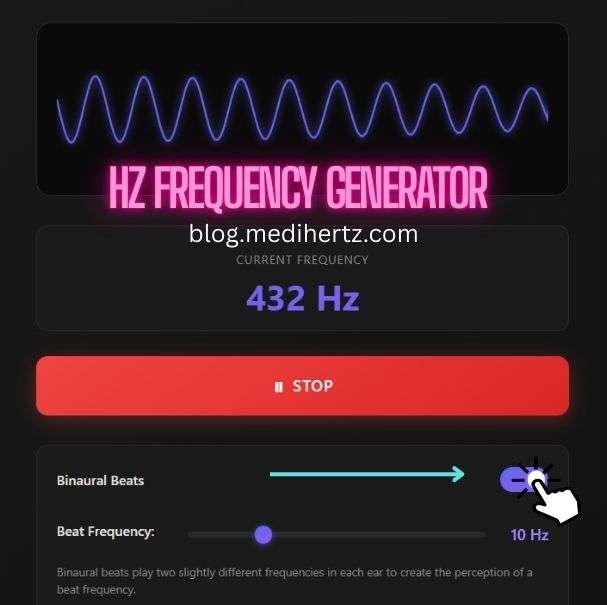
Emotional triggers disturb the nervous system. Sound can help regulate it.
Listening to calming frequency tones—especially through a frequency tone generator—can help shift your mental state before or after stressful interactions. Frequencies like 528 Hz (emotional balance) or 432 Hz (grounding calm) are often used to support relaxation and clarity.
A short 10–15 minute session helps:
-
Calm racing thoughts
-
Reduce emotional reactivity
-
Reset mental focus
Use it as a mental reset—not an escape, but a stabilizer.
7. Redirect the conversation or walk away

When a conversation becomes toxic and boundaries fail, disengagement is wisdom. Changing the topic or removing yourself is an act of self-respect, not avoidance.
Psychology supports strategic withdrawal as a healthy coping mechanism. Staying in a harmful exchange only reinforces negative patterns.
You don’t need to prove anything. Choose peace over pride.


Dealing with difficult people is less about changing them and more about mastering yourself. Calm is not passive—it is powerful. When you regulate your mind, set boundaries, and support your nervous system (even through tools like frequency tones), you remain unshaken.
Peace is not something you wait for.
It is something you practice.
Frequently Asked Questions (FAQ)
How to deal with someone who is being difficult?
The best way to deal with a difficult person is to stay calm, pause before reacting, and respond with clarity. Set boundaries, don’t take their behavior personally, and choose peace over proving a point.
How to handle difficult people without losing your mind?
You protect your mental peace by controlling your response, not their behavior. Breathe, stay emotionally detached, and walk away if the situation turns toxic.
How to deal with difficult people in psychology?
Psychology suggests observing patterns, responding instead of reacting, setting clear boundaries, and not absorbing others’ emotions. Difficult people often seek reaction—calmness disarms them.
What are the signs of a difficult person?
A difficult person often shows constant negativity, blame-shifting, lack of accountability, emotional outbursts, and boundary-breaking behavior.
How to communicate with a difficult person?
Use calm, clear, and brief communication. Avoid arguing, use neutral language, and ask clarifying questions instead of reacting emotionally.
What is the best response to disrespect?
The strongest response to disrespect is calm silence or a firm boundary. You don’t need to explain yourself or match their tone to maintain self-respect.
Is silence a good response to disrespect?
Yes. Silence can be powerful when used intentionally. It prevents escalation and shows emotional maturity without feeding negativity.
How do you disarm a difficult person?
You disarm a difficult person by staying calm, not defending emotionally, and responding with confidence or quiet detachment. Calm energy neutralizes aggression.
What are some powerful phrases to say to difficult people?
Simple phrases work best, such as:
-
“I need a moment to think.”
-
“Let’s keep this respectful.”
-
“I don’t agree, and that’s okay.”
-
“I’m choosing not to engage.”
How to handle unpleasant people?
Limit interaction, don’t seek validation from them, and focus on protecting your peace. You are not responsible for fixing their mood.
What are the four types of difficult people?
Psychology often identifies:
-
Aggressive
-
Passive-aggressive
-
Negative / complaining
-
Controlling
Each requires calm boundaries and emotional control.
How do toxic people behave?
Toxic people often manipulate, disrespect boundaries, drain energy, create drama, and avoid accountability. Distance is often the healthiest response.
Hidden disrespect includes sarcasm, dismissive tone, ignoring boundaries, backhanded compliments, and constant interruption.
जो मुश्किल हो रहा है उससे कैसे निपटें?
मुश्किल लोगों से निपटने के लिए शांत रहें, तुरंत प्रतिक्रिया न दें, अपनी सीमाएँ स्पष्ट रखें और ज़रूरत पड़े तो दूरी बनाना सीखें।
अप्रत्याशित लोगों से कैसे निपटें?
अप्रत्याशित लोगों से निपटने के लिए मानसिक रूप से तैयार रहें, भावनात्मक नियंत्रण रखें और प्रतिक्रिया देने से पहले सोचें।
Disclaimer:
This article is for educational and self-development purposes only, not medical advice.
👉 Schumann Waves Generator Explained Simply: What It Is, How People Actually Use It, and Who It’s For
Related 👇
- Kozyrev Mirror vs Mirror Meditation: Why You Don’t Need a Lab to Explore Consciousness
- How to Build a Kozyrev Mirror Step by Step Guide.
- What Does a Kozyrev Mirror Do? The Complete Guide
Most Read 👇
- 2026 Will Change Everything: What Your Life Path Number Must Prepare For
- The One Frequency You Must Avoid in 2026 (Based on Your Birth Number)
- Peer Pressure: What It Is, How to Identify It, and How to Overcome It
- What Is Walmart’s DEI Program? (Diversity, Equity & Inclusion Explained)
- 3I/ATLAS: Is the Interstellar Object Alien Technology?
- Mystery From the Sky: The Buga Sphere Appears in ColombiaOumuamua: The Mysterious Interstellar Visitor and the Cosmic Message in Prashyant Jha’s Song
- Hz Frequency Generator- Free Online Tone Generator
Frequency Articles- 👇
- 👉Complete Guide to Brainwave Frequencies (Hz Explained Simply)
- 👉 The One Frequency You Must Avoid in 2026 (Based on Your Birth Number)
- 👉What is the science behind sound bowls?
- 👉What is 7 Hz good for? A careful, evidence-based guide (with references)
- 👉Cymatics: From 2D Sand Patterns to 3D Sound Sculptures
- 👉 Hz Frequency Generator- Free Online Tone Generator
- 👉 What Frequencies Are Dangerous to Humans? Understanding Risks from Sound to Radiation
- 👉How to do a Cymatic Experiment
- 👉What is the science behind cymatics?
- 👉 NASA-Approved 30-Min Brain Boost
- 👉 What Is The Healing Power Of Sound Wave
- 👉 What does 528 hz do to the brain?
- 👉 The 7 Healing Frequencies: Unlocking the Power of Sound for Wellness
- 👉 The Sacred Science of Yantras: How Cymatics Validates Ancient Tantric Geometry
- 👉 Is 1111 a Lucky Number? A Deep Dive into Its Mystical, Numerological, and Cultural Significance
- 👉 Is 528 Hz Dangerous?
- 👉Delta Waves (0.5–4 Hz): Effects on Mind, Sleep, and Spiritual Energy
- 👉What Happens to Your Brain at 1 Hz Frequency?
- 👉Complete Guide to Brainwave Frequencies (Hz Explained Simply)
- 👉 White Noise for Sleep – Fall Asleep Fast (Free Online Tool)
- 👉 Is It Good to Sleep With White Noise? (Simple Guide for Better Sleep)
Numerology 👇
- Decoding the Mystery: What Happens If You Write 690452 on Your Wrist?
- Is 1111 a Lucky Number? A Deep Dive into Its Mystical, Numerological, and Cultural Significance
- What Does 1 Mean In Numerology
- What Does 2 Mean In Numerology
- What Does Number 3 mean in Numerology
- What Does 4 Mean In Numerology
- What Does 5 Mean In Numerology
- What Does 6 Mean In Numerology
- What Does 7 Mean In Numerology
- What Does 8 Mean In Numerology
- What Does 9 Mean In Numerology
- How to Use the 5 Elements for Personal Growth in Numerology
- Name Numerology Calculator: How to use it.
People Also Read
- 2030 A Doomsday According to Indian Texts or Misinterpretation?
- The Glory of Narasimha Bhagwan: An Exploration of Ancient Indian History
- Medusa and Mansa Devi: The Untold Myths Connecting Greek and Hindu Traditions
- “The Enigmatic Link Between the Bermuda Triangle and Hindu Mythology of Ramayan: Unveiling the Mystery”
- why is mt. Kailash Considered to be a Sacred Site?
- How Eastern Wisdom Can Transform Your Modern Life.
- Lord Shani and Lord Yam : God of Karma for Living and Death
- In which direction Ganesh Idol should face.
- What is the logic for existence of God?
- Who Is Mahadev Shiv ?
- How to increase love for Krishna?
- Hanuman Chalisa English Lyrics| Bhajle Ram Naam | Prashyant Jha
Free AI Tools To test yourself
- Love Percentage Checker Tool – Check For Free!
- Soulmates Initial Finder
- Hz Frequency Generator- Free Online Tone Generator
- Mental Health Check In Tool [ FREE TEST ]
- Best Free Phone Photos Download
- Image Converter (Online & Free)
Seotoolrank.com Free Ai Tools
- RankVortex – Implies pulling traffic and SEO rankings toward you.
- How do I convert a PNG file to BMP?
- ConvertEase PDF
- Website Speed Checker Tool
- SEO Word Counter with Character Count
- Free Stopwatch and Online Timer Countdown
- Age Calculator Tool
- Password Generator Tool
- Qr Code Generator Free
