Free Hearing Test
Test your hearing online in minutes and identify your tinnitus frequency using this advanced audio tool.
Take a quick free hearing test, match your tinnitus tone, and download your personalized hearing report instantly.
Advanced Hearing Test & Tinnitus Frequency Finder
Clinical-grade audiometry tools for hearing assessment, tinnitus frequency matching, and sound therapy.
Medihertz FrequenciesYour Information
Enter your details for a personalized hearing report.
Pure Tone Hearing Test
Test your hearing at key frequencies. Select an ear, play each tone, then indicate if you hear it.
Headphones Required
Use headphones for accurate results. Set volume to a comfortable level before starting. This is not a medical diagnosis tool.
| Frequency | Left Ear | Right Ear |
|---|
🏥 Hearing Screening Result
This is a screening estimate and not a medical diagnosis.
Tinnitus Frequency Finder
Adjust the slider until the tone matches your tinnitus ringing. Use fine-tune buttons for precision.
Your Detected Tinnitus Frequency
Tinnitus Frequency Analysis
Most tinnitus tones occur in the high frequency range (4,000–12,000 Hz). Frequency matching helps tailor sound therapy to your specific tinnitus profile.
Tinnitus Masking Sound Generator
Select a masking sound to relieve tinnitus symptoms. Set a timer for your session.
Notched Sound Therapy Session
Generate a personalized notched noise therapy session based on your tinnitus frequency.
Result Interpretation & Recommendations
Evidence-informed guidance for managing hearing health and tinnitus at home.
🎧 At-Home Sound Practices
- Use low volume white noise during quiet environments
- Play gentle nature sounds like rain or ocean audio
- Avoid complete silence when tinnitus is noticeable
- Use short daily sound therapy sessions (10–20 minutes)
Sound masking can reduce the perceived contrast between tinnitus and silence, helping the brain habituate to the ringing over time. Consistent daily use of gentle background sound is recommended.
⚕️ Consult a Hearing Specialist If:
- Tinnitus becomes persistent or louder over time
- Hearing suddenly changes in one or both ears
- One ear hears significantly worse than the other
- Tinnitus is accompanied by dizziness or ear pain
Download Hearing & Tinnitus Report
Generate a comprehensive PDF report with all your test results and therapy details.
Related Sound Tools by Medihertz
Discover more professional-grade frequency and sound therapy tools.
Advanced Hearing Test & Tinnitus Frequency Finder
0.03
Free Online Hearing Test & Tinnitus Frequency Finder
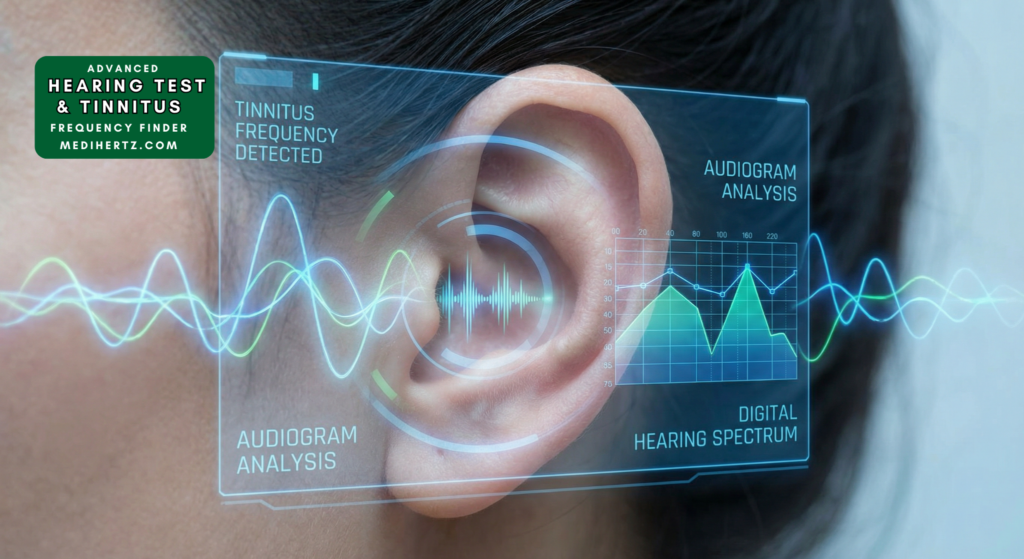
Hearing health is an important part of overall well-being, yet many people do not realize they may have mild hearing loss or persistent ringing in the ears until it begins to affect their daily life.
This Free Online Hearing Test & Tinnitus Frequency Finder helps you:
• Check your hearing ability at different frequencies
• Identify the possible frequency of your tinnitus tone
• Generate masking sounds to help manage ringing in the ears
• Download a personalized hearing report
The tool is designed to give you an initial hearing screening at home using simple audio tone testing techniques commonly used in the field of Audiology.
While it does not replace a professional clinical hearing test, it can help you better understand your hearing patterns and tinnitus frequency.
Also Try
👉 Hearing Age Test
How Old Are Your Ears?
How to Use This Tool
Follow these simple steps to complete your hearing test and tinnitus frequency check.
1. Use Headphones
For the most accurate results, use good quality headphones or earphones.
This allows the tool to test the left and right ear separately.
2. Start the Hearing Test
The tool will play tones at different frequencies and volumes.
Click the button whenever you hear the sound.
This helps estimate your hearing sensitivity across frequency ranges.
3. Test Both Ears
The system will test:
• Left ear hearing response
• Right ear hearing response
This helps identify differences between ears.
4. Find Your Tinnitus Frequency
If you experience ringing or buzzing sounds, the tool allows you to match the tone you hear.
Move the frequency slider until the tone closely resembles your tinnitus sound.
5. Generate Masking Sound
Once the tinnitus frequency is identified, the tool can create masking sounds that may help reduce the perception of ringing.
6. Download Your Hearing Report
You can generate a PDF report containing:
• Your name and age
• Left ear results
• Right ear results
• Estimated tinnitus frequency
• Test session details
The report is generated by Medihertz Frequencies and can be saved for personal reference or shared with a hearing specialist.
Understanding the Hearing Test
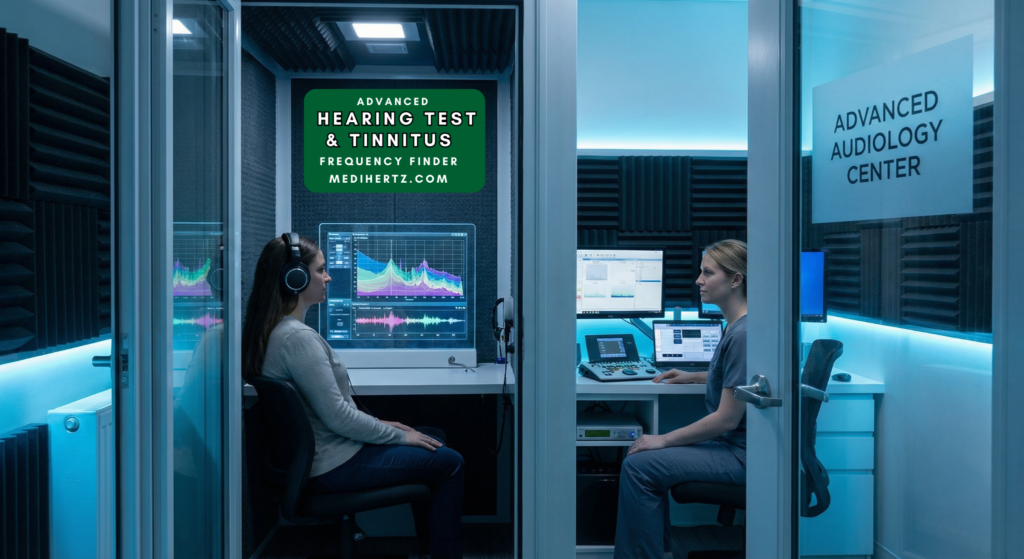
The hearing test used in this tool is based on a simple tone detection method.
Different sound frequencies are played at gradually changing volumes to determine the quietest level you can hear.
Typical hearing tests measure frequencies between:
250 Hz
500 Hz
1000 Hz
2000 Hz
4000 Hz
8000 Hz
These ranges cover most of the human speech frequencies, which are important for understanding conversations.
A hearing test like this helps identify whether your hearing is within the normal hearing range or if certain frequencies are harder to detect.
What Is Tinnitus?
Tinnitus is the experience of hearing sounds that are not coming from an external source.
People commonly describe tinnitus as:
• ringing
• buzzing
• hissing
• whistling
• humming
For some individuals, tinnitus occurs occasionally. For others, it may persist for long periods.
Many tinnitus tones exist at high frequencies between 4000 Hz and 8000 Hz, though this can vary from person to person.
Identifying your tinnitus frequency can help you explore sound-based masking techniques.
What Is Tinnitus Frequency Matching?
Tinnitus frequency matching is a technique used to estimate the pitch of the ringing sound a person hears.
In clinical settings, an audiologist plays different tones and asks the patient to identify the closest match to their tinnitus.
This tool provides a similar interactive frequency matching process.
Once you identify the closest tone, the system records the approximate tinnitus frequency.
This information can help guide sound therapy methods.
Using Sound Masking for Tinnitus
One common method used to manage tinnitus symptoms is sound masking.
Masking introduces gentle background sounds that make the tinnitus tone less noticeable to the brain.
Common masking sounds include:
• soft noise
• nature sounds
• low-level tones
• ambient audio
A widely used masking concept is White Noise.
White noise contains many frequencies simultaneously, which can help reduce the contrast between tinnitus and silence.
Common Tinnitus Frequency Ranges
Tinnitus tones often occur in specific frequency ranges.
Typical examples include:
| Frequency Range | Possible Perception |
|---|---|
| 1000 – 3000 Hz | low humming or buzzing |
| 3000 – 6000 Hz | ringing tone |
| 6000 – 10000 Hz | high pitched whistle |
However, tinnitus perception varies widely between individuals.
That is why frequency matching tools can be helpful for understanding your personal tinnitus tone.
What Are “Healing Frequencies” for Tinnitus?
You may see references online to special frequencies claimed to cure tinnitus, sometimes called:
• healing frequencies
• Da Vinci frequencies
• tinnitus elimination frequencies
While sound therapy can help manage tinnitus symptoms, there is no single frequency proven to cure tinnitus for everyone.
However, sound therapy techniques can help reduce how strongly the brain notices the ringing.
These techniques are often used alongside other tinnitus management approaches.
What Your Hearing Test Results Mean
Your hearing test results show how sensitive your ears are to different frequencies.
Results typically fall into categories such as:
Normal Hearing
Most tones are easily detected at low volumes.
Mild Hearing Difficulty
Some frequencies require louder sounds to hear clearly.
Possible Hearing Loss
Several tones are difficult to detect even at higher volumes.
Future updates of this tool may include an audiogram chart, which visually displays your hearing sensitivity across frequencies.
Audiograms are commonly used by hearing professionals to evaluate hearing patterns.
When to Consult a Hearing Specialist
Online hearing tests are useful screening tools, but they cannot replace a full medical evaluation.
You may want to consult a hearing professional if you experience:
• persistent tinnitus
• difficulty understanding speech
• hearing imbalance between ears
• sudden hearing changes
A licensed audiologist or ear specialist can perform a clinical hearing evaluation and recommend appropriate treatment options.
Benefits of Using an Online Hearing Test
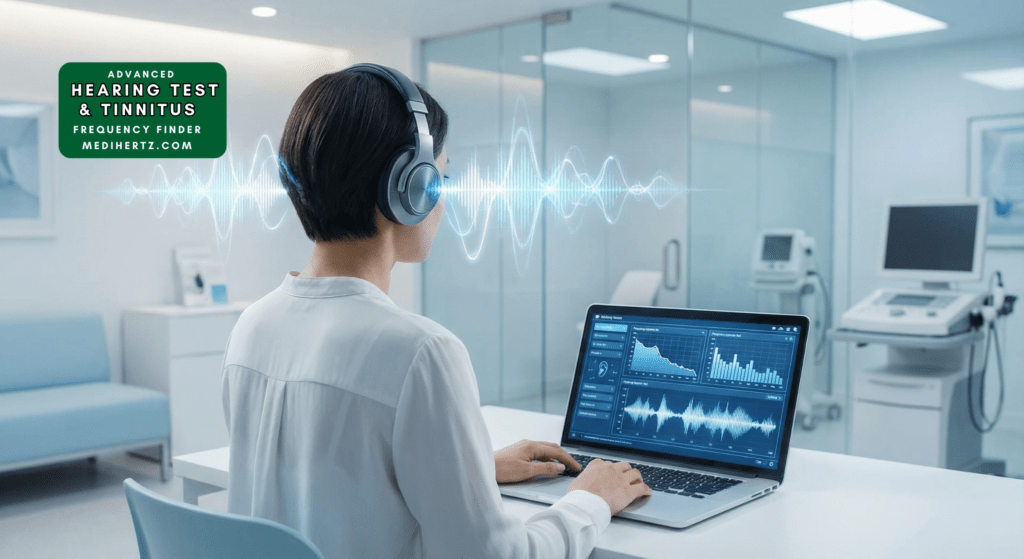
Online hearing screening tools provide several advantages.
They allow people to:
• check hearing quickly from home
• explore tinnitus frequency matching
• understand hearing patterns early
• track hearing changes over time
Many people first notice hearing changes while taking an online hearing test, which encourages them to seek professional guidance if needed.
About Medihertz Frequencies
Medihertz Frequencies develops digital tools designed to explore the relationship between sound, hearing, and wellness.
Our tools help users experiment with:
• sound frequencies
• hearing tests
• tinnitus tone matching
• audio-based relaxation techniques
The goal is to make sound science tools accessible to everyone.
🔗 Explore More Medihertz Tools
🔊 Healing Frequency ToolS
- Vocal Pitch & Ear Scale Trainer
- Find Your Tinnitus Frequency Online
- TuneNaad 🎸
- Daily Weight Loss Frequencies
- Instant Hz Listener
- Hz Frequency Generator (Advanced)
- Find Your Tinnitus Frequency Online
- Om Chanting Meditation Tool
- CatPurrTone Tool
- Third Eye & Chakra Alignment Frequency Tool
- SENCAR Focus Waves for Driving, Travel & Long Focus Sessions 🔴🚘
- TradeMind Frequency Analyzer – for Traders
- White Noise & Binaural Beats Generator Free
- CampHertz: A Camping Sound Guard for Night Protection
Utility Tools
- Calm Online Notepad with Auto Save
- CalmMind Quiz
- Manifestation Tools
- Magic Ball Prediction Tool
Frequently Asked Questions
1. Is this online hearing test accurate?
This tool provides a hearing screening estimate using pure tone audio signals across common hearing frequencies. While it can help identify possible hearing difficulties, it does not replace a clinical hearing evaluation performed by a licensed audiologist or ear specialist.
For a definitive diagnosis, a professional hearing test performed in a controlled medical environment is recommended.
2. Do I need headphones for this hearing test?
Yes. Using headphones or earphones is strongly recommended.
Headphones allow the tool to test left and right ears independently, which improves the accuracy of the screening results. Built-in laptop or phone speakers may produce unreliable results.
3. What frequency is tinnitus usually?
Most tinnitus sounds occur in the high-frequency hearing range between 4,000 Hz and 12,000 Hz. However, tinnitus can vary significantly between individuals.
This tool helps estimate your tinnitus pitch so you can explore sound masking or sound therapy techniques tailored to your tinnitus frequency.
4. Can sound therapy help reduce tinnitus?
Sound therapy is commonly used in the field of Audiology to help manage tinnitus symptoms.
Techniques such as white noise, nature sounds, and notched sound therapy may help reduce the perceived intensity of tinnitus by lowering the contrast between tinnitus and silence.
5. What does my hearing score mean?
Your hearing score reflects how many tones you were able to detect during the hearing screening.
Higher scores generally indicate stronger hearing responses across the tested frequencies. Lower scores may suggest difficulty detecting certain tones and could indicate possible hearing changes.
If your score falls in the “Hearing Evaluation Recommended” range, you may benefit from a professional hearing assessment.
6. Is this tool a medical device?
No. This tool is designed for educational and screening purposes only.
It is not classified as a medical diagnostic device and should not be used as a substitute for professional medical evaluation.
7. Can tinnitus go away on its own?
For some people, tinnitus may be temporary and related to factors such as stress, fatigue, loud noise exposure, or earwax buildup.
However, persistent tinnitus may require evaluation by a hearing specialist or ENT physician.
8. When should I see a doctor for tinnitus?
You should consider consulting a medical professional if:
tinnitus becomes persistent or worsening
hearing suddenly changes
tinnitus occurs in only one ear
tinnitus is accompanied by dizziness or ear pain
An ENT specialist or audiologist can perform detailed tests and recommend appropriate treatment options.
9. Can I share my hearing report with a doctor?
Yes. The downloadable report generated by this tool can be shared with a hearing professional as an informational reference.
However, clinical tests performed by an audiologist will still be required for diagnosis.
10. Is my personal information stored?
Your personal details entered in the tool are used only to generate your hearing report.
The tool does not store or sell personal health information.
Medical Disclaimer
This tool provides hearing screening and tinnitus frequency matching for informational purposes only. It is not intended to diagnose, treat, cure, or prevent any medical condition.
The results generated by this tool should not be interpreted as medical advice. Always consult a qualified healthcare professional or audiologist for medical evaluation and treatment recommendations.
Safe Listening & Volume Disclaimer
For safe use of this tool:
Use comfortable listening volume levels
Avoid setting volume at excessively loud levels
Stop the test if you experience discomfort or ear pain
Prolonged exposure to loud sound may contribute to hearing damage.
Affiliate Disclosure
Some pages on this website may include links to recommended audio equipment, headphones, or related products. These links may be affiliate links, which means the website may earn a small commission if you choose to purchase through them.
This does not affect the price you pay, and product recommendations are based on relevance to hearing tests and sound therapy tools.
Educational Purpose Statement
This tool was created to help users explore hearing frequencies, tinnitus pitch matching, and sound masking techniques commonly discussed in audiology research.
It is designed to make sound science tools more accessible and encourage individuals to seek professional evaluation if hearing concerns arise.
🔗 Explore More Medihertz Tools
🔊 Healing Frequency ToolS
- Vocal Pitch & Ear Scale Trainer
- Find Your Tinnitus Frequency Online
- TuneNaad 🎸
- Daily Weight Loss Frequencies
- Instant Hz Listener
- Hz Frequency Generator (Advanced)
- Find Your Tinnitus Frequency Online
- Om Chanting Meditation Tool
- CatPurrTone Tool
- Third Eye & Chakra Alignment Frequency Tool
- SENCAR Focus Waves for Driving, Travel & Long Focus Sessions 🔴🚘
- TradeMind Frequency Analyzer – for Traders
- White Noise & Binaural Beats Generator Free
- CampHertz: A Camping Sound Guard for Night Protection
Utility Tools
- Calm Online Notepad with Auto Save
- CalmMind Quiz
- Manifestation Tools
- Magic Ball Prediction Tool
Related Frequency Articles- 👇
- 👉Complete Guide to Brainwave Frequencies (Hz Explained Simply)
- 👉 The One Frequency You Must Avoid in 2026 (Based on Your Birth Number)
- 👉What is the science behind sound bowls?
- 👉What is 7 Hz good for? A careful, evidence-based guide (with references)
- 👉Cymatics: From 2D Sand Patterns to 3D Sound Sculptures
- 👉 Hz Frequency Generator- Free Online Tone Generator
- 👉 What Frequencies Are Dangerous to Humans? Understanding Risks from Sound to Radiation
- 👉How to do a Cymatic Experiment
- 👉What is the science behind cymatics?
- 👉 NASA-Approved 30-Min Brain Boost
- 👉 What Is The Healing Power Of Sound Wave
- 👉 What does 528 hz do to the brain?
- 👉 The 7 Healing Frequencies: Unlocking the Power of Sound for Wellness
- 👉 The Sacred Science of Yantras: How Cymatics Validates Ancient Tantric Geometry
- 👉 Is 1111 a Lucky Number? A Deep Dive into Its Mystical, Numerological, and Cultural Significance
- 👉 Is 528 Hz Dangerous?
- 👉Delta Waves (0.5–4 Hz): Effects on Mind, Sleep, and Spiritual Energy
- 👉What Happens to Your Brain at 1 Hz Frequency?
- 👉Complete Guide to Brainwave Frequencies (Hz Explained Simply)
- 👉 White Noise for Sleep – Fall Asleep Fast (Free Online Tool)
- 👉 Is It Good to Sleep With White Noise? (Simple Guide for Better Sleep)