Listen. Breathe. Be still.
Om Meditation
Session Complete
The Om has faded gently. Take one slow breath before you continue.
Visual
Environments change instantly — your session, timer and Om voice continue undisturbed.
The Om voice stays the master sound. The frequency layer is capped so it can only support, never cover it.
Human Om chanting has no single fixed frequency. 136.1 Hz is a frequency commonly referenced in modern Om and meditation practice, offered here as a soft support tone.
Ambience starts silent so you begin with pure Om. When chosen it sits quietly beneath the Om voice.
Change the length at any time — the Om keeps playing and the session continues from where it is.
Used by Om 108 to count each completed Om cycle.
Om Meditation · 10 min · Calm Void · no ambience
A sustained, human-style Om voice — warm, smooth and unbroken — with an optional frequency layer and ambience underneath. For meditation, relaxation and mindfulness only; not a medical treatment.
Press play to enter the Om
0.03
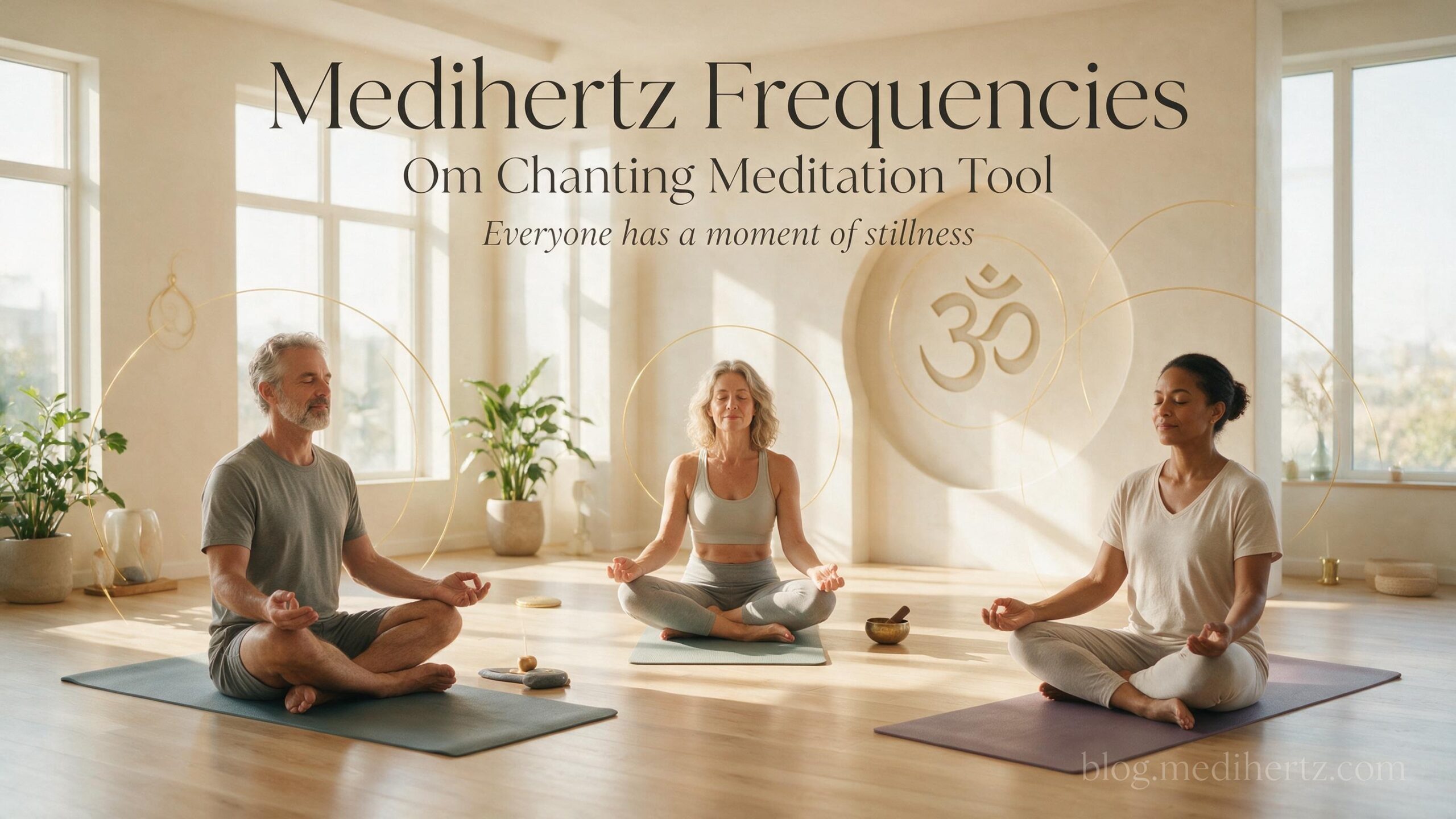
Om Chanting Meditation Tool
From 5 Minute Meditation to 10 hour long Sleep. Use this Om sound tool to calm your mind, relax your body, and enter a deep meditative state.
How to Use the Om Meditation Tool
Using the Om Meditation Tool is simple. You can listen quietly, meditate with the sound, or use the timer for a longer session.
1. Choose your Om experience
Select one of the options below the player:
- Om Meditation — the main continuous Om meditation experience
- Om 108 — designed around the traditional 108-count practice
- Om Frequency — explore the frequency-focused Om experience
- Om Sleep — a slower listening experience for winding down
- Om 432 Hz — explore an Om experience tuned around 432 Hz
2. Press Play
Tap the Play button in the center of the screen. The Om sound will begin and the meditation timer will start.
3. Find a comfortable volume
Use the volume slider to keep the sound gentle and comfortable. You do not need loud audio for meditation.
4. Choose a visual experience
Open Visual to explore the meditation visual environment while listening. You can keep your attention on the sound, the visual, or simply close your eyes.
5. Add ambience
Open Ambience if you want to combine the Om experience with a gentle background atmosphere.
6. Set your meditation time
Open Timer and choose the session length that feels right for you. Beginners can start with 5–10 minutes and gradually increase the duration.
7. Meditate with the sound
Sit or lie down comfortably. Relax your shoulders, breathe naturally, and let your attention rest on the Om sound.
When your mind wanders, gently return your attention to the sound and your breathing. There is no need to force concentration.
8. Pause or stop whenever you want
Use the center playback control to pause the session. You can continue whenever you are ready, or end the session when you feel finished.
Tip: Headphones can create a more immersive listening experience, but ordinary speakers also work well at a comfortable volume.
This tool is designed for meditation, relaxation, mindfulness, and personal spiritual practice. It is not a medical treatment or a substitute for professional care.
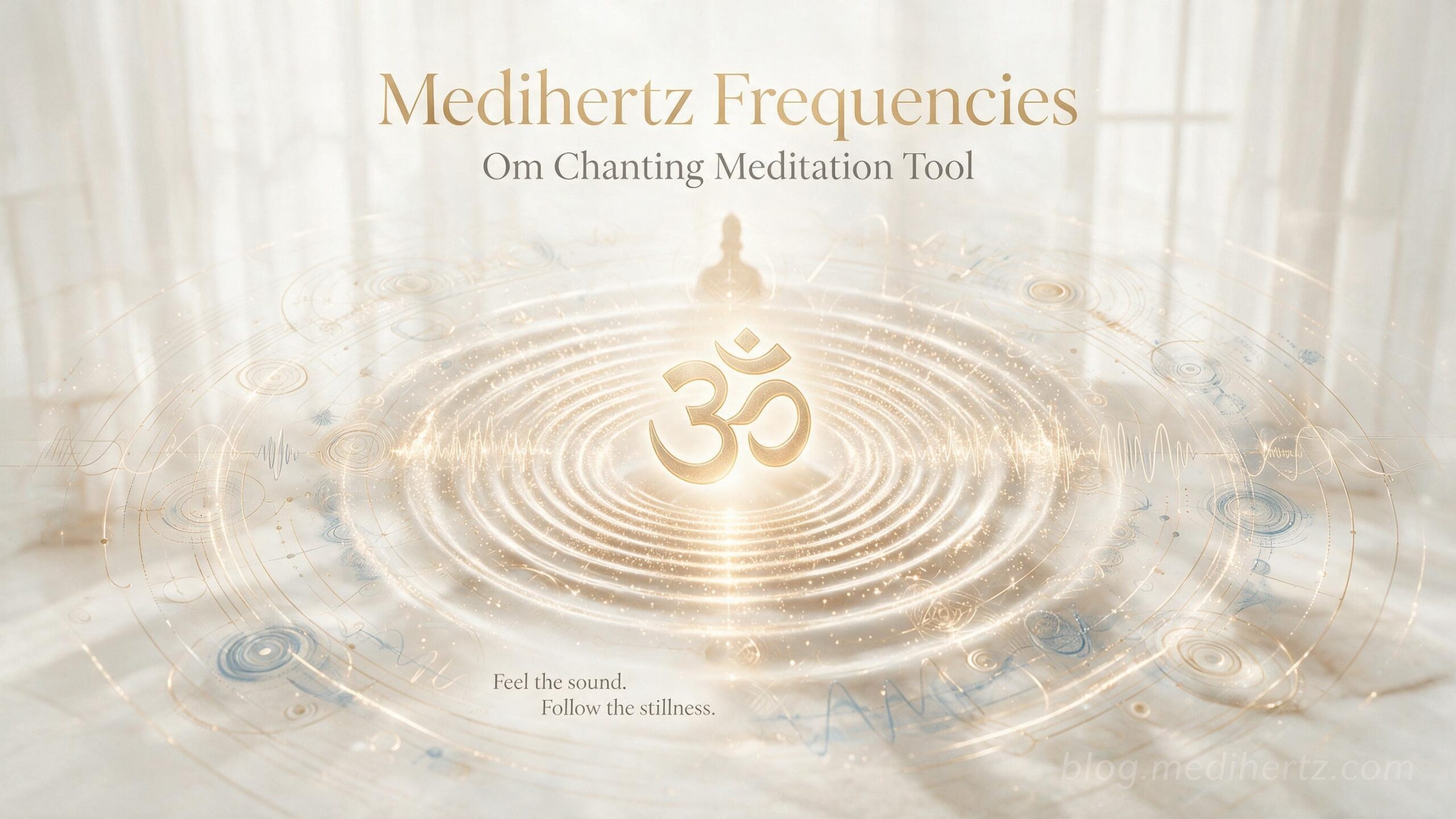
What Is the Frequency of Om?
One of the most common questions about Om meditation is: What frequency is Om?
There is no single fixed frequency for every Om chant. When a person chants Om (AUM), the actual fundamental pitch depends on the person’s voice, vocal technique, musical tuning, and the recording being used.
However, 136.1 Hz is widely referred to in modern meditation and sound practices as the “Om frequency” or “cosmic Om frequency.” The value comes from a modern system of tuning associated with the Earth’s orbital period and is commonly used as a reference tone for meditation and chanting.
That means 136.1 Hz is better understood as a traditional or contemporary tuning reference associated with Om, rather than a universal scientific frequency of the Om mantra.
Our Om Meditation Tool includes a frequency-focused experience so you can explore the sound directly rather than simply reading about it.
Is Om always 136.1 Hz?
No.
A human Om chant can contain many frequencies at the same time because the human voice is a complex sound. The pitch of the chant can also vary from person to person.
For example, two people can chant Om at different pitches while both are genuinely chanting the same mantra.
The 136.1 Hz reference is therefore best thought of as a particular tuning used in meditation and sound practices.
Why is 136.1 Hz called the Om frequency?
The 136.1 Hz association comes from the modern concept of calculating an audible tone from the Earth’s yearly orbital cycle through a system known as the Cosmic Octave. This tone became associated with the Om sound in contemporary sound-healing and meditation practices.
It is an interesting intersection of music, mathematics, astronomy, and spiritual tradition, but it should not be confused with evidence that every traditional Om chant physically vibrates at exactly 136.1 Hz.
What about 432 Hz Om?
You may also see Om meditation recordings described as 432 Hz Om.
432 Hz generally refers to a musical tuning reference rather than the fundamental frequency of the word Om itself. An Om recording can be created or tuned using different reference pitches, including 432 Hz or the more commonly used 440 Hz standard.
This is why different Om recordings can sound noticeably different even though they are all described as Om meditation.
136.1 Hz vs 432 Hz Om
These numbers describe different things in different contexts:
| Reference | Common use |
|---|---|
| 136.1 Hz | Modern “Om frequency” reference used in meditation and sound practices |
| 432 Hz | Alternative musical tuning reference used in some meditation music |
| 440 Hz | Standard tuning reference commonly used for A above middle C |
The important point is that 136.1 Hz and 432 Hz should not be treated as two competing “frequencies of Om.” They can refer to different tuning concepts used when creating or presenting Om-based meditation audio.
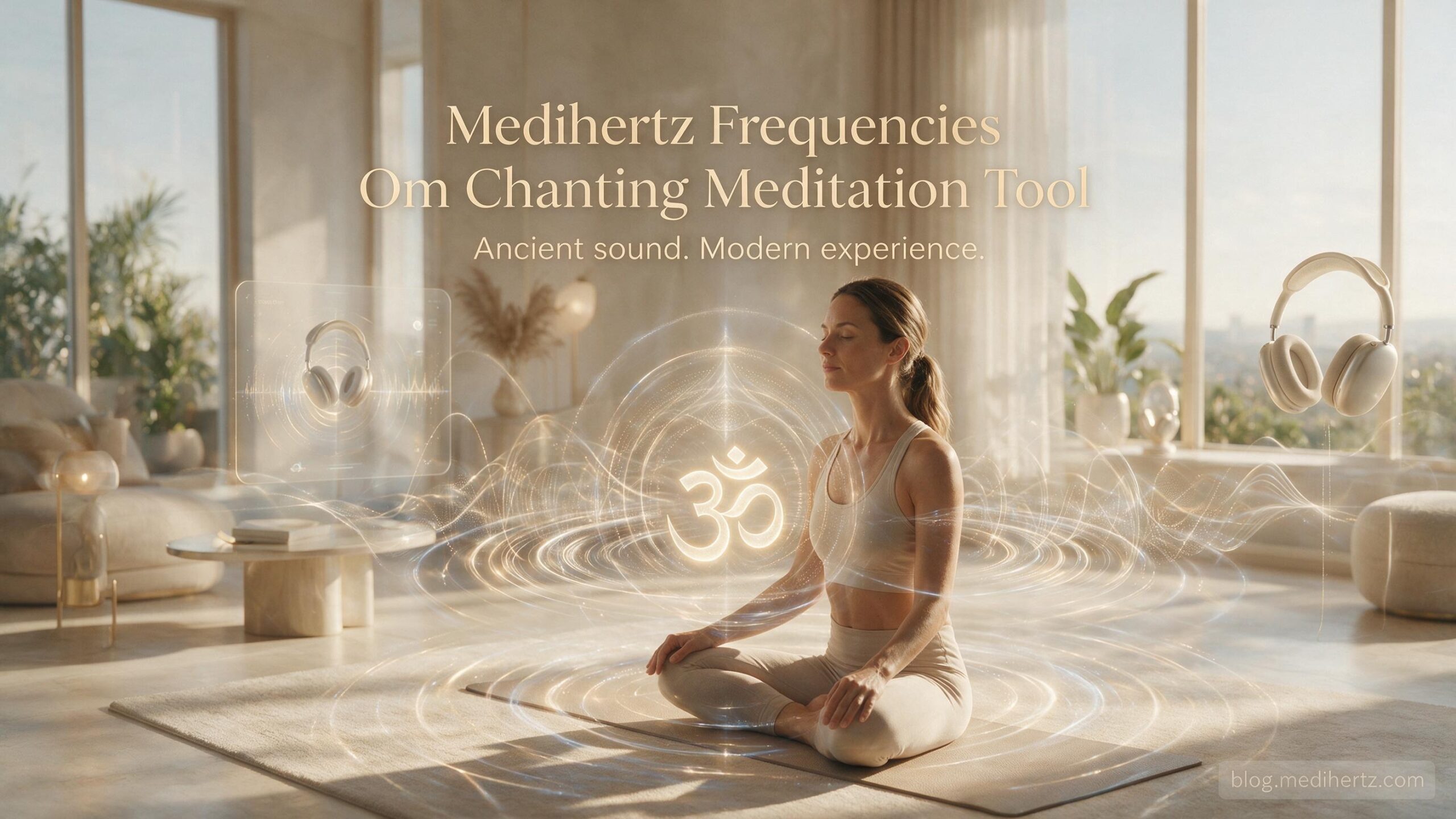
What Does “Om Hertz” Mean?
Hertz (Hz) is the unit used to describe frequency, meaning how many cycles occur per second.
When people search for “Om Hertz”, they are often looking for the frequency associated with Om meditation.
The number most commonly discussed in modern Om-frequency practices is 136.1 Hz. However, an Om chant is not limited to one frequency. Human chanting produces a fundamental pitch together with harmonics and other overtones.
So “Om Hertz” can mean either:
- the pitch of a particular Om chant,
- a reference tone used to accompany Om chanting, or
- the modern 136.1 Hz “Om frequency” concept.
This distinction is important because Om is a mantra and sound experience, not simply a single laboratory frequency.
With the Medihertz Om Meditation Tool, you can listen to Om-based sound experiences and explore the relationship between meditation, sound, and frequency.
What Is Om Resonance?
Om resonance describes the sense of vibration and sustained sound experienced while chanting or listening to Om.
When you chant Om, the sound contains a combination of frequencies created by your voice and the shape of your vocal tract. The vibration can be felt differently around the chest, throat, mouth, and head as the sound changes from A-U-M.
This is one reason Om chanting is often used as a meditation practice: the sustained sound provides a simple point of attention.
Rather than trying to force a particular sensation, simply notice the sound and vibration as they naturally occur.
The Medihertz Om Meditation Tool is designed around this idea of sound awareness — listen, breathe, and allow your attention to settle without forcing concentration.
What Is the Difference Between AUM and OM?
AUM and OM refer to the same sacred syllable, with “AUM” often being used to describe its three-part sound structure.
The three sounds are traditionally represented as:
A — U — M
The sound begins with an open “A,” moves through “U,” and closes with the humming “M.”
In written form, the syllable is commonly represented by the symbol ॐ.
In everyday meditation practice, people may simply say “Om chanting,” while explanations of the sound may use “AUM” to emphasize its three phonetic parts.
The important part for meditation is not perfect pronunciation. Beginners can start gently, listen to the sound, and allow their breathing and attention to become steady.
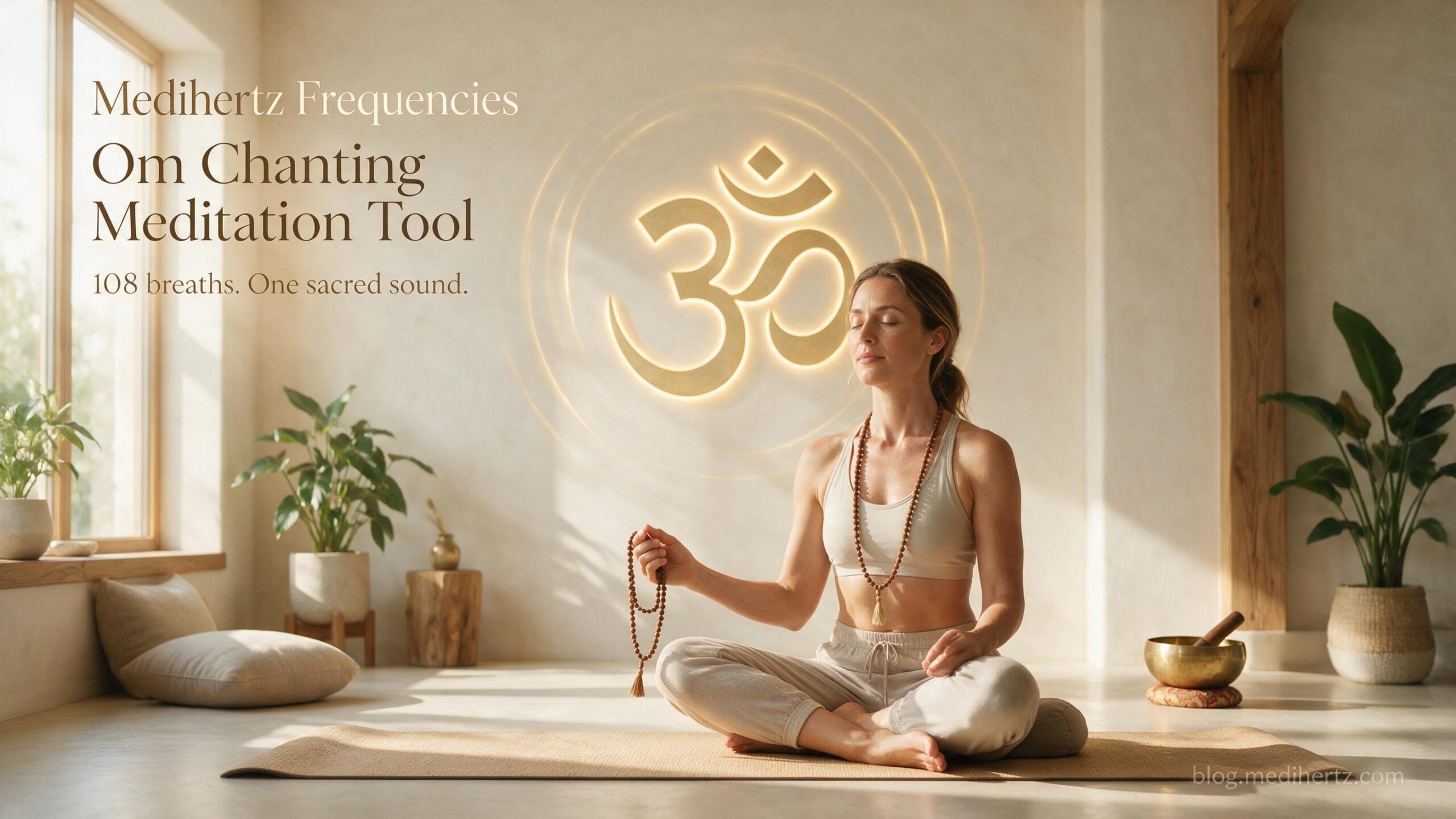
Why Is Om Chanted 108 Times?
The number 108 has a long-standing place in Indian spiritual and contemplative traditions. It is commonly associated with malas, mantra repetition, prayer, and meditation.
That is why 108 Om repetitions are often used as a structured meditation practice.
The purpose of counting is not to create a magical requirement. For many practitioners, a fixed number simply gives the mind a clear rhythm and prevents the session from becoming distracted by timekeeping.
If you are new to Om meditation, you do not need to begin with 108 repetitions. A short 5–10 minute session can be a comfortable starting point.
The Om 108 option in this tool provides a simple way to explore this traditional repetition-based approach.
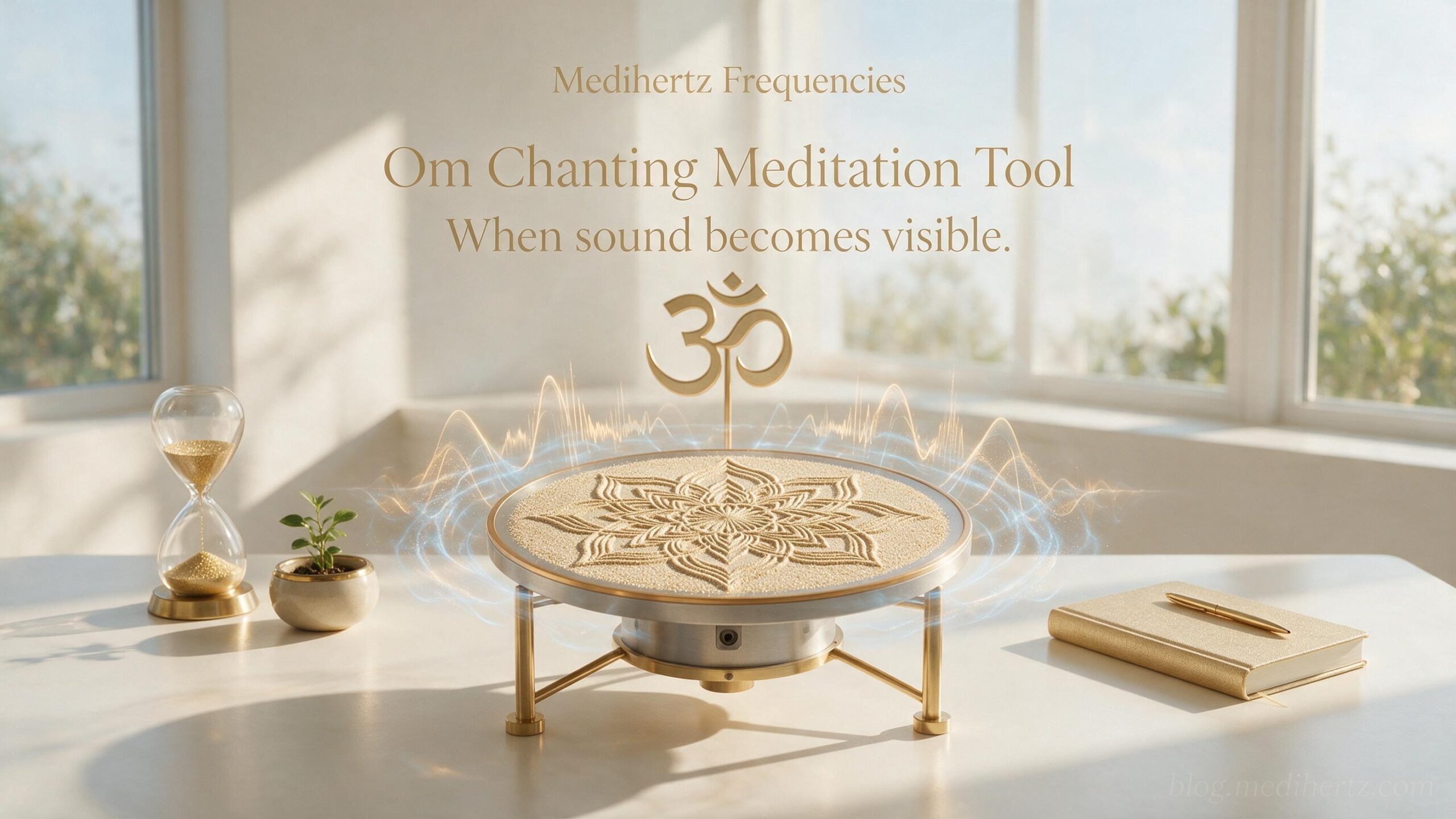
What Does Om Look Like on a Tonoscope?
A tonoscope is an instrument or experimental setup used to make sound vibrations visible through physical patterns, often using a vibrating surface or material such as sand.
Because Om is a complex vocal sound rather than a single pure sine wave, the visible pattern produced by chanting Om can change depending on:
- the pitch of the chant,
- vocal intensity,
- microphone or speaker characteristics,
- the material being vibrated,
- the geometry of the surface, and
- the frequency components present in the recording.
This is closely related to the broader field of cymatics, where sound vibrations are used to create visible patterns in physical materials.
A visual pattern produced by an Om recording should therefore not automatically be interpreted as proof of a specific “Om frequency.” The pattern is a physical response to the particular sound signal and experimental setup.
If you want to explore sound visually, you can also experiment with different frequencies using the Medihertz Frequency Hub.
What Are the Benefits of Om Meditation?
People practice Om meditation for different personal, spiritual, and mindfulness reasons.
Common reasons include:
- creating a quiet moment during the day
- focusing attention on one sustained sound
- supporting a regular meditation routine
- practicing slow and relaxed breathing
- creating a sense of stillness
- preparing for sleep or quiet reflection
- exploring the spiritual meaning of Om
- developing greater awareness of sound and vibration
Research into mantra-based and meditation practices continues to explore how chanting, breathing, attention, and relaxation may affect subjective wellbeing and physiological measures. Individual experiences vary, so Om meditation should be viewed as a mindfulness or spiritual practice rather than a medical treatment.
The simplest approach is often the best: listen, breathe, notice, and return your attention to the sound.
Om Meditation for Beginners
If you have never practiced Om meditation before, start small.
Choose a quiet place and sit comfortably. You do not need a special meditation room, advanced posture, or previous experience.
Start the Om Meditation Tool and choose a comfortable volume. Close your eyes if that feels comfortable and take a few natural breaths.
You can either:
- Listen silently to the Om sound, or
- Chant along with the sound.
If you chant, allow the sound to flow naturally rather than forcing your voice. When the sound ends, take another relaxed breath and repeat.
If your attention wanders, simply return to the sound.
A 5–10 minute session is enough to begin. With regular practice, you can experiment with longer sessions, Om 108, or the other listening modes available in the tool.
🧘 How to Meditate with the Om Chanting Meditation Tool
Sit or lie down in a comfortable position where your body feels relaxed. Keep your spine straight if sitting, but do not force posture. Close your eyes gently.
Press Play and allow the Om sound to begin. Do not try to chant aloud unless you feel naturally guided. Simply listen.
As the sound flows, bring your attention to your breath. Inhale slowly through the nose and exhale gently through the mouth or nose. Let the Om vibration move through your chest, throat, and head.
If thoughts arise, do not resist them. Let them pass and softly return your awareness to the sound. Continue until the timer ends or until you feel calm and centered.
This tool is best used:
-
Early morning for mental clarity
-
Before sleep to calm the nervous system
-
During stress or anxiety to regain balance
🔊 What Frequency Does This Om Sound Use?
This Om chanting meditation tool is designed around the natural vibration of Om, often associated with 136.1 Hz, also known as the cosmic Om frequency.
This frequency is traditionally linked to:
-
Deep relaxation
-
Nervous system calming
-
Mind–body harmony
-
Meditative awareness
The sound is intentionally smooth, continuous, and non-aggressive, making it suitable for long listening sessions without mental fatigue.
This experience focuses on sound awareness, not forced concentration.
🕉️ About This Om Chanting Meditation Tool
The Om Chanting Meditation Tool by Medihertz is a simple, distraction-free sound meditation experience inspired by ancient spiritual traditions.
It is designed to help users:
-
Quiet mental noise
-
Enter a meditative state naturally
-
Experience the calming power of primordial sound
No guidance, no pressure — just sound, breath, and awareness.
❓ Frequently Asked Questions (FAQ)
What frequency is Om?
There is no single universal frequency for every Om chant. 136.1 Hz is widely called the “Om frequency” in modern meditation and sound practices, but an individual’s Om chant can have a different fundamental pitch and many harmonic frequencies.
What is 136.1 Hz?
136.1 Hz is a modern tuning reference commonly associated with the Om or cosmic Om frequency. It is derived from a contemporary system connecting astronomical cycles with audible musical frequencies.
Is Om frequency 136.1 Hz or 432 Hz?
They refer to different tuning concepts. 136.1 Hz is commonly called the Om frequency, while 432 Hz is commonly used as a musical tuning reference in some meditation recordings. Neither number represents a universal fixed frequency for every Om chant.
What does Om resonance mean?
Om resonance generally refers to the perceived vibration and sustained sound created while chanting or listening to Om. The exact sound depends on the voice, pitch, recording, and acoustic environment.
Is Om the same as AUM?
Yes. AUM is commonly used to describe the three-part sound A-U-M, while Om is the more familiar name for the sacred syllable represented by ॐ.
Why is Om sometimes chanted 108 times?
108 is traditionally important in several Indian spiritual practices and is commonly used for mantra repetition. The number provides a structured meditation cycle, although beginners can start with fewer repetitions.
Can I listen to Om without chanting?
Yes. You can simply listen to the Om sound and use it as an object of attention during meditation.
Can beginners use Om meditation?
Yes. Beginners can start with a short 5–10 minute session, sit comfortably, breathe naturally, and gently return their attention to the sound whenever the mind wanders.
Can I use Om meditation before sleep?
Yes. Many people use quiet Om-based listening as part of a relaxing bedtime routine. Keep the volume comfortable and use the timer if you do not want the audio to continue indefinitely.
Do I need headphones?
No. Headphones can provide a more immersive listening experience, but the tool can also be used with speakers at a comfortable volume.
What is Om sound on a tonoscope?
A tonoscope can make sound vibrations visible as physical patterns. An Om recording may create a visible pattern depending on its pitch, harmonics, volume, equipment, and the material being vibrated.
Is this an Om healing tool?
The Medihertz Om Meditation Tool is intended for meditation, mindfulness, relaxation, and spiritual listening. It should not be considered a medical treatment or a substitute for professional healthcare.
Is this tool safe to use daily?
Yes. Om chanting and listening practices are gentle and can be used daily for relaxation and mindfulness.
Do I need headphones?
Headphones are recommended for deeper immersion, but the tool also works well on speakers at low volume.
Can I use this for sleep?
Yes. Many users find Om sound helpful before sleep as it slows mental activity and promotes calmness.
Is this a medical or healing device?
No. This tool is intended for meditation and relaxation only. It does not replace medical or professional treatment.
How long should I use it?
Start with 5–10 minutes. You can increase the duration as you feel comfortable.
🌐 Medihertz Frequency Hub
The Mother of All Frequency Tools
Medihertz is not just a meditation website.
It is a complete Frequency Hub where sound, vibration, and awareness come together.
Each tool inside Medihertz is created for a specific mental, emotional, or practical need — from deep meditation to focus during work or driving.
🔊 Explore the Medihertz Frequency Tools
🧠 Hz Frequency Generator (Core Tool)
The foundation of the Medihertz ecosystem.
Discover moreElectric generatorScienceGenerator
This tool allows users to generate and listen to:
-
Specific Hz frequencies
-
Brainwave frequencies (Alpha, Theta, Delta, Gamma)
-
Solfeggio and custom tones
Users can choose frequencies based on intention — relaxation, focus, meditation, or exploration.
Used for:
Focus, relaxation, meditation, awareness, sound exploration
This is the mother tool from which all other Medihertz tools expand.
🕉️ Om Meditation Tool (Sacred Sound Tool)
A focused meditation tool centered around the Om (AUM) sound, traditionally used for grounding and inner calm.
The Om tone is presented in a smooth, continuous form that supports stillness and slow breathing.
It helps users settle the mind gently, making it easier to enter a meditative or mindful state.
This tool is ideal for both beginners and experienced meditators who prefer a single, stable sound rather than complex frequencies.
Used for:
Om meditation, grounding, mental calm, breath awareness, spiritual stillness
👁️ Third Eye Chakra Alignment Tool
A meditation-focused tool designed to support inner stillness and awareness.
It uses carefully selected frequencies commonly associated with third eye meditation.
Meditating with third eye focus is believed to shorten the distance between intention (will) and the pineal gland, helping users enter deeper meditative states with less effort.
This tool is best used in silence, with eyes closed and slow breathing.
Used for:
Meditation, intuition, inner clarity, spiritual focus, quiet mind
🌊 Sencar Focus Waves (Sensory Calm Tool)
Sencar is designed to gently calm the mind without making the user sleepy.
The smooth, continuous sound patterns help reduce mental noise and overstimulation.
It is especially useful while driving, working, or during long tasks where calm focus is needed.
Used for:
Focused driving, stress reduction, mental balance, sensory calming
🧠 TradeMind (Focus & Mental Flow Tool)
TradeMind is created for high-pressure situations where emotional control matters.
It helps users stay mentally still and focused during:
-
Trading
-
Decision-making
-
Market volatility
-
Mentally demanding work
The sound environment supports calm awareness, helping reduce impulsive reactions during tough situations.
Used for:
Trading focus, emotional control, decision clarity, mental discipline
🌫️ White Noise & Binaural Beats Generator
A practical and widely used sound tool.
White noise and brown noise help block sudden sounds and create a stable background environment.
This tool is commonly used for:
-
Helping babies sleep
-
Improving sleep quality
-
Studying and concentration
-
Noise masking
Used for:
Baby sleep, deep sleep, studying, calming background sound
🎵 Music Therapy Lab
A sound-based tool inspired by music therapy principles.
It combines gentle tones, rhythms, and calming frequencies to support emotional balance.
This tool is ideal for moments when users want to relax emotionally rather than meditate silently.
Used for:
Music therapy, emotional release, relaxation, mindful listening
😻CatPurrTone – Authentic Cat Purr Frequency Experience
A natural, oscillating sound tool inspired by the real vibration pattern of a cat’s purr.
CatPurrTone blends low-frequency vibration with soft rhythmic oscillations to recreate the calming, wave-like feeling many people experience when a cat purrs nearby.
The sound is designed to feel warm, grounded, and comforting, rather than sharp or electronic.
This tool is suitable for quiet relaxation, stress relief, and emotional comfort.
Used for:
Calm, relaxation, emotional grounding, comfort listening, stress relief
🔗 Explore More Medihertz Tools
🔊 Healing Frequency Tools
- Vocal Pitch & Ear Scale Trainer
- TuneNaad 🎸
- Daily Weight Loss Frequencies
- Instant Hz Listener
- Hz Frequency Generator (Advanced)
- Om Chanting Meditation Tool
- CatPurrTone Tool
- Third Eye & Chakra Alignment Frequency Tool
- TradeMind Frequency Analyzer – for Traders
- White Noise & Binaural Beats Generator Free
- CalmMind Quiz
- Manifestation Tools
- Magic Ball Prediction Tool
Also Read
Related 👇
- Kozyrev Mirror vs Mirror Meditation: Why You Don’t Need a Lab to Explore Consciousness
- How to Build a Kozyrev Mirror Step by Step Guide.
- What Does a Kozyrev Mirror Do? The Complete Guide
Most Read 👇
- 2026 Will Change Everything: What Your Life Path Number Must Prepare For
- The One Frequency You Must Avoid in 2026 (Based on Your Birth Number)
- Peer Pressure: What It Is, How to Identify It, and How to Overcome It
- What Is Walmart’s DEI Program? (Diversity, Equity & Inclusion Explained)
- 3I/ATLAS: Is the Interstellar Object Alien Technology?
- Mystery From the Sky: The Buga Sphere Appears in ColombiaOumuamua: The Mysterious Interstellar Visitor and the Cosmic Message in Prashyant Jha’s Song
- Hz Frequency Generator- Free Online Tone Generator
Frequency Articles- 👇
- 👉Complete Guide to Brainwave Frequencies (Hz Explained Simply)
- 👉 The One Frequency You Must Avoid in 2026 (Based on Your Birth Number)
- 👉What is the science behind sound bowls?
- 👉What is 7 Hz good for? A careful, evidence-based guide (with references)
- 👉Cymatics: From 2D Sand Patterns to 3D Sound Sculptures
- 👉 Hz Frequency Generator- Free Online Tone Generator
- 👉 What Frequencies Are Dangerous to Humans? Understanding Risks from Sound to Radiation
- 👉How to do a Cymatic Experiment
- 👉What is the science behind cymatics?
- 👉 NASA-Approved 30-Min Brain Boost
- 👉 What Is The Healing Power Of Sound Wave
- 👉 What does 528 hz do to the brain?
- 👉 The 7 Healing Frequencies: Unlocking the Power of Sound for Wellness
- 👉 The Sacred Science of Yantras: How Cymatics Validates Ancient Tantric Geometry
- 👉 Is 1111 a Lucky Number? A Deep Dive into Its Mystical, Numerological, and Cultural Significance
- 👉 Is 528 Hz Dangerous?
- 👉Delta Waves (0.5–4 Hz): Effects on Mind, Sleep, and Spiritual Energy
- 👉What Happens to Your Brain at 1 Hz Frequency?
- 👉Complete Guide to Brainwave Frequencies (Hz Explained Simply)
- 👉 White Noise for Sleep – Fall Asleep Fast (Free Online Tool)
- 👉 Is It Good to Sleep With White Noise? (Simple Guide for Better Sleep)
- 👉 Why Is 963 Hz Called the God Frequency?
Numerology 👇
- Decoding the Mystery: What Happens If You Write 690452 on Your Wrist?
- Is 1111 a Lucky Number? A Deep Dive into Its Mystical, Numerological, and Cultural Significance
- What Does 1 Mean In Numerology
- What Does 2 Mean In Numerology
- What Does Number 3 mean in Numerology
- What Does 4 Mean In Numerology
- What Does 5 Mean In Numerology
- What Does 6 Mean In Numerology
- What Does 7 Mean In Numerology
- What Does 8 Mean In Numerology
- What Does 9 Mean In Numerology
- How to Use the 5 Elements for Personal Growth in Numerology
- Name Numerology Calculator: How to use it.
People Also Read
- 2030 A Doomsday According to Indian Texts or Misinterpretation?
- The Glory of Narasimha Bhagwan: An Exploration of Ancient Indian History
- Medusa and Mansa Devi: The Untold Myths Connecting Greek and Hindu Traditions
- “The Enigmatic Link Between the Bermuda Triangle and Hindu Mythology of Ramayan: Unveiling the Mystery”
- why is mt. Kailash Considered to be a Sacred Site?
- How Eastern Wisdom Can Transform Your Modern Life.
- Lord Shani and Lord Yam : God of Karma for Living and Death
- In which direction Ganesh Idol should face.
- What is the logic for existence of God?
- Who Is Mahadev Shiv ?
- How to increase love for Krishna?
- Hanuman Chalisa English Lyrics| Bhajle Ram Naam | Prashyant Jha
Free AI Tools To test yourself
- Love Percentage Checker Tool – Check For Free!
- Soulmates Initial Finder
- Hz Frequency Generator- Free Online Tone Generator
- Mental Health Check In Tool [ FREE TEST ]
- Best Free Phone Photos Download
- Image Converter (Online & Free)
Seotoolrank.com Free Ai Tools
- RankVortex – Implies pulling traffic and SEO rankings toward you.
- How do I convert a PNG file to BMP?
- ConvertEase PDF
- Website Speed Checker Tool
- SEO Word Counter with Character Count
- Free Stopwatch and Online Timer Countdown
- Age Calculator Tool
- Password Generator Tool
- Qr Code Generator Free
☸