
9 Small Behaviors That Make You Memorable to Everyone You Meet
(And One Science-Backed Way to Enhance Your Aura)
Isabella Chase
January 10, 2026 · 3 min read
I watched him move through a room full of strangers, and something subtle kept happening.
People leaned in when he spoke.
They smiled without realizing it.
They remembered him later—even though he never tried to impress anyone.
He wasn’t louder.
He wasn’t dominant.
He wasn’t performing.
Yet his presence lingered.
Psychology tells us that memorability isn’t about charisma tricks or confidence theatrics. It’s about how safe, seen, and regulated people feel around you.
After years of observing social dynamics and emotional behavior, these small patterns show up again and again among people others never forget.
They’re quiet behaviors—but powerful ones.
1) They remember and use your name

Hearing your name activates recognition centers in the brain. It signals identity, not just interaction.
When someone remembers your name—even casually—it creates a sense of importance and familiarity that bypasses logic.
Memorable people don’t just hear names.
They store them.
And when they use them naturally, people feel acknowledged rather than managed.
2) They remove distractions instead of multitasking
Nothing breaks connection faster than divided attention.
Putting your phone away completely tells the other person something rare: this moment matters.
From a psychological standpoint, full presence lowers social threat and increases trust. People relax when they sense they are not competing with a screen.
In a distracted world, attention becomes unforgettable.
3) They ask questions that go one layer deeper
Most conversations stay on the surface because most people never go past the first question.
Memorable people listen for meaning, not just information.
They follow curiosity instead of scripts.
When someone asks a thoughtful follow-up, the brain registers emotional validation. It feels like being understood rather than interviewed.
4) They give precise, thoughtful compliments

The mind discards generic praise quickly.
But specific recognition sticks.
When someone highlights exactly what stood out—your clarity, your patience, your way of explaining something—it signals genuine attention.
Psychologically, this strengthens self-perception and trust at the same time.
5) They remember small details from past conversations

When someone recalls a detail you barely remember sharing, it creates continuity.
It tells the nervous system: I wasn’t just background noise.
These moments form emotional bookmarks. They transform casual interactions into relational ones.
6) They allow themselves to be human

Perfection doesn’t connect—authenticity does.
Memorable people don’t overshare, but they also don’t hide behind polish.
They share struggles with boundaries. They admit uncertainty without collapsing into it.
This balanced vulnerability signals emotional safety, which naturally deepens connection.
7) They adjust their energy to the moment

Psychology calls this emotional attunement.
Memorable people don’t impose their mood—they sense the room.
They can be calm without being cold, enthusiastic without overwhelming, quiet without withdrawing.
This flexibility makes people feel met rather than managed.
8) They pause before responding

Silence, when used intentionally, signals respect.
A brief pause shows that words are being processed, not reacted to.
Neurologically, this lowers defensiveness and increases perceived intelligence and emotional maturity.
Thoughtful pauses make conversations feel grounded instead of rushed.
9) They end interactions with clarity and warmth

How a conversation ends shapes how it’s remembered.
Memorable people don’t disappear mid-sentence or drag things out awkwardly.
They close interactions with appreciation, intention, and respect—leaving the other person feeling valued, not dismissed.
10) They regulate their inner state to enhance their aura (New)
Beyond behavior, psychology recognizes something subtler: emotional regulation affects presence.
People unconsciously sense when someone is calm, grounded, and internally coherent. This is often described as aura—but it’s actually nervous system balance.
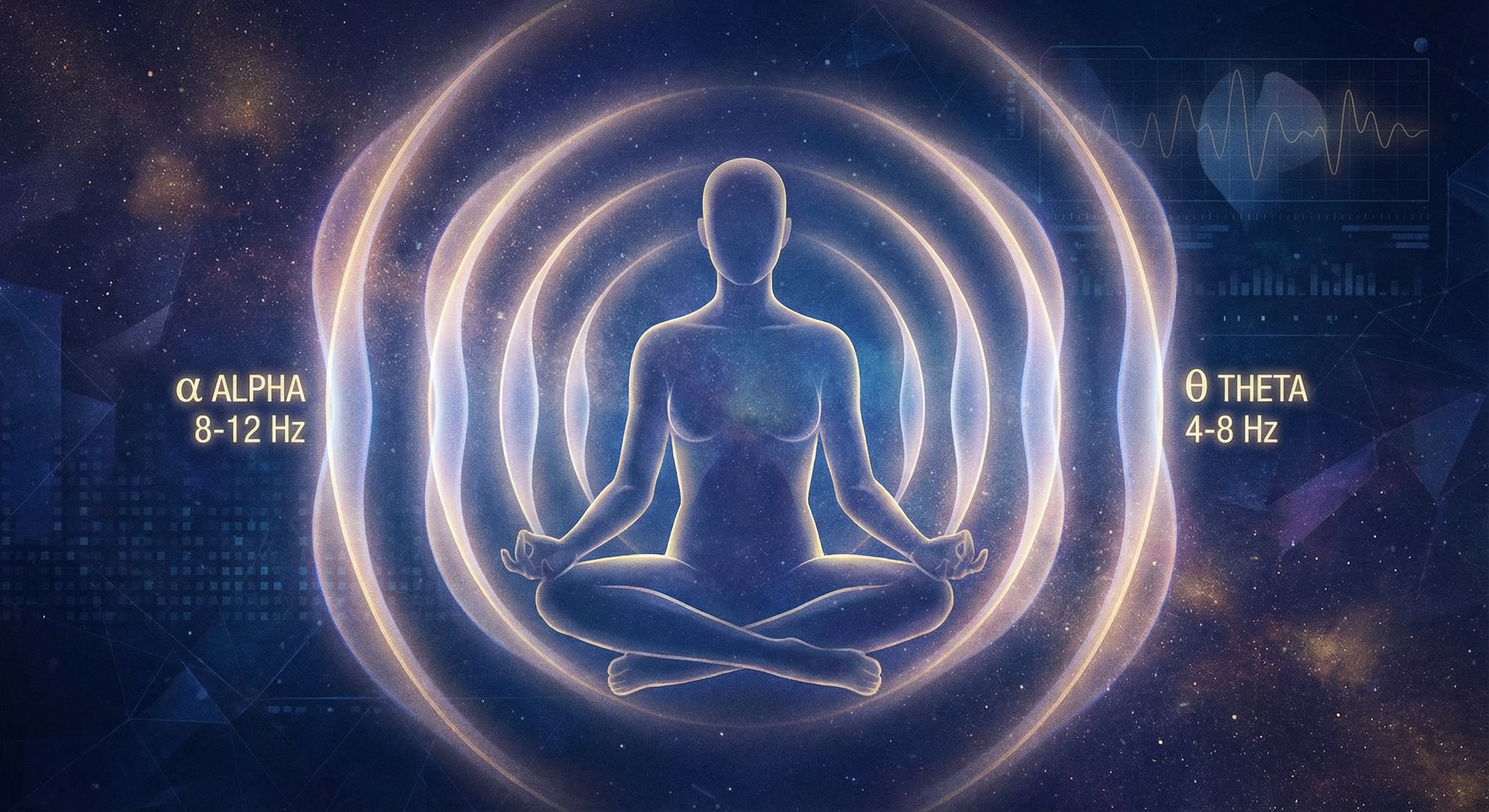
Certain sound frequencies help the brain settle into calm, focused states linked with emotional stability and social ease.
Using a frequency generator—especially in Alpha or Theta ranges—before social interactions can help:
-
Reduce internal tension
-
Improve emotional regulation
-
Create a calmer, more centered presence
This doesn’t change who you are.
It clears the noise around who you are.
When your internal state is balanced, people feel it—even if they can’t explain why.
Final Thoughts
Being memorable isn’t about standing out.
It’s about making others feel seen, safe, and settled in your presence.
These behaviors share one quiet truth:
People remember how regulated they felt around you.
You don’t need all ten.
Start with one.
Practice it intentionally.
Notice the shift—not just in others, but in yourself.
That’s where real presence begins.
Frequently Asked Questions (FAQ)
What are 5 examples of good behavior?
Five examples of good behavior are listening without interrupting, being respectful in speech, keeping promises, showing empathy, and staying calm under pressure. These behaviors help build trust and positive relationships.
What are 5 healthy behaviors?
Five healthy behaviors include emotional regulation, active listening, honest communication, consistent routines, and managing stress effectively. These behaviors support mental, emotional, and social well-being.
What are five behaviors?
Five common human behaviors are communication, cooperation, emotional expression, decision-making, and self-control. Together, they shape how people interact with others and respond to situations.
What are the 10 types of behavior?
The ten commonly recognized types of behavior include verbal, non-verbal, emotional, social, cognitive, habitual, adaptive, reactive, intentional, and learned behavior. Each plays a role in daily interactions.
What are 10 positive attitudes?
Ten positive attitudes are gratitude, patience, optimism, empathy, humility, openness, self-discipline, curiosity, resilience, and kindness. These attitudes strongly influence how others perceive you.
What is 5-1 positive behavior?
The 5-to-1 positive behavior principle means offering five positive interactions for every one negative or corrective interaction. Psychology shows this ratio helps build strong, lasting relationships.
What are the 12 types of attitudes?
Twelve common attitude types include positive, negative, neutral, optimistic, pessimistic, realistic, idealistic, emotional, rational, flexible, rigid, and growth-oriented attitudes.
What is a great attitude?
A great attitude is one that combines calmness, openness, respect, and responsibility. It allows a person to respond thoughtfully instead of reacting emotionally.
How can I stay positive daily?
You can stay positive daily by regulating stress, limiting distractions, practicing gratitude, staying present in conversations, and keeping your nervous system calm through rest or mindfulness practices.
What are the 9 behavioral patterns?
Nine common behavioral patterns include listening, reacting, avoiding, engaging, adapting, mirroring, questioning, reflecting, and concluding interactions thoughtfully.
What are the 14 intelligent behaviors and their examples?
Fourteen intelligent behaviors include emotional control, curiosity, reflection, empathy, adaptability, patience, clarity, self-awareness, focus, humility, responsibility, resilience, ethical thinking, and calm decision-making.
What is positive good behaviour?
Positive good behavior is behavior that is respectful, emotionally regulated, intentional, and considerate of others. It creates trust, comfort, and lasting positive impressions.
Disclaimer:
This article is for educational purposes only and not medical advice.

👉 Schumann Waves Generator Explained Simply: What It Is, How People Actually Use It, and Who It’s For
Related 👇
- Kozyrev Mirror vs Mirror Meditation: Why You Don’t Need a Lab to Explore Consciousness
- How to Build a Kozyrev Mirror Step by Step Guide.
- What Does a Kozyrev Mirror Do? The Complete Guide
Most Read 👇
- 2026 Will Change Everything: What Your Life Path Number Must Prepare For
- The One Frequency You Must Avoid in 2026 (Based on Your Birth Number)
- Peer Pressure: What It Is, How to Identify It, and How to Overcome It
- What Is Walmart’s DEI Program? (Diversity, Equity & Inclusion Explained)
- 3I/ATLAS: Is the Interstellar Object Alien Technology?
- Mystery From the Sky: The Buga Sphere Appears in ColombiaOumuamua: The Mysterious Interstellar Visitor and the Cosmic Message in Prashyant Jha’s Song
- Hz Frequency Generator- Free Online Tone Generator
Frequency Articles- 👇
- 👉Complete Guide to Brainwave Frequencies (Hz Explained Simply)
- 👉 The One Frequency You Must Avoid in 2026 (Based on Your Birth Number)
- 👉What is the science behind sound bowls?
- 👉What is 7 Hz good for? A careful, evidence-based guide (with references)
- 👉Cymatics: From 2D Sand Patterns to 3D Sound Sculptures
- 👉 Hz Frequency Generator- Free Online Tone Generator
- 👉 What Frequencies Are Dangerous to Humans? Understanding Risks from Sound to Radiation
- 👉How to do a Cymatic Experiment
- 👉What is the science behind cymatics?
- 👉 NASA-Approved 30-Min Brain Boost
- 👉 What Is The Healing Power Of Sound Wave
- 👉 What does 528 hz do to the brain?
- 👉 The 7 Healing Frequencies: Unlocking the Power of Sound for Wellness
- 👉 The Sacred Science of Yantras: How Cymatics Validates Ancient Tantric Geometry
- 👉 Is 1111 a Lucky Number? A Deep Dive into Its Mystical, Numerological, and Cultural Significance
- 👉 Is 528 Hz Dangerous?
- 👉Delta Waves (0.5–4 Hz): Effects on Mind, Sleep, and Spiritual Energy
- 👉What Happens to Your Brain at 1 Hz Frequency?
- 👉Complete Guide to Brainwave Frequencies (Hz Explained Simply)
- 👉 White Noise for Sleep – Fall Asleep Fast (Free Online Tool)
- 👉 Is It Good to Sleep With White Noise? (Simple Guide for Better Sleep)
Numerology 👇
- Decoding the Mystery: What Happens If You Write 690452 on Your Wrist?
- Is 1111 a Lucky Number? A Deep Dive into Its Mystical, Numerological, and Cultural Significance
- What Does 1 Mean In Numerology
- What Does 2 Mean In Numerology
- What Does Number 3 mean in Numerology
- What Does 4 Mean In Numerology
- What Does 5 Mean In Numerology
- What Does 6 Mean In Numerology
- What Does 7 Mean In Numerology
- What Does 8 Mean In Numerology
- What Does 9 Mean In Numerology
- How to Use the 5 Elements for Personal Growth in Numerology
- Name Numerology Calculator: How to use it.
People Also Read
- 2030 A Doomsday According to Indian Texts or Misinterpretation?
- The Glory of Narasimha Bhagwan: An Exploration of Ancient Indian History
- Medusa and Mansa Devi: The Untold Myths Connecting Greek and Hindu Traditions
- “The Enigmatic Link Between the Bermuda Triangle and Hindu Mythology of Ramayan: Unveiling the Mystery”
- why is mt. Kailash Considered to be a Sacred Site?
- How Eastern Wisdom Can Transform Your Modern Life.
- Lord Shani and Lord Yam : God of Karma for Living and Death
- In which direction Ganesh Idol should face.
- What is the logic for existence of God?
- Who Is Mahadev Shiv ?
- How to increase love for Krishna?
- Hanuman Chalisa English Lyrics| Bhajle Ram Naam | Prashyant Jha
Free AI Tools To test yourself
- Love Percentage Checker Tool – Check For Free!
- Soulmates Initial Finder
- Hz Frequency Generator- Free Online Tone Generator
- Mental Health Check In Tool [ FREE TEST ]
- Best Free Phone Photos Download
- Image Converter (Online & Free)
Seotoolrank.com Free Ai Tools
- RankVortex – Implies pulling traffic and SEO rankings toward you.
- How do I convert a PNG file to BMP?
- ConvertEase PDF
- Website Speed Checker Tool
- SEO Word Counter with Character Count
- Free Stopwatch and Online Timer Countdown
- Age Calculator Tool
- Password Generator Tool
- Qr Code Generator Free