
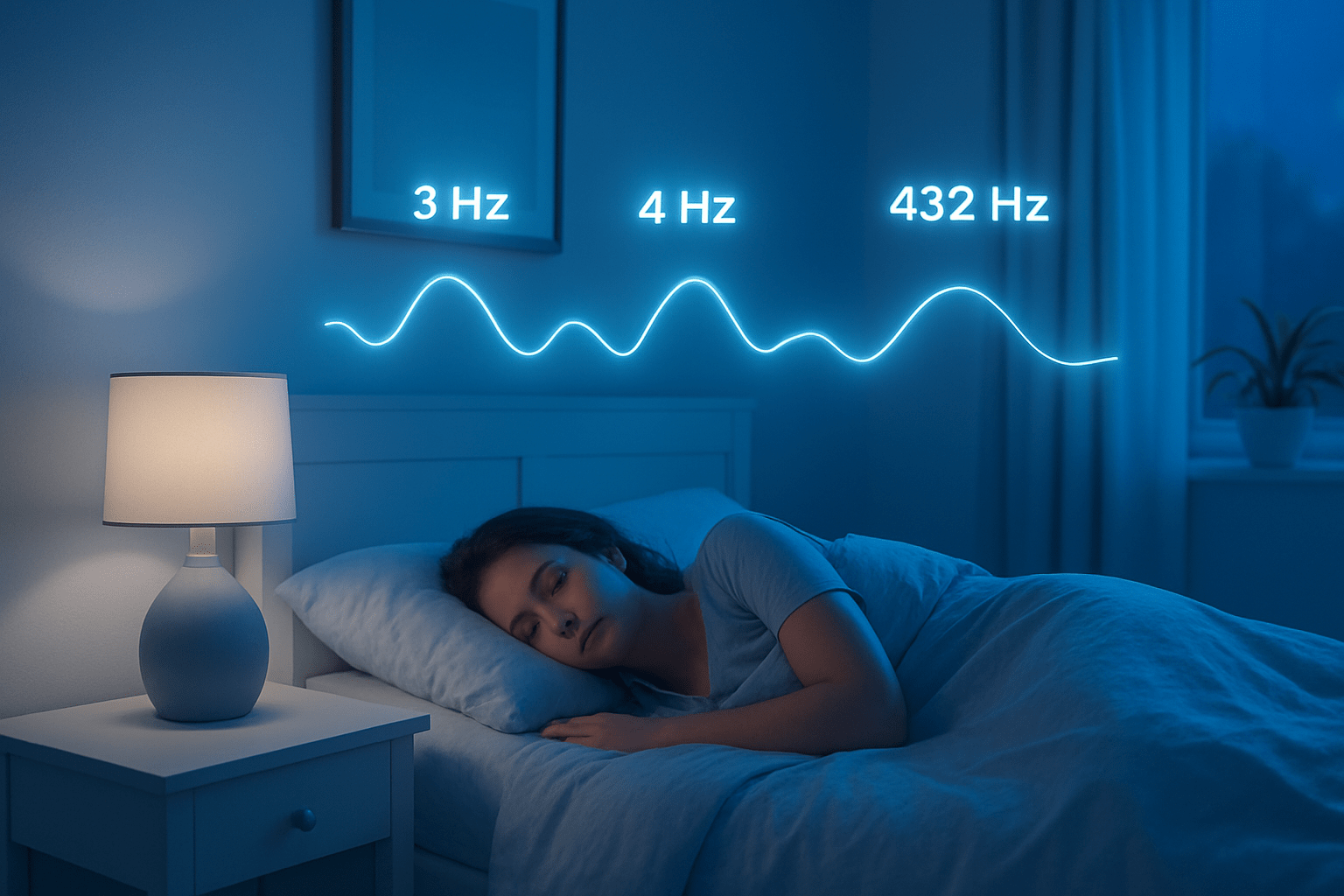
Best Hz for Sleep: 3 Hz vs 4 Hz vs 432 Hz – What Actually Works?
If you’ve been searching for the best Hz for sleep, you’ve probably seen all kinds of claims:
“3 Hz will knock you out instantly.”
“432 Hz is the secret sleep frequency.”
“528 Hz heals your brain overnight.”
But what’s real – and what’s just background music with a fancy title?
Let’s break this down clearly and honestly.
If you want deep sleep, the frequencies that matter most are 3 Hz and 4 Hz, which sit inside the delta brainwave range. But understanding how they work – and what you’re actually hearing – makes all the difference.
First Question: Can You Even Hear 3 Hz or 4 Hz?
This is important.
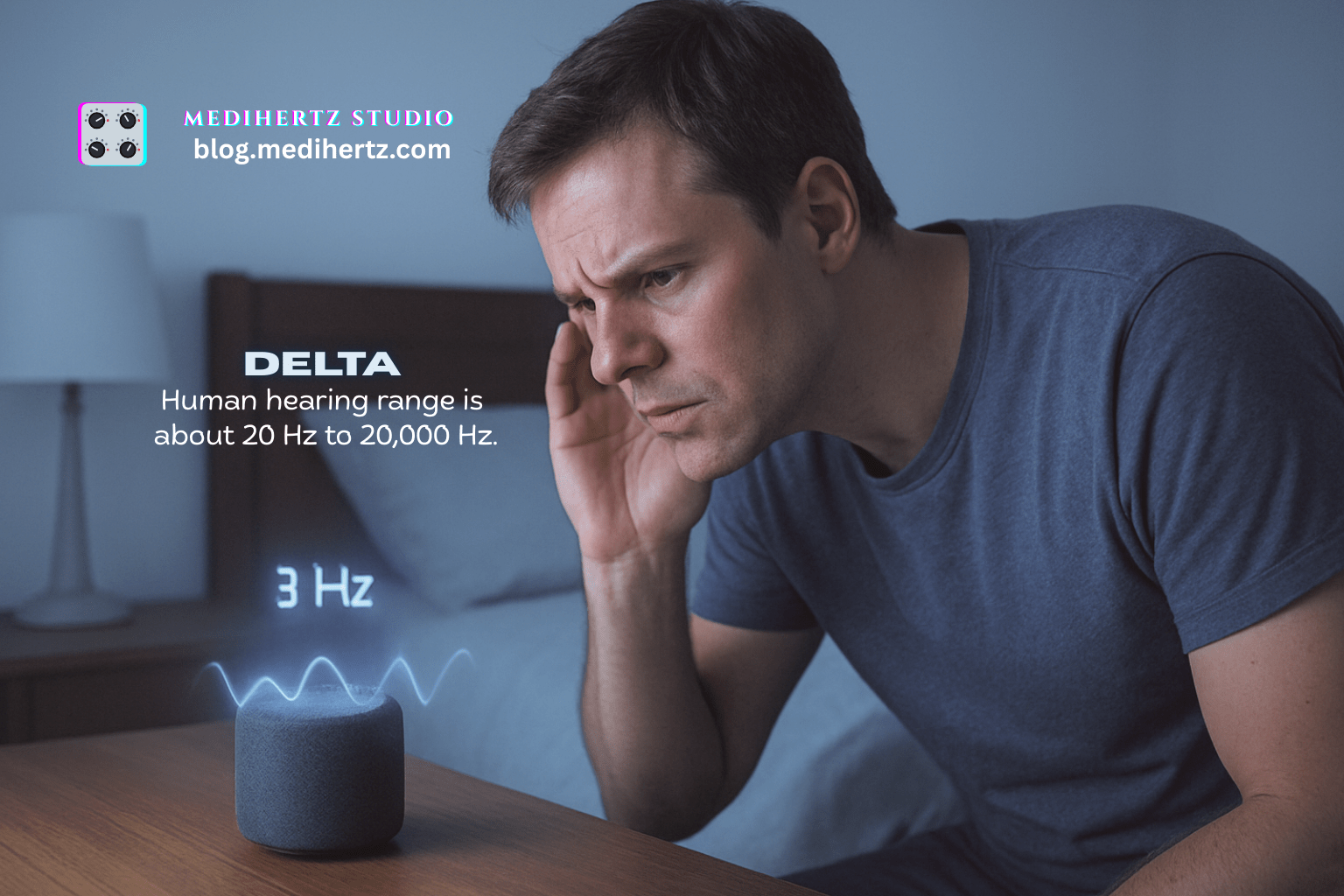
No you cannot directly hear 3 Hz or 4 Hz.
Human hearing range is about 20 Hz to 20,000 Hz.
So when you see a YouTube video titled:
“3 Hz Deep Sleep Sound”
You are not hearing 3 Hz directly.
Instead, you are hearing:
-
Music
-
Ambient sound
-
Ocean waves
-
Rain
-
A carrier tone
The 3 Hz is usually created through binaural beats, where two slightly different tones are played in each ear. Your brain perceives the difference between them.
For example:
-
Left ear: 100 Hz
-
Right ear: 103 Hz
-
Brain interprets the difference → 3 Hz
So what you “hear” is a tone.
What your brain “detects” is the 3 Hz difference.
That’s a big distinction.
What Do 3 Hz and 4 Hz Actually Feel Like?
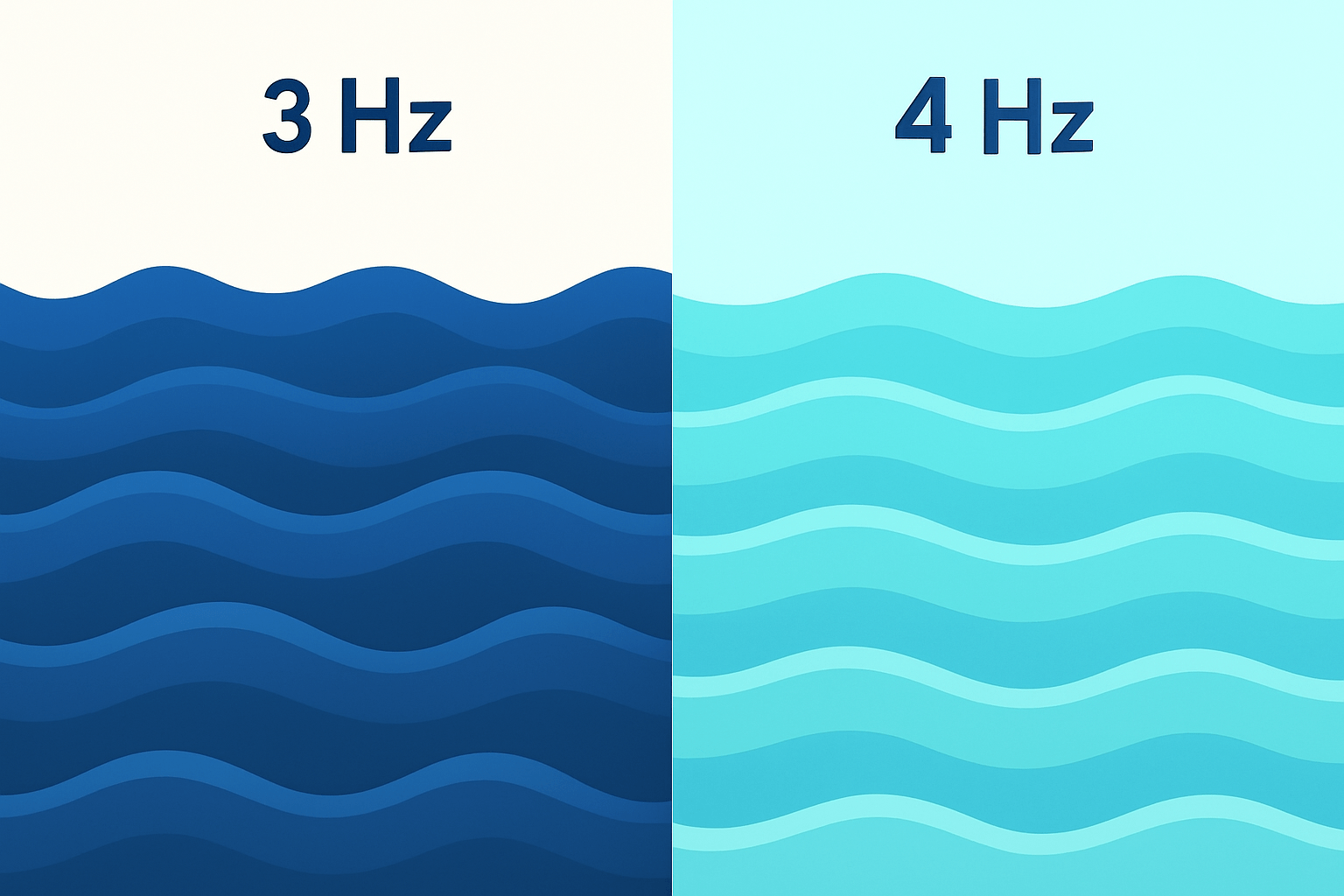
You won’t hear “3 vibrations per second.”
Instead, you may notice:
-
Heavy eyelids
-
Slower breathing
-
Body relaxation
-
Fewer thoughts
-
A drifting sensation
-
Dreamless, deep sleep
3 Hz is linked to deep N3 sleep, which is the most restorative stage.
4 Hz sits on the edge between theta and delta. Many people experience:
-
Easier sleep transition
-
Calmer mind
-
Less nighttime anxiety
It feels smoother than 3 Hz for some people.
What Is N3 Sleep? (Simple Explanation)
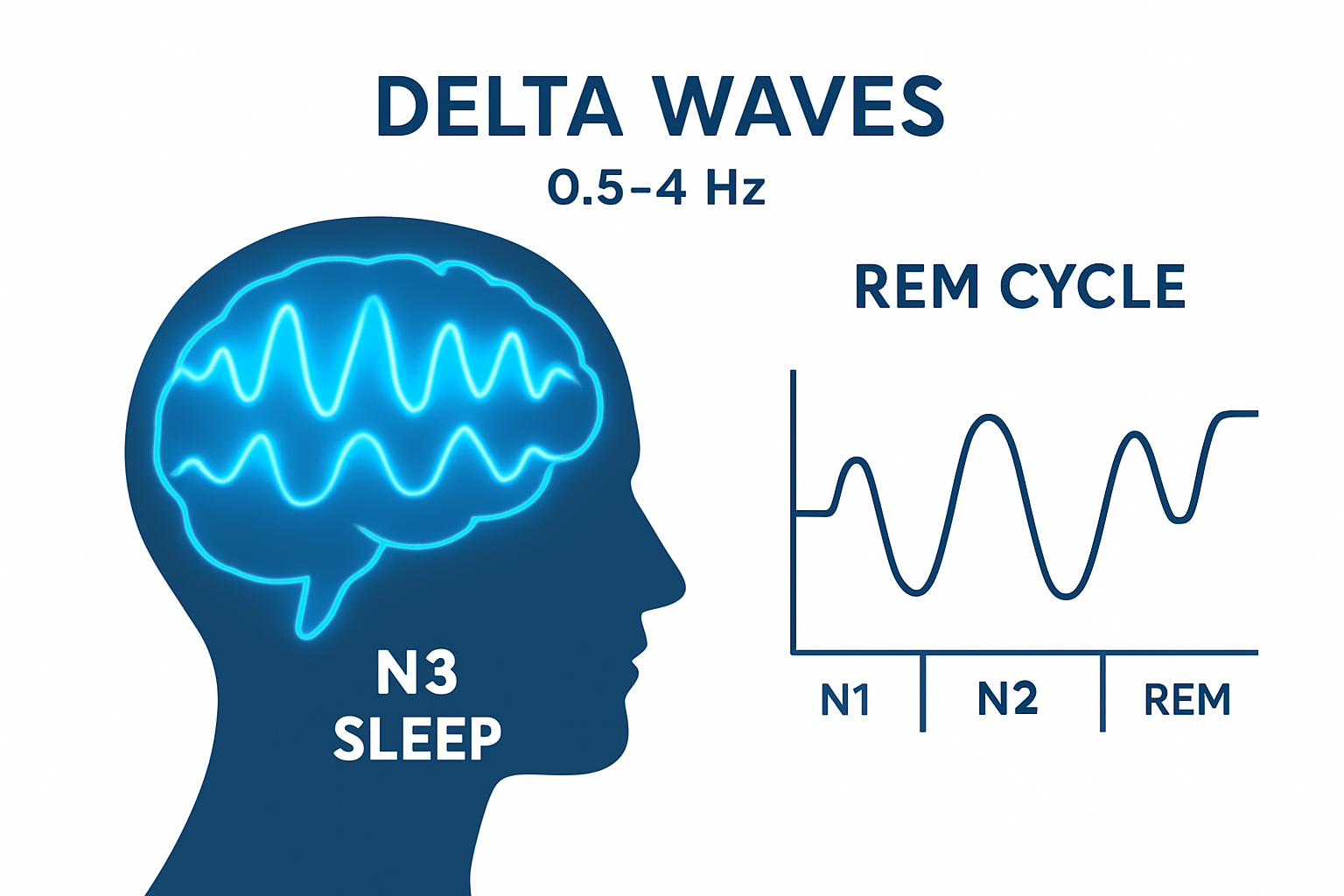
Sleep has stages.
The deepest stage is called N3 sleep.
N3 is when:
-
Your body repairs tissue
-
Growth hormone is released
-
Immune system resets
-
Physical recovery happens
Brain activity in N3 is dominated by delta waves (0.5-4 Hz).
That’s why 3 Hz and 4 Hz are associated with deep sleep support.
What About REM Sleep?
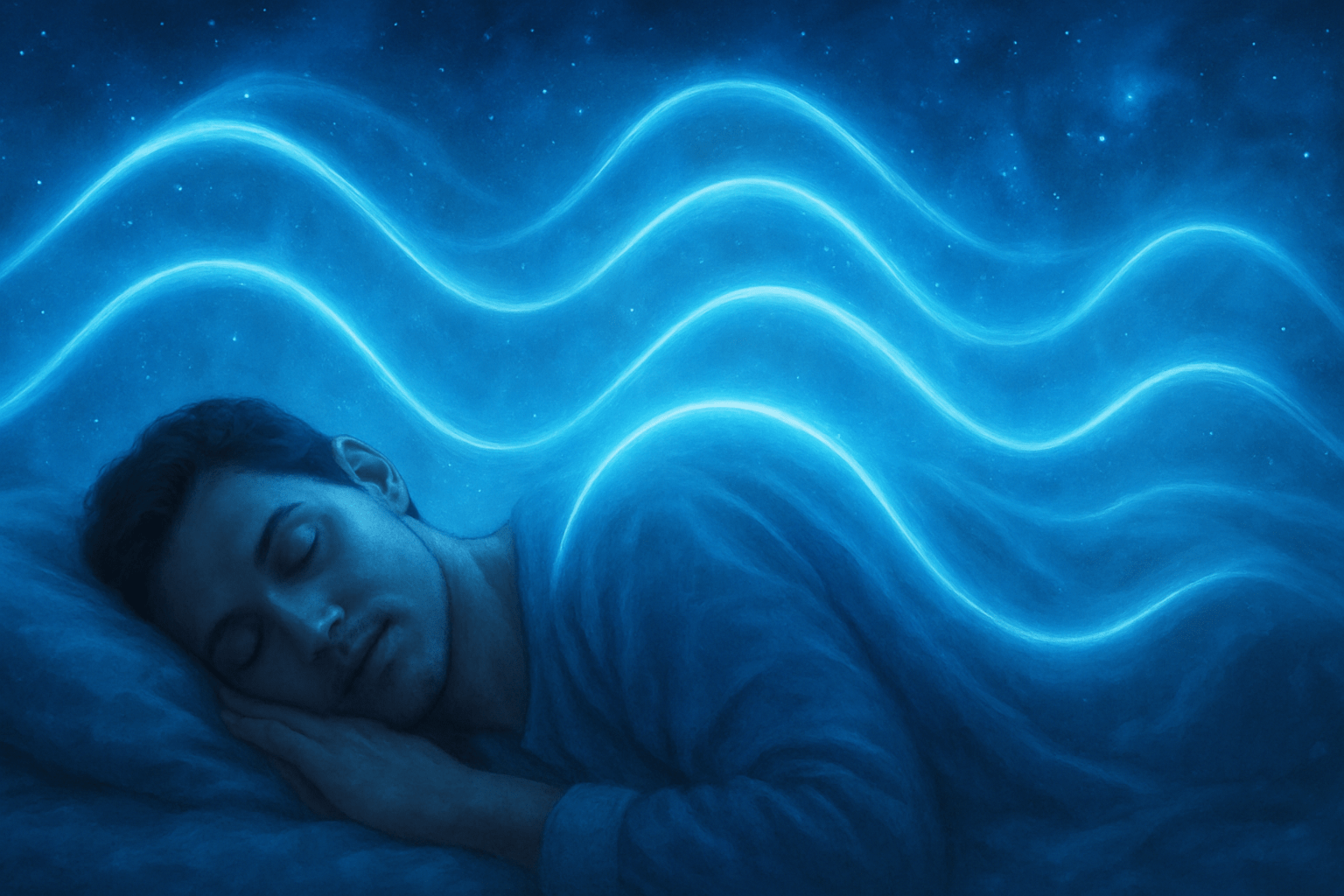
REM stands for Rapid Eye Movement sleep.
This is when:
-
You dream
-
Your brain becomes active
-
Memory processing happens
REM is different from deep sleep.
You can’t directly “force REM” with a single frequency.
Instead, the best strategy is:
-
Enter deep delta sleep first
-
Let your body naturally cycle into REM
Healthy sleep alternates between deep sleep and REM every 90 minutes or so.
Why Most People Never Feel Real Delta
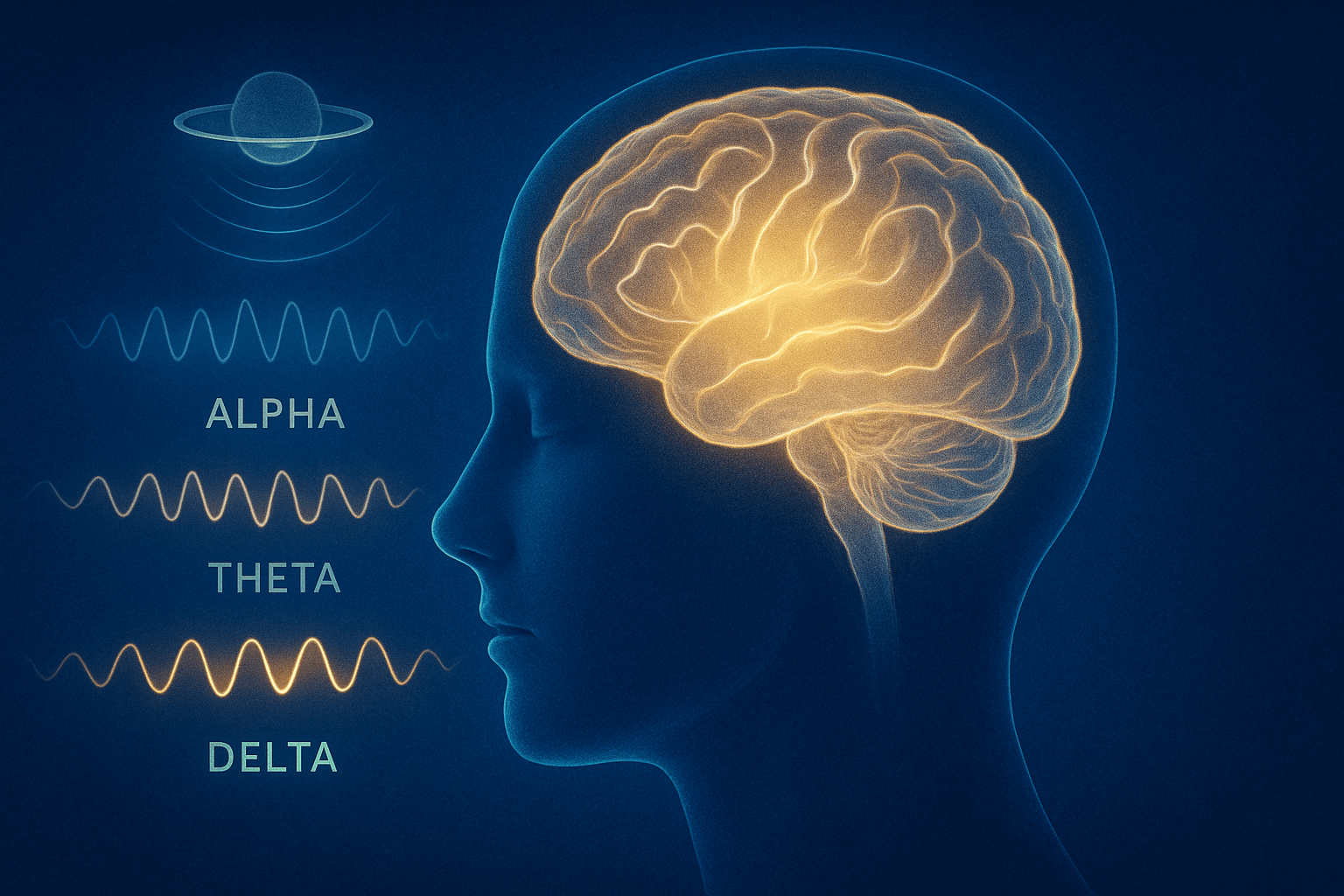
Here’s the uncomfortable truth.
Most “3 Hz” videos online:
-
Layer music over the tone
-
Change frequencies mid-track
-
Boost volume for effect
-
Don’t disclose carrier frequency
-
Don’t let you verify anything
So you think you’re using delta.
But you’re really just listening to cinematic ambient music.
When you use tools like:
You remove the mystery.
You know exactly what you’re listening to.
That alone changes the experience.
Because awareness improves results.
3 Hz vs 4 Hz vs 432 Hz – What’s the Real Difference?
Let’s simplify this.
3 Hz
-
Delta brainwave frequency
-
Linked to deep N3 sleep
-
Strong recovery support
4 Hz
-
Edge of theta and delta
-
Helps with falling asleep
-
Calms racing thoughts
432 Hz
-
Musical tuning frequency
-
Often used in relaxing music
-
Promotes emotional calm
-
Does NOT directly target delta waves
432 Hz can help you relax.
But it is not the same as delta brainwave stimulation.
The Problem With Most YouTube Sleep Frequencies
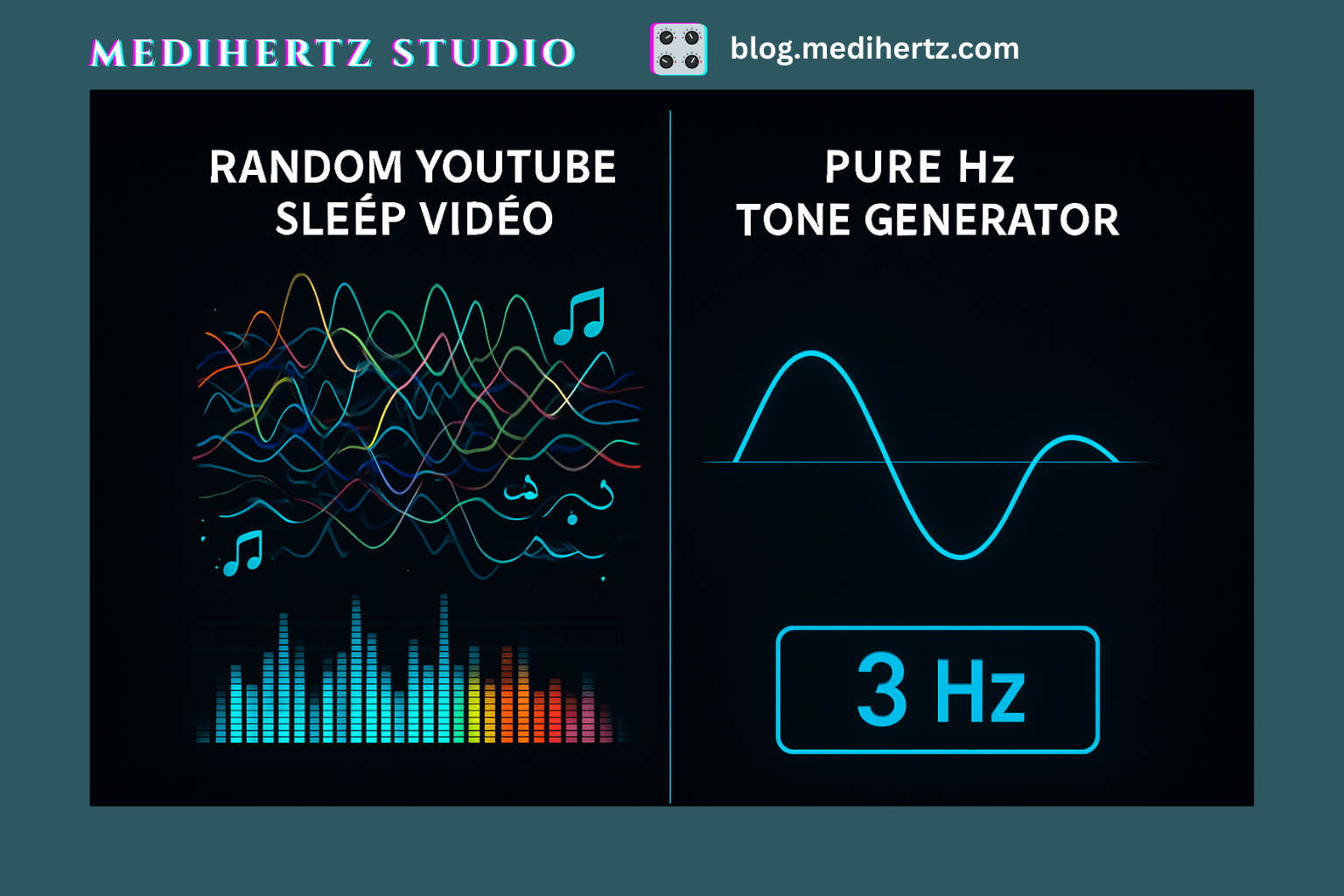
Here’s something most people don’t realize.
Many sleep videos:
-
Add soft music
-
Add ocean sounds
-
Add rain
-
Label it “3 Hz” or “528 Hz”
-
And that’s it
You often have:
-
No way to verify the frequency
-
No control over volume balance
-
No way to adjust delta level
-
No way to remove the music
-
No idea if the frequency is even accurate
Sometimes it’s just relaxing background music with a frequency in the title.
You may think you’re listening to deep sleep frequencies…
But you’re just listening to ambient music.
That’s not necessarily bad — but it’s not the same thing.
Why Frequency Control Matters
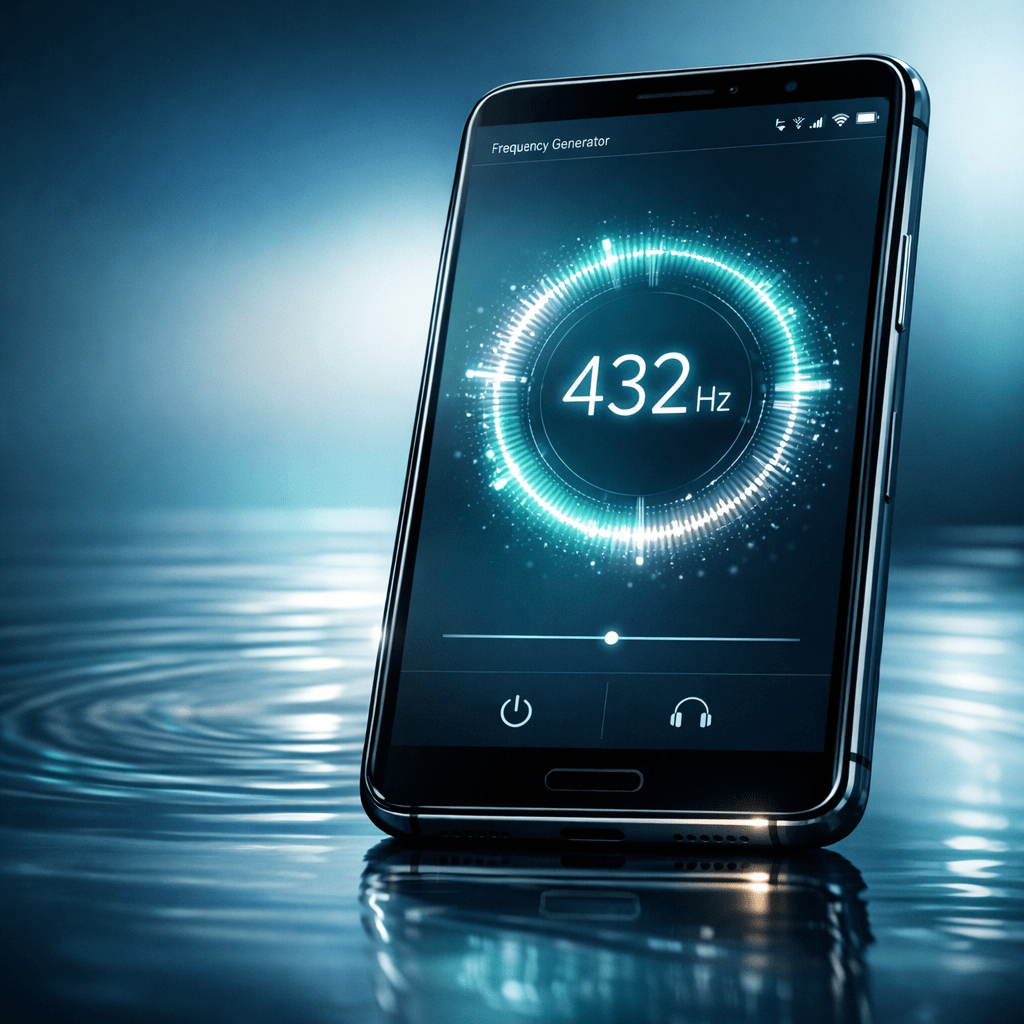
If you’re serious about improving sleep, control matters.
When you control frequency, you can:
-
Set exact 3 Hz or 4 Hz
-
Remove background music
-
Adjust volume safely
-
Combine delta waves with pink noise
-
Test what works for your brain
Instead of guessing, you experiment.
That’s how you learn what truly helps you sleep.
How You Can Test 3 Hz and 4 Hz Yourself (Step-By-Step)
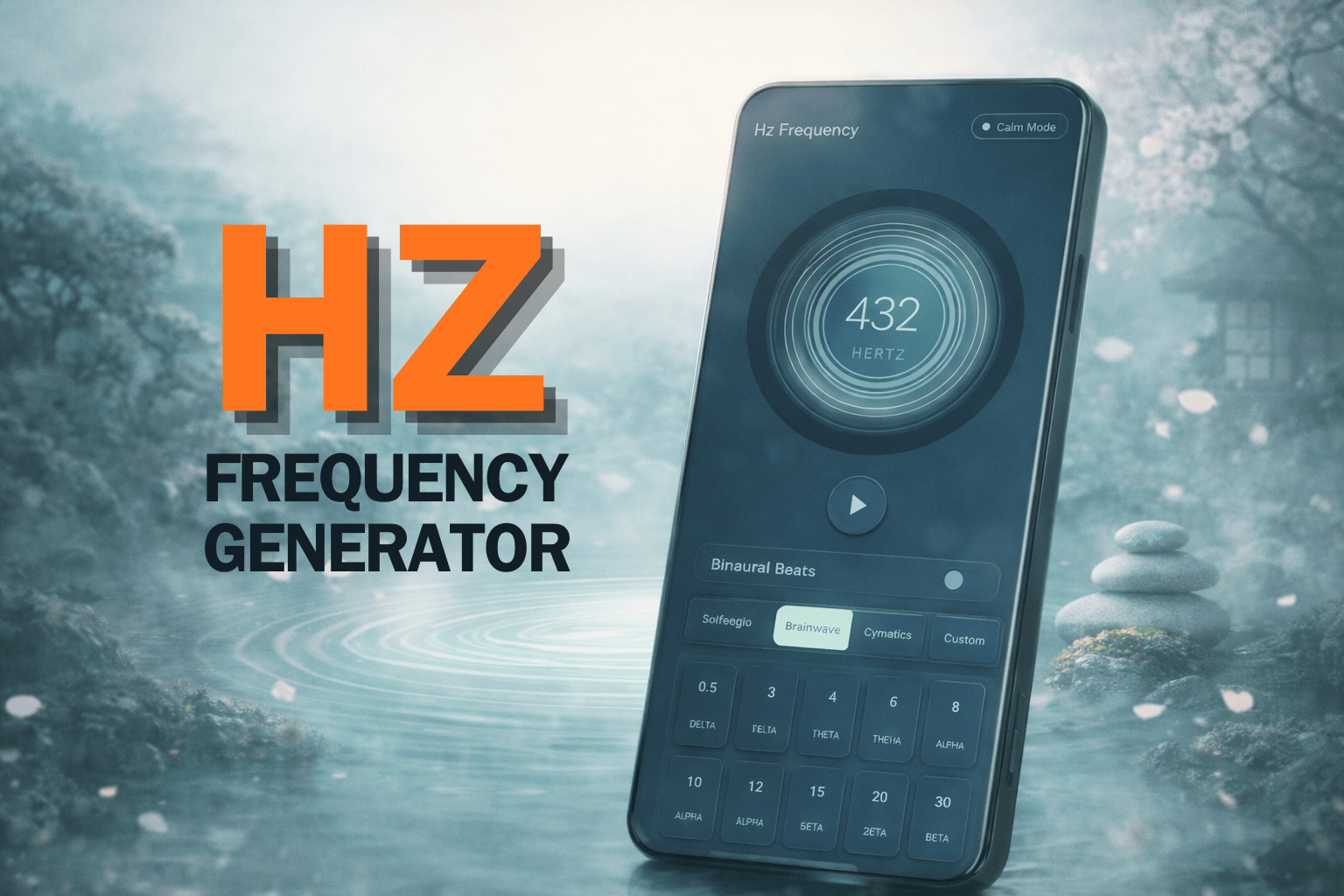
Instead of just believing what I’m saying, I want you to test it yourself tonight.
Here’s how to take full control.
Step 1: Generate Pure 3 Hz or 4 Hz Delta
Go to Hz Frequency Generator (Advanced).
What you can do there:
Click Brainwaves
- Manually enter 3 Hz or 4 Hz
- Choose binaural beats mode
- Adjust carrier tone
- Control volume precisely
- Remove all background music
- Check different frequencies and find out your hearing limit
- Check which frequency resonates with you
This lets you experience actual delta stimulation – not just relaxing music with a “3 Hz” label.
What to observe:
- Do your thoughts slow down?
- Does your breathing deepen?
- Do your eyelids feel heavy?
- Do you drift faster than usual?
Now switch to 4 Hz and compare.
Notice the difference.
3 Hz usually feels heavier.
4 Hz often feels smoother and easier for sleep onset.
That’s real experimentation.
Step 2: Add Noise Support (If You Wake Up at Night)

If outside sounds wake you up, go to:
White Noise & Binaural Beats Generator Free
There you can:
- Add pink noise
- Add white noise
- Combine it with 3 Hz or 4 Hz
- Adjust both volumes separately
Many light sleepers in the US find:
3 Hz + Pink Noise = deeper, more stable sleep
4 Hz + Fan sound = smoother transition
You’re not guessing anymore.
You’re building your own sleep system.
Binaural Beats vs White Noise vs Pink Noise
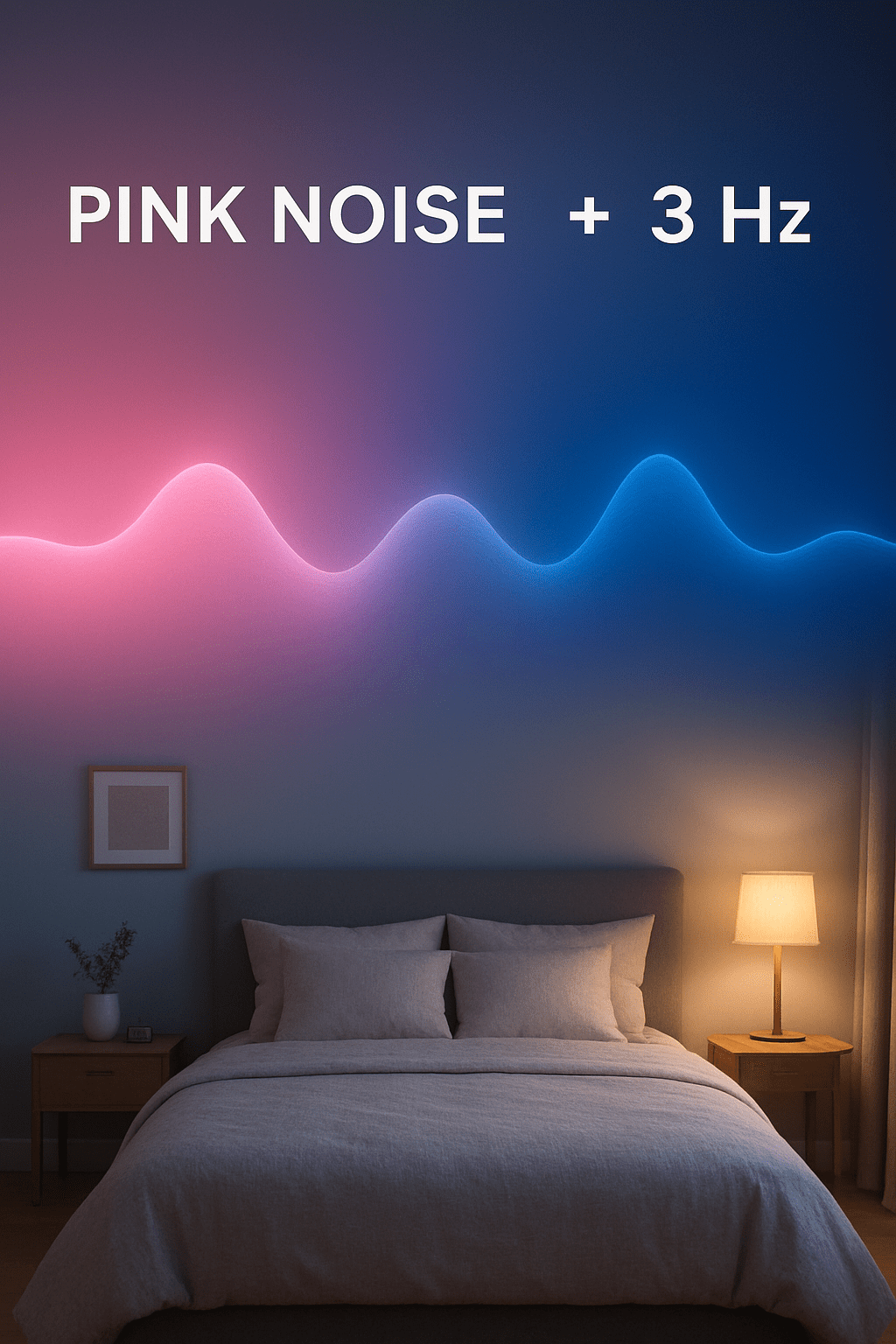
These all serve different purposes.
Binaural Beats (3-4 Hz)
- Designed to influence brainwave patterns
- Require headphones
- Target delta sleep stages
White Noise
- Masks background sounds
- Good for noisy environments
- Doesn’t target brainwaves directly
Pink Noise
- Softer, deeper than white noise
- May improve sleep stability
- Good for light sleepers
Many adults in the US combine:
- Delta frequency + pink noise
- Or delta + gentle fan sound
There is no one-size-fits-all. That’s why control is powerful.
If You Want a Simpler Option (Preset Mode)

If you don’t want to manually enter frequencies at first, you can start with:
This lets you:
- Quickly test common frequencies
- Switch between them easily
- Compare how each one feels
Think of it as your testing lab.
Once you notice which frequency feels best, then move to the Hz Frequency Generator (Advanced). or 🎛 Medihertz Studio (Advanced) for full control.
How to Take Full Control of Sleep Frequencies
Instead of relying on random YouTube uploads, you can use a frequency generator.
With a proper frequency tool, you can:
- Enter 3 Hz or 4 Hz manually
- Adjust binaural beat settings
- Use white noise generator
- Use pink noise generator
- Add sea waves or wind sounds
- Play OM sound
- Run it all night safely at low volume
This gives you full transparency.
You know exactly what you’re listening to.
You can feel and observe how your body responds.
That’s a completely different experience from passive listening.
Why Exploring Frequencies Can Change Your Sleep
When you experiment safely, you may discover:
- 3 Hz helps your physical recovery
- 4 Hz helps you fall asleep faster
- Pink noise prevents wake-ups
- A steady fan sound reduces anxiety
- OM sound helps slow breathing
Instead of chasing claims online, you build your own sleep system.
That’s where real improvement happens.
Sleep is personal.
Your brain responds to consistency, calmness, and gentle stimulation – not hype.
So What Is the Best Hz for Sleep?
For most adults:
- 3 Hz → strongest for deep sleep recovery
- 4 Hz → best for smooth transition into sleep
- 432 Hz → good for relaxation, not deep delta stimulation
The real answer is not just the number.
It’s control, consistency, and awareness.
What About OM Sound for Sleep?
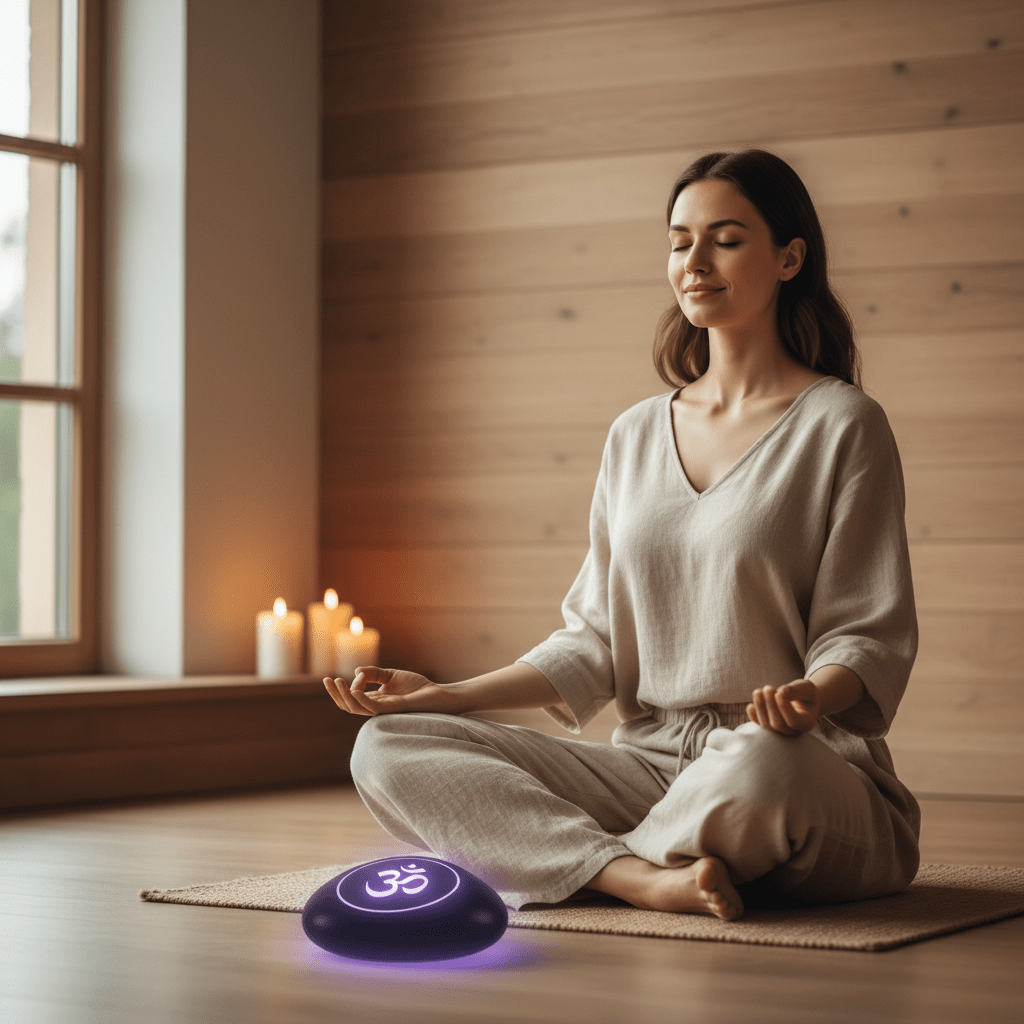
Some people can’t sleep with pure tones.
If that’s you, try:
OM is not a delta frequency.
But the steady vibration can:
- Slow breathing
- Calm racing thoughts
- Reduce stress before bed
A good strategy is:
10–15 minutes OM
Then switch to 3 Hz or 4 Hz delta overnight
This helps your nervous system transition naturally.
Ready to Sleep Faster? Try Nox Nidra by Medihertz
If you don’t want to manually test frequencies every night, there’s an easier way.
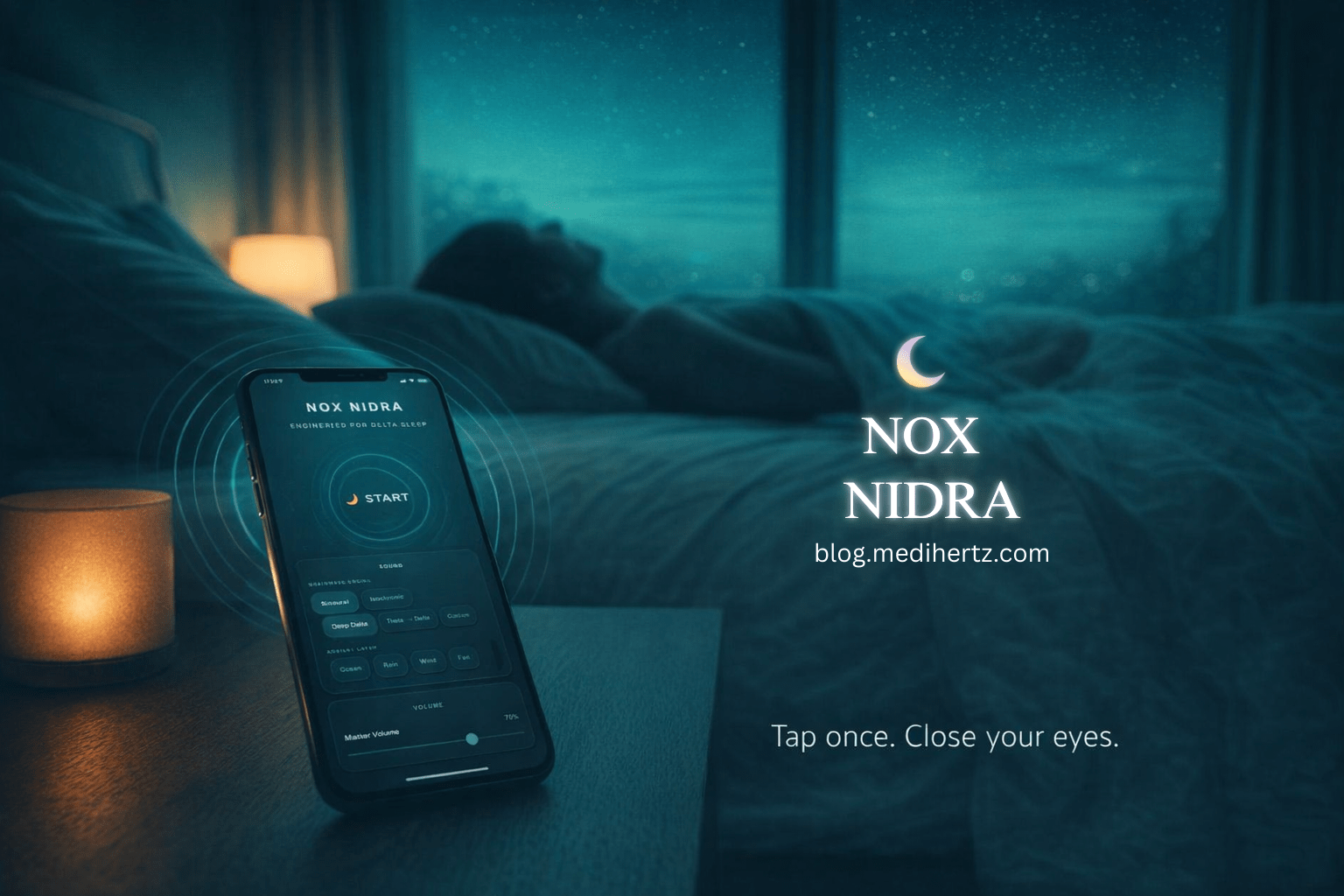
Nox Nidra is Medihertz’s dedicated online sleep tool designed specifically to help you fall asleep faster and stay asleep peacefully. Instead of guessing between 3 Hz, 4 Hz, pink noise, or OM sound, Nox Nidra blends delta support and calming audio into a simplified, sleep-focused experience.
It’s built for one purpose:
To help your nervous system slow down naturally.
With a clean interface and one-tap start, you can:
- Activate deep delta support
- Adjust volume safely
- Choose calming background layers
- Let it run quietly through the night
No complicated setup. No frequency confusion.
Just tap once. Close your eyes.
If your goal is deep, uninterrupted sleep without overthinking the science every night, Nox Nidra is worth trying. It’s designed for real-world sleep – not just theory.
Give it a try tonight and notice how your body responds.
Final Thought
Sleep frequencies are tools.
They are not magic.
They work best when:
- Used at low volume
- Played consistently
- Combined with good sleep habits
- Tested personally
If you want deeper sleep, start with 3-4 Hz delta support and adjust from there.
That’s how you move from random videos to intentional sleep optimization.
This article is for educational purposes, not medical advice.
Free Online Frequency & Interactive Tools – Medihertz Tools Hub
Frequently Asked Questions About Sleep Frequencies
Does 432 Hz make you sleepy?
432 Hz does not directly trigger deep sleep brainwaves like 3 Hz or 4 Hz.
However, many people find 432 Hz calming because it is used in relaxing music tuned slightly lower than standard 440 Hz.
It may reduce stress and help you unwind before bed, which indirectly makes falling asleep easier.
If you want to test it yourself, use Instant Hz Listener to compare 432 Hz with delta frequencies like 3 Hz or 4 Hz and notice how your body responds.
What is the best Hz for sleep?
For deep physical recovery, 3 Hz (delta range) is typically the strongest.
For smoother sleep transition, 4 Hz often works better.
For relaxation before sleep, 432 Hz may help calm the nervous system.
The best approach is personal testing using Hz Frequency Generator (Advanced) so you can compare them at low volume and observe what works for you.
Is 528 Hz good for sleep?
528 Hz is often called a “healing frequency,” but there is limited scientific evidence supporting deep sleep effects.
It may feel relaxing if used in music, but it does not directly target delta brainwaves like 3–4 Hz do.
If your goal is deep N3 sleep support, delta frequencies are more relevant.
Is 777 Hz good for sleep?
There is no strong evidence that 777 Hz directly improves sleep stages.
Some people associate 777 with spirituality or “angel numbers,” but from a brainwave perspective, it does not target delta sleep.
For real sleep depth, lower delta frequencies are more relevant.
Does 528 Hz really work?
“Working” depends on your goal.
If your goal is relaxation, maybe.
If your goal is deep delta sleep stimulation, 528 Hz does not target that brainwave range.
Always test for yourself rather than relying on online claims.
Is 432 Hz better than 440 Hz?
432 Hz and 440 Hz are tuning standards for music.
Some people claim 432 Hz feels warmer or softer, but scientifically, the difference is subtle.
Neither directly induces deep sleep like 3–4 Hz delta frequencies.
What is God’s frequency in Hz?
There is no scientifically proven “God frequency.”
Terms like 528 Hz, 963 Hz, or 777 Hz are often used in spiritual communities, but they are not medically recognized sleep frequencies.
It’s important to separate spiritual symbolism from neurological effects.
Can I listen to 963 Hz while sleeping?
You can, but 963 Hz does not target deep delta brainwaves.
If the sound is comfortable and low volume, it is generally safe.
If your goal is physical recovery sleep, delta frequencies are more relevant.
Can I sleep with 852 Hz?
Yes, as long as the volume is low and comfortable.
852 Hz is often associated with spiritual themes, not deep sleep stimulation.
If you feel relaxed using it, that matters more than the number itself.
What does 777 Hz do to the brain?
There is no strong scientific evidence that 777 Hz changes brainwave states.
Any effect is likely psychological or emotional rather than neurological delta stimulation.
What is the 10 4 3 2 1 sleep rule?
The 10-4-3-2-1 rule is a sleep hygiene method:
-
10 hours before bed: no caffeine
-
4 hours before bed: no heavy meals
-
3 hours before bed: no alcohol
-
2 hours before bed: no work
-
1 hour before bed: no screens
This often improves sleep more reliably than any frequency alone.
What Hz is Jesus?
There is no verified frequency associated with Jesus.
Online claims connecting religious figures to specific Hz numbers are symbolic, not scientific.
Is 777 good or bad luck?
777 is considered a lucky number in many cultures.
However, it has no proven neurological effect on sleep.
How do I activate 100% brain power?
The idea of using only 10% of your brain is a myth.
Brain imaging shows we use multiple areas of the brain throughout the day.
Healthy sleep, exercise, nutrition, and learning are far more effective than listening to a specific frequency.
What is the difference between 852 Hz and 963 Hz?
Both are part of the “Solfeggio frequency” system used in spiritual music traditions.
Neither directly targets delta brainwaves responsible for deep sleep.
The difference is mainly symbolic and tonal, not medically established.
Why does 852 Hz quiet my brain?
If 852 Hz feels calming, it may:
-
Slow breathing
-
Reduce mental chatter
-
Create a meditative state
The effect is subjective.
If it works for you, that’s valuable — but it’s not the same as delta sleep induction.
What is the healthiest noise to sleep to?
For many adults:
Pink noise is considered healthier than white noise because it is softer and deeper.
It may help stabilize sleep and reduce awakenings.
You can test pink noise and combine it with 3-4 Hz using White Noise & Binaural Beats Generator Free to see what feels best.
What is the dark side of binaural beats?
Potential downsides include:
-
Headaches if volume is too high
-
Discomfort without headphones
-
Overstimulation if used excessively
They are generally safe at low volume, but should not replace medical treatment.
Can listening to 852 Hz hurt your ears?
The frequency itself does not damage hearing.
High volume does.
Always keep sound at a low, comfortable level.
How long should I listen to 852 Hz?
You can listen:
-
20–30 minutes before sleep
-
Or all night at very low volume
If testing different frequencies, start short and observe your response.
Does 852 Hz remove negative energy?
There is no scientific evidence that any frequency removes “negative energy.”
However, if a sound helps you relax and feel calm, that psychological effect can improve your mood and sleep.
🔗 Explore More Medihertz Tools
🔊 Healing Frequency ToolS
- Vocal Pitch & Ear Scale Trainer
- Find Your Tinnitus Frequency Online
- TuneNaad 🎸
- Daily Weight Loss Frequencies
- Instant Hz Listener
- Hz Frequency Generator (Advanced)
- Find Your Tinnitus Frequency Online
- Om Chanting Meditation Tool
- CatPurrTone Tool
- Third Eye & Chakra Alignment Frequency Tool
- SENCAR Focus Waves for Driving, Travel & Long Focus Sessions 🔴🚘
- TradeMind Frequency Analyzer – for Traders
- White Noise & Binaural Beats Generator Free
- CampHertz: A Camping Sound Guard for Night Protection
Utility Tools
- Calm Online Notepad with Auto Save
- CalmMind Quiz
- Manifestation Tools
- Magic Ball Prediction Tool
Related 👇
- Kozyrev Mirror vs Mirror Meditation: Why You Don’t Need a Lab to Explore Consciousness
- How to Build a Kozyrev Mirror Step by Step Guide.
- What Does a Kozyrev Mirror Do? The Complete Guide
Most Read 👇
- 2026 Will Change Everything: What Your Life Path Number Must Prepare For
- The One Frequency You Must Avoid in 2026 (Based on Your Birth Number)
- Peer Pressure: What It Is, How to Identify It, and How to Overcome It
- What Is Walmart’s DEI Program? (Diversity, Equity & Inclusion Explained)
- 3I/ATLAS: Is the Interstellar Object Alien Technology?
- Mystery From the Sky: The Buga Sphere Appears in ColombiaOumuamua: The Mysterious Interstellar Visitor and the Cosmic Message in Prashyant Jha’s Song
- Hz Frequency Generator- Free Online Tone Generator
Frequency Articles- 👇
- 👉Complete Guide to Brainwave Frequencies (Hz Explained Simply)
- 👉 The One Frequency You Must Avoid in 2026 (Based on Your Birth Number)
- 👉What is the science behind sound bowls?
- 👉What is 7 Hz good for? A careful, evidence-based guide (with references)
- 👉Cymatics: From 2D Sand Patterns to 3D Sound Sculptures
- 👉 Hz Frequency Generator- Free Online Tone Generator
- 👉 What Frequencies Are Dangerous to Humans? Understanding Risks from Sound to Radiation
- 👉How to do a Cymatic Experiment
- 👉What is the science behind cymatics?
- 👉 NASA-Approved 30-Min Brain Boost
- 👉 What Is The Healing Power Of Sound Wave
- 👉 What does 528 hz do to the brain?
- 👉 The 7 Healing Frequencies: Unlocking the Power of Sound for Wellness
- 👉 The Sacred Science of Yantras: How Cymatics Validates Ancient Tantric Geometry
- 👉 Is 1111 a Lucky Number? A Deep Dive into Its Mystical, Numerological, and Cultural Significance
- 👉 Is 528 Hz Dangerous?
- 👉Delta Waves (0.5–4 Hz): Effects on Mind, Sleep, and Spiritual Energy
- 👉What Happens to Your Brain at 1 Hz Frequency?
- 👉Complete Guide to Brainwave Frequencies (Hz Explained Simply)
- 👉 White Noise for Sleep – Fall Asleep Fast (Free Online Tool)
- 👉 Is It Good to Sleep With White Noise? (Simple Guide for Better Sleep)