
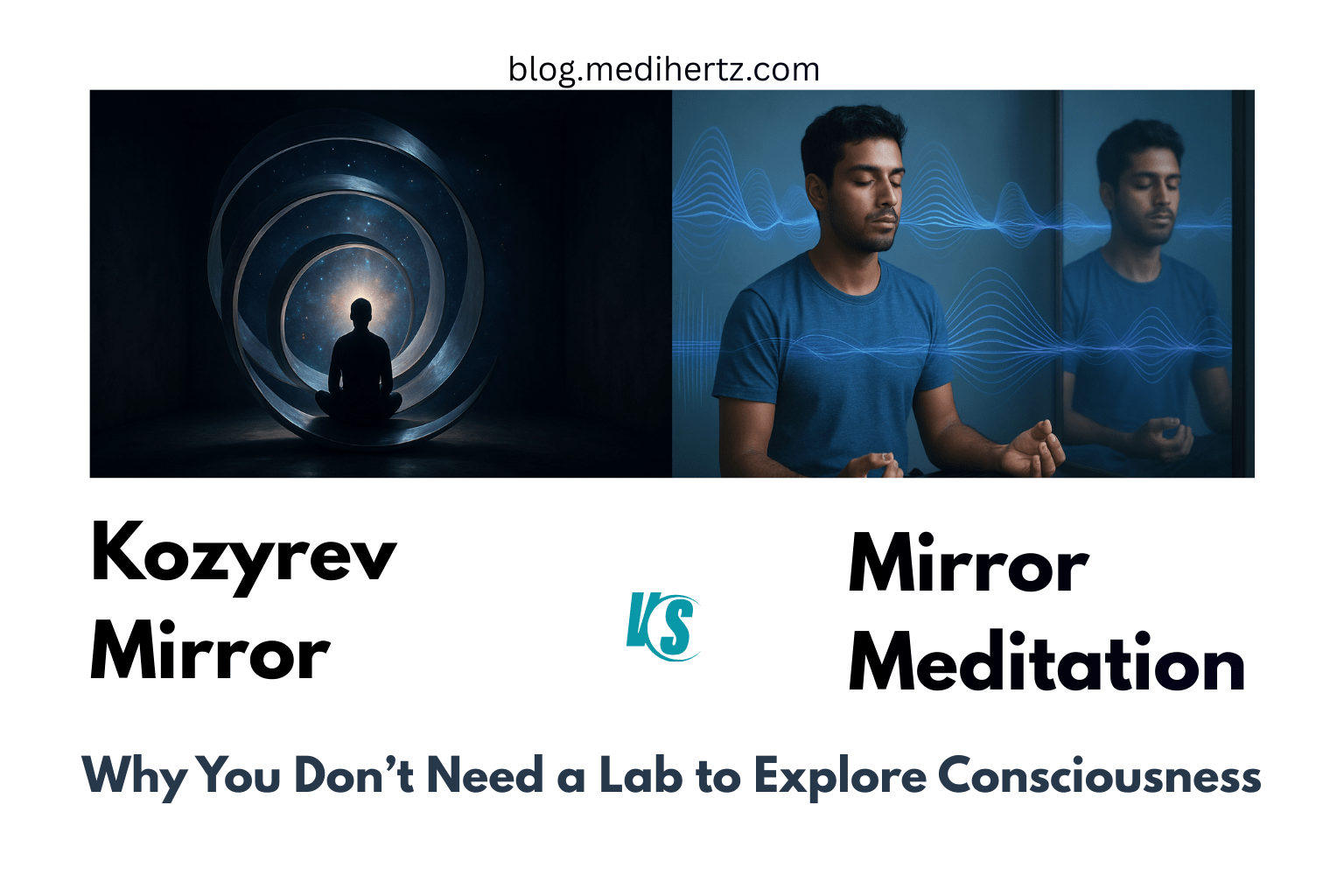
Kozyrev Mirror vs Mirror Meditation: Why You Don’t Need a Lab to Explore Consciousness
For decades, the Kozyrev Mirror experiment fascinated scientists and spiritual seekers alike.
People sat inside curved metallic mirrors, believing the setup could amplify awareness, perception, and inner experiences.
But here’s the truth most people miss:
You don’t need a scientific chamber to explore your inner world.
What matters is attention, reflection, and frequency — and all three already exist in mirror meditation.
This article explains the difference, the connection, and how you can begin mirror meditation with frequencies today, safely and intentionally.
What Is the Kozyrev Mirror? (Simple Explanation)
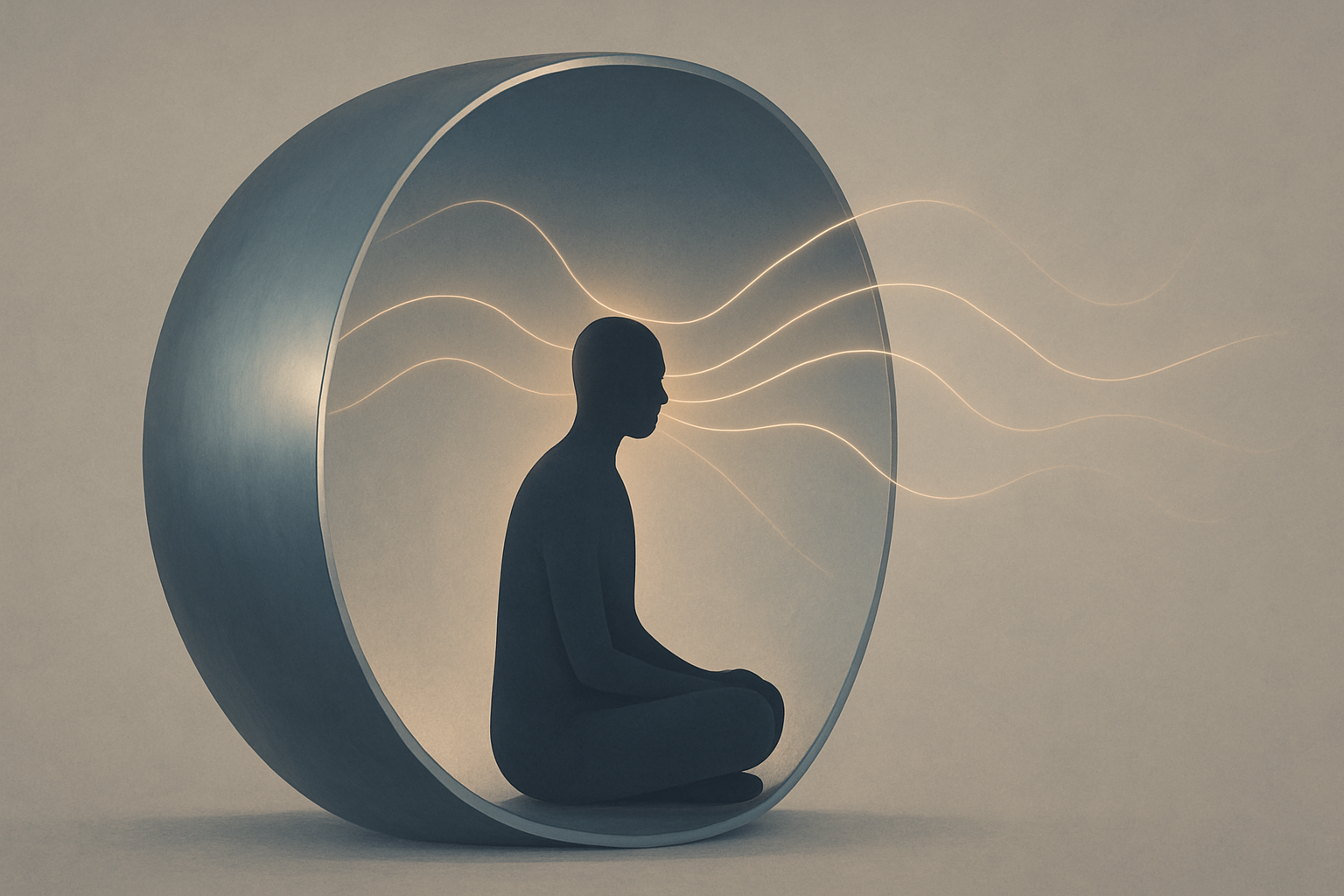
The Kozyrev Mirror was an experimental setup using curved reflective metal surfaces.
The idea was that:
-
Reflection could influence perception
-
Isolation could heighten awareness
-
The environment could focus the mind inward
Whether scientific or symbolic, one thing is clear:
The Kozyrev Mirror wasn’t about metal — it was about focused consciousness.
What Is Mirror Meditation? (Modern, Human Version)
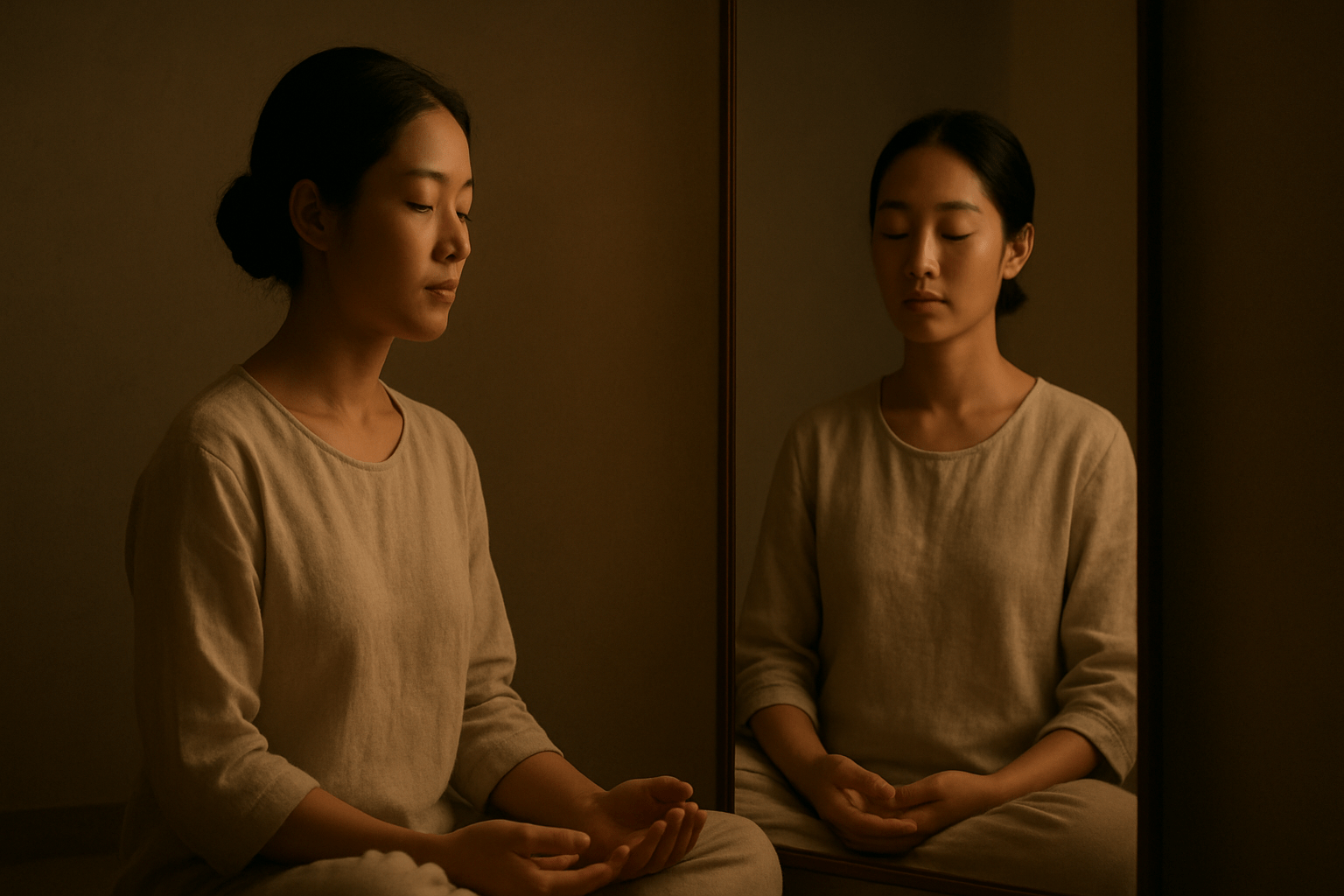
Mirror meditation is much simpler and more accessible.
You sit calmly, look into a mirror, and:
-
Observe your face
-
Observe emotions without judgment
-
Stay present with your reflection
Psychology shows that mirror meditation can:
-
Increase self-awareness
-
Surface subconscious emotions
-
Improve emotional regulation
-
Strengthen mindfulness
No lab. No isolation chamber. Just you and awareness.
The Key Difference: Structure vs Awareness
| Kozyrev Mirror | Mirror Meditation |
|---|---|
| External structure | Internal focus |
| Physical enclosure | Psychological reflection |
| Experimental setup | Mindful practice |
| Rare & inaccessible | Immediate & personal |
But here’s where it gets interesting 👇
The Missing Link: Frequency

Both practices work on the same principle:
When the mind slows down, awareness deepens.
This is where frequencies come in.
Your brain naturally operates in frequencies:
-
Fast = alert, stressed
-
Slow = calm, reflective, intuitive
Using sound frequencies during mirror meditation can guide the mind into the right state faster.
Using Frequencies During Mirror Meditation (Practical Guide)
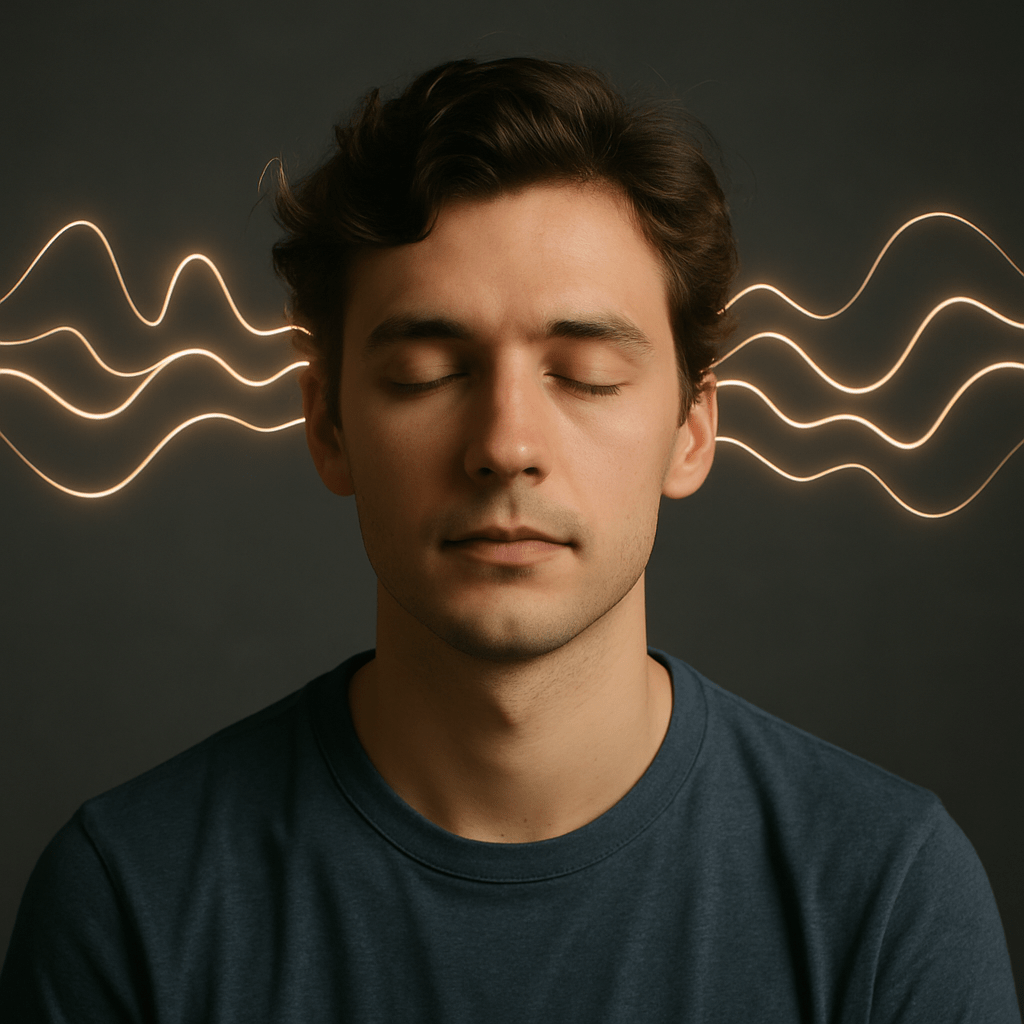
You don’t need belief.
You need experience.
Here’s how different frequencies can support mirror meditation:
🟢 432 Hz – Emotional Calm & Grounding
Best for beginners.
Helps reduce inner resistance and self-judgment.
👉 Use when you feel anxious or restless.
🔵 528 Hz – Emotional Release & Self-Connection
Often associated with emotional balance.
Helps soften the inner critic.
👉 Use when mirror meditation feels uncomfortable at first.
🟣 396 Hz – Letting Go of Guilt & Fear
Helpful when old emotions surface while looking at yourself.
👉 Use if mirror meditation brings up heaviness.
🌙 174 Hz – Deep Relaxation & Safety
Very gentle, grounding frequency.
👉 Use for night meditation or first-time sessions.
Why Mirror Meditation + Frequency Is Powerful
Looking at yourself already activates:
-
Self-perception
-
Emotional memory
-
Awareness
Adding frequency:
-
Calms mental noise
-
Reduces overthinking
-
Helps the nervous system relax
-
Allows deeper observation without fear
This combination creates a natural amplification effect, similar in intention — but safer and more personal — than the Kozyrev Mirror setup.
Why the Medihertz Frequency Generator Is Different
Most tone generators are designed for:
-
Music testing
-
Speaker calibration
-
Sharp, aggressive sound output
That’s not ideal for meditation.
Your frequency generator is different because:
✔ Raw, clean tones
✔ No musical distraction
✔ No artificial rhythm
✔ Suitable for meditation, cymatic experiments, and focused listening
✔ Designed for stillness, not stimulation
This matters because:
Meditation requires clarity, not entertainment.
How to Start Mirror Meditation With Frequency (Today)
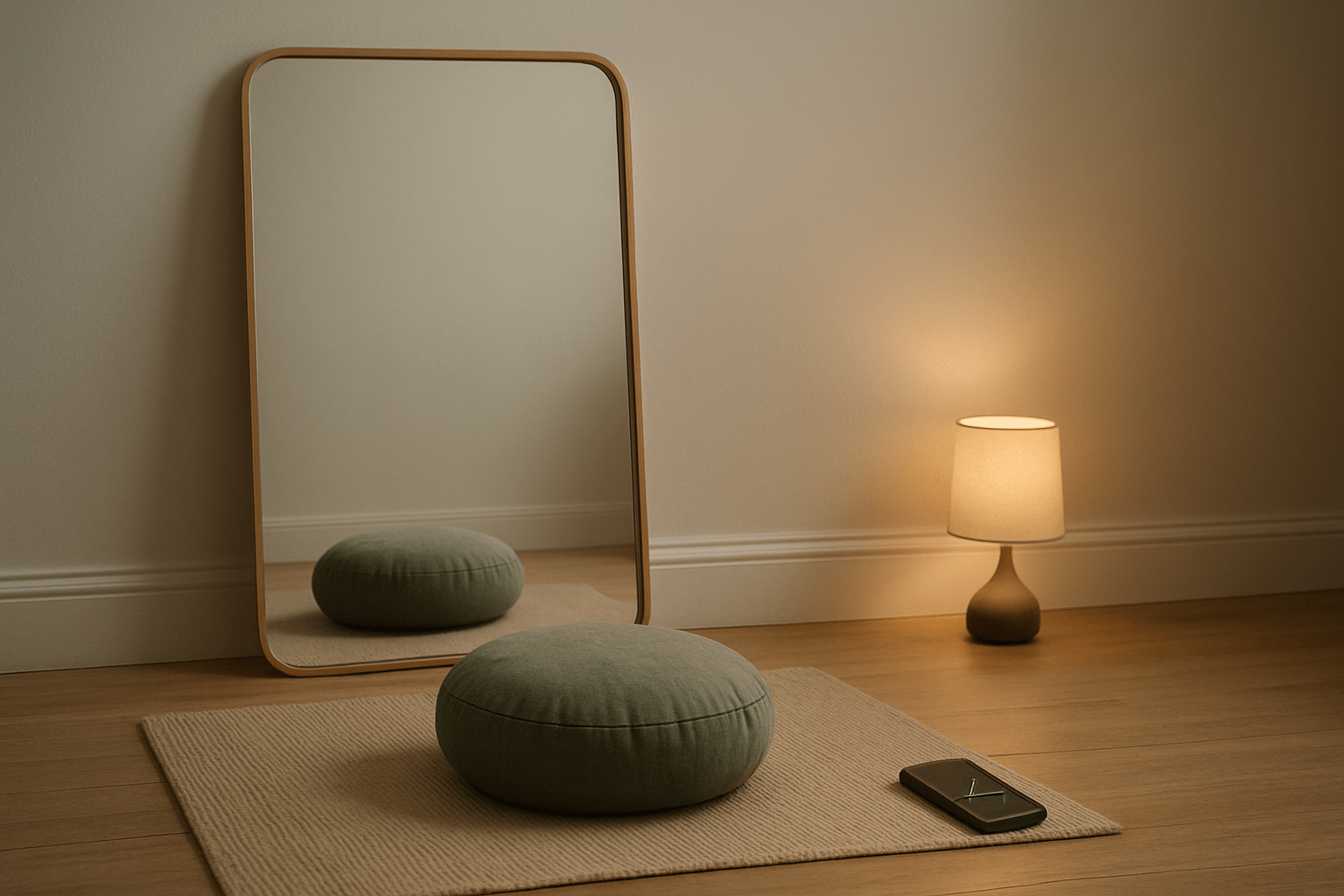
You can begin right now.
Step-by-step:
-
Sit comfortably in front of a mirror
-
Dim the lights
-
Play one frequency (low volume)
-
Look gently into your eyes
-
Breathe slowly
-
Observe — don’t analyze
-
Stop after 5–10 minutes
That’s it.
No forcing.
No expectations.
No fear.
Important Reminder: What This Practice Is NOT
-
It is not hypnosis
-
It is not mind control
-
It is not supernatural
-
It is not medical treatment
It is self-awareness through stillness.
Some people feel calm.
Some feel emotional.
Some feel nothing at first.
All responses are normal.
How Any Meditation Deepens Connection With the Inner Self (Including Mirror Meditation)
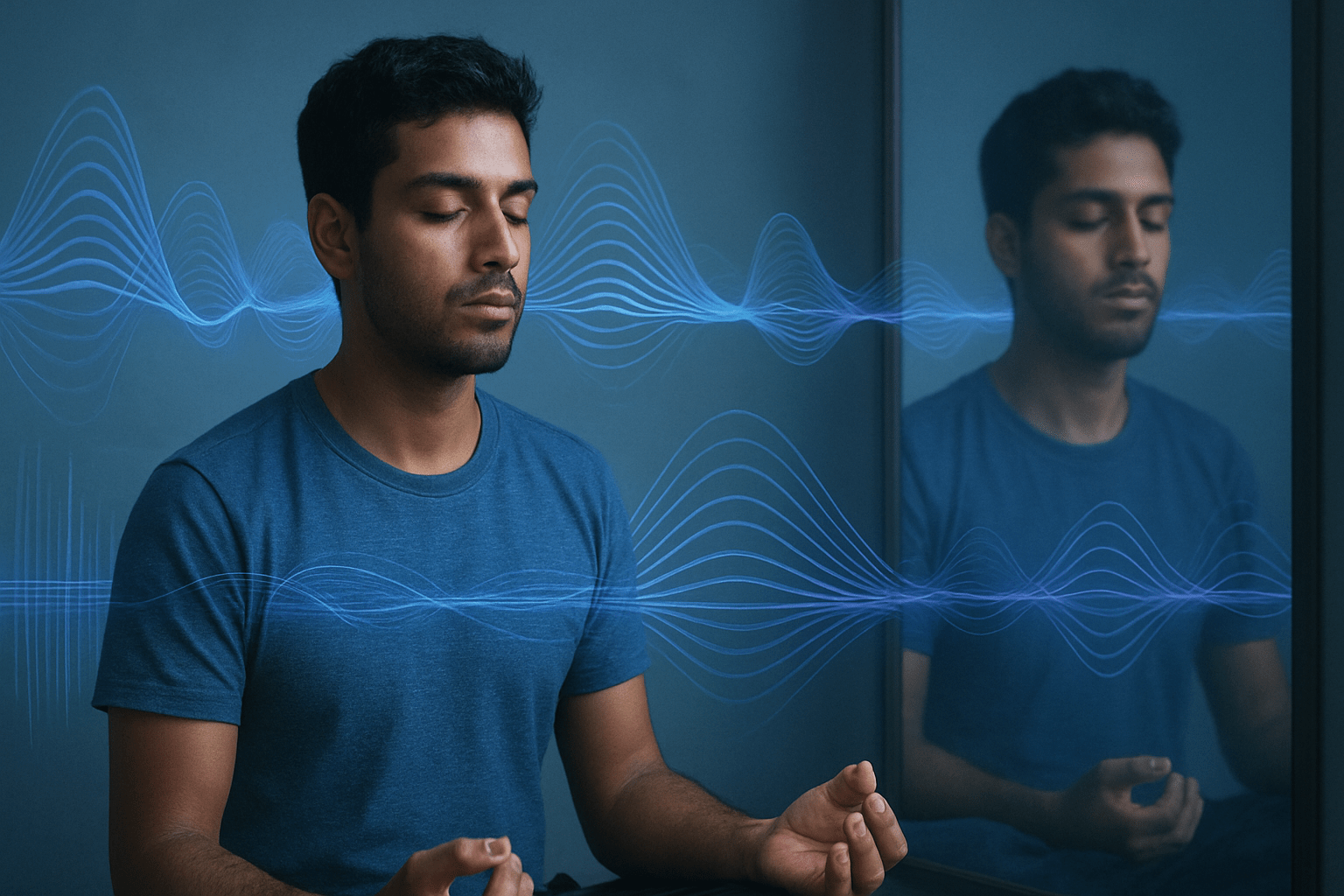
At its core, all meditation practices work toward the same direction —
they quiet the surface mind and allow awareness to move inward.
Mirror meditation simply makes this process more visible and immediate.
When practiced consistently, many people experience a gradual deepening of self-connection, often described in spiritual language as:
-
Increased self-awareness
-
Chakra sensitivity
-
Inner stillness
-
Heightened focus
-
Subtle kundalini-like energy awareness
These experiences do not happen suddenly or dramatically.
They unfold naturally, layer by layer.
Kundalini Activation: What People Actually Experience (Realistic Perspective)

Kundalini is often misunderstood as a sudden explosive event.
In most meditation practices, kundalini activation is subtle, not dramatic.
People commonly report:
-
A gentle sense of energy moving upward
-
Warmth or tingling along the spine
-
Increased sensitivity to breath and posture
-
Heightened awareness in the body
-
A feeling of inner alignment
Psychological and spiritual insight:
True kundalini awakening is about awareness, not force.
Mirror meditation supports this by:
-
Keeping attention present
-
Reducing mental distraction
-
Anchoring awareness in the body and breath
Frequencies may help reduce resistance, making the process feel smoother and calmer.
Chakra Activation Through Meditation (Mirror + Stillness)
Chakra activation does not mean “opening” something forcefully.
It usually appears as increased awareness in certain areas.
Over time, people may notice:
🔴 Root Chakra
-
Feeling more grounded
-
Reduced anxiety
-
Greater sense of safety
🟠 Sacral Chakra
-
Emotional clarity
-
Reduced emotional suppression
-
Increased creativity or emotional flow
🟡 Solar Plexus Chakra
-
Improved confidence
-
Stronger personal boundaries
-
Clearer sense of self
💚 Heart Chakra
-
Increased compassion
-
Emotional release
-
Reduced emotional heaviness
🔵 Throat Chakra
-
More honest self-expression
-
Reduced fear of speaking truth
-
Inner clarity
🟣 Third Eye & Crown
-
Deeper focus
-
Inner silence
-
Expanded awareness
-
Reduced attachment to thoughts
Mirror meditation enhances this by keeping attention steady, while frequencies may help maintain calm and focus.
Increased Self-Awareness and Inner Stillness
As meditation deepens, people often report:
-
Longer moments of silence between thoughts
-
Increased awareness of emotional reactions
-
Reduced impulsive behavior
-
Clearer observation of inner patterns
This is often described as:
“I feel more still, even when life is busy.”
Stillness is not emptiness.
It is alert calmness.
Deep Focus and Mental Clarity
With consistent practice:
-
Focus becomes effortless
-
Distractions lose intensity
-
Thoughts slow down naturally
-
Awareness becomes more stable
This is why many traditions use:
-
Breath
-
Mantras
-
Visual focus
-
Frequencies
All of them guide the mind toward single-pointed awareness.
Mirror meditation simply adds self-reflection to the process.
The Real Transformation Happens Gradually
Whether through:
-
Kundalini awareness
-
Chakra sensitivity
-
Inner stillness
-
Deep focus
-
Self-observation
The real change is not mystical.
It is this:
You become less reactive and more aware.
That is the foundation of all genuine spiritual growth.
A Grounded Reminder
-
Not everyone feels energy
-
Not everyone experiences chakras consciously
-
Progress is internal, not performative
-
Silence itself is progress
Meditation is not about chasing experiences.
It is about becoming present enough to notice what is already there.
Kozyrev Mirror vs Mirror Meditation: Final Insight
The Kozyrev Mirror pointed people inward using structure.
Mirror meditation does the same using presence.
Frequencies don’t replace awareness — they support it.
And the most powerful experiment is the one you can repeat safely, daily, and consciously.
Final Thought: Begin Before You Overthink
You don’t need proof to begin.
You don’t need permission to explore yourself.
Sit.
Breathe.
Listen.
Observe.
The mirror will reflect more than your face —
it reflects your current state of awareness.
FAQ: Kozyrev Mirror, Mirror Meditation & Frequency-Based Practice
❓ Is the Kozyrev Mirror real?
The Kozyrev Mirror is a real physical structure that was built and experimented with in Russia, inspired by the theories of astrophysicist Nikolai Kozyrev.
However, its claimed effects on time, consciousness, and perception are not scientifically proven by modern standards. Most explanations today fall into the areas of experimental psychology, perception, and consciousness studies, rather than accepted physics.
❓ Who was Kozyrev?
Nikolai Kozyrev was a Russian astrophysicist known for his unconventional ideas about time, energy, and causality.
He proposed that time itself might be an active force, not just a measurement. His theories influenced later consciousness and perception experiments, including those involving reflective environments like the Kozyrev Mirror.
❓ What is the Kozyrev theory in simple words?
Kozyrev’s theory suggests that time is not passive, but can interact with matter and consciousness.
Supporters believe that certain environments — like reflective, enclosed mirror structures — may amplify human perception or awareness.
Science considers this theory speculative, but it remains influential in alternative research.
❓ How do Kozyrev Mirrors work (according to supporters)?
According to supporters, Kozyrev Mirrors:
-
Create a highly reflective, enclosed space
-
Reduce external sensory distractions
-
Increase internal focus and awareness
From a psychological view, these effects can be explained by sensory isolation, expectation, and deep concentration, which are known to alter perception.
❓ Can you build a Kozyrev Mirror at home?
A true Kozyrev Mirror requires large curved metal sheets and controlled conditions, so it’s not practical or safe for home use.
However, mirror meditation offers a safe and accessible alternative that uses similar principles:
-
Reflection
-
Focus
-
Stillness
-
Reduced external distraction
❓ What is mirror meditation?
Mirror meditation is a practice where you sit calmly and look at your own reflection while maintaining relaxed awareness.
Instead of judging your appearance, you observe:
-
Your eyes
-
Facial expressions
-
Thoughts and emotions that arise
The mirror becomes a tool for self-awareness, not vanity.
❓ What happens if I look in the mirror for 10 minutes during meditation?
Many people report:
-
Increased self-awareness
-
Emotional release
-
Altered perception of facial features
-
Deeper focus or stillness
Psychology explains this as a result of sustained attention and reduced mental distraction, not something supernatural or harmful.
❓ What happens when you meditate in front of a mirror regularly?
With consistent practice, users often notice:
-
Better emotional regulation
-
Reduced inner resistance
-
Greater self-acceptance
-
Stronger mind–body awareness
Over time, mirror meditation can feel less intense and more calming as the mind adapts.
❓ Why are mirrors considered spiritual across cultures?
Mirrors symbolize:
-
Self-reflection
-
Truth
-
Awareness
-
Conscious observation
Many spiritual traditions view mirrors as tools that turn attention inward, which is why they’re often associated with meditation, rituals, and self-inquiry.
❓ Are mirrors 100% accurate?
Physically, mirrors reflect light accurately.
Psychologically, interpretation is subjective.
Your emotional state, expectations, and focus strongly influence what you perceive while mirror gazing, especially during meditation.
❓ Why do some traditions cover mirrors at night?
This belief comes from cultural and symbolic traditions, not science.
Mirrors were historically associated with:
-
Reflection of consciousness
-
Dreams and inner worlds
-
Vulnerability during sleep
There is no scientific evidence that uncovered mirrors cause harm.
❓ Can frequencies enhance mirror meditation?
Frequencies may help by:
-
Reducing mental noise
-
Supporting relaxation
-
Helping the mind stay focused
They do not create experiences on their own, but can support the meditative state, especially for beginners.
❓ What frequencies are commonly used during meditation?
Common meditation-supportive ranges include:
-
Lower frequencies for calm and grounding
-
Mid-range frequencies for focus
-
Stable continuous tones for deep stillness
The effect depends more on consistency and attention than on the exact number.
❓ Why use a raw frequency generator instead of music?
Raw frequency generators:
-
Reduce distraction
-
Provide a neutral auditory anchor
This makes them useful for:
-
Meditation
-
Mirror gazing
-
Cymatic and awareness experiments
❓ Can frequencies activate chakras during mirror meditation?
Frequencies do not “force” chakra activation.
What they may do is support awareness in certain areas, making sensations more noticeable during meditation. But the frequencies defiantly help. Every Practitioners have different experience, because frequencies are always spread across . with the help of tone generator, we get the power to focus a certain frequency for a certain amount of time time. You can experiment with it and share your experiences with the world.
Chakra experiences arise from focused awareness, not from sound alone.
❓ Is mirror meditation with frequencies safe?
For most people, yes — when practiced gently and without forcing experiences.
Best practices:
-
Sit comfortably
-
Keep sessions short at first (5–10 minutes)
-
Stop if discomfort arises
-
Focus on calm observation, not expectations
❓ Is mirror meditation similar to a quantum or magic mirror?
No mirror is “magic” in a scientific sense.
What changes is human perception.
Both Kozyrev Mirror experiments and mirror meditation work primarily by:
-
Reducing external distraction
-
Increasing internal awareness
-
Altering focus and perception
Final Reminder (Aligned With the Article)
Mirror meditation and frequency usage are tools, not guarantees.
The real power comes from:
-
Attention
-
Stillness
-
Consistency
-
Self-awareness
No mirror changes you —
your awareness does.
Disclaimer
This article is for educational purposes, not medical advice.
👉 Schumann Waves Generator Explained Simply: What It Is, How People Actually Use It, and Who It’s For
Related 👇
- Kozyrev Mirror vs Mirror Meditation: Why You Don’t Need a Lab to Explore Consciousness
- How to Build a Kozyrev Mirror Step by Step Guide.
- What Does a Kozyrev Mirror Do? The Complete Guide
Most Read 👇
- 2026 Will Change Everything: What Your Life Path Number Must Prepare For
- The One Frequency You Must Avoid in 2026 (Based on Your Birth Number)
- Peer Pressure: What It Is, How to Identify It, and How to Overcome It
- What Is Walmart’s DEI Program? (Diversity, Equity & Inclusion Explained)
- 3I/ATLAS: Is the Interstellar Object Alien Technology?
- Mystery From the Sky: The Buga Sphere Appears in ColombiaOumuamua: The Mysterious Interstellar Visitor and the Cosmic Message in Prashyant Jha’s Song
- Hz Frequency Generator- Free Online Tone Generator
Frequency Articles- 👇
- 👉Complete Guide to Brainwave Frequencies (Hz Explained Simply)
- 👉 The One Frequency You Must Avoid in 2026 (Based on Your Birth Number)
- 👉What is the science behind sound bowls?
- 👉What is 7 Hz good for? A careful, evidence-based guide (with references)
- 👉Cymatics: From 2D Sand Patterns to 3D Sound Sculptures
- 👉 Hz Frequency Generator- Free Online Tone Generator
- 👉 What Frequencies Are Dangerous to Humans? Understanding Risks from Sound to Radiation
- 👉How to do a Cymatic Experiment
- 👉What is the science behind cymatics?
- 👉 NASA-Approved 30-Min Brain Boost
- 👉 What Is The Healing Power Of Sound Wave
- 👉 What does 528 hz do to the brain?
- 👉 The 7 Healing Frequencies: Unlocking the Power of Sound for Wellness
- 👉 The Sacred Science of Yantras: How Cymatics Validates Ancient Tantric Geometry
- 👉 Is 1111 a Lucky Number? A Deep Dive into Its Mystical, Numerological, and Cultural Significance
- 👉 Is 528 Hz Dangerous?
- 👉Delta Waves (0.5–4 Hz): Effects on Mind, Sleep, and Spiritual Energy
- 👉What Happens to Your Brain at 1 Hz Frequency?
- 👉Complete Guide to Brainwave Frequencies (Hz Explained Simply)
- 👉 White Noise for Sleep – Fall Asleep Fast (Free Online Tool)
- 👉 Is It Good to Sleep With White Noise? (Simple Guide for Better Sleep)
Numerology 👇
- Decoding the Mystery: What Happens If You Write 690452 on Your Wrist?
- Is 1111 a Lucky Number? A Deep Dive into Its Mystical, Numerological, and Cultural Significance
- What Does 1 Mean In Numerology
- What Does 2 Mean In Numerology
- What Does Number 3 mean in Numerology
- What Does 4 Mean In Numerology
- What Does 5 Mean In Numerology
- What Does 6 Mean In Numerology
- What Does 7 Mean In Numerology
- What Does 8 Mean In Numerology
- What Does 9 Mean In Numerology
- How to Use the 5 Elements for Personal Growth in Numerology
- Name Numerology Calculator: How to use it.
People Also Read
- 2030 A Doomsday According to Indian Texts or Misinterpretation?
- The Glory of Narasimha Bhagwan: An Exploration of Ancient Indian History
- Medusa and Mansa Devi: The Untold Myths Connecting Greek and Hindu Traditions
- “The Enigmatic Link Between the Bermuda Triangle and Hindu Mythology of Ramayan: Unveiling the Mystery”
- why is mt. Kailash Considered to be a Sacred Site?
- How Eastern Wisdom Can Transform Your Modern Life.
- Lord Shani and Lord Yam : God of Karma for Living and Death
- In which direction Ganesh Idol should face.
- What is the logic for existence of God?
- Who Is Mahadev Shiv ?
- How to increase love for Krishna?
- Hanuman Chalisa English Lyrics| Bhajle Ram Naam | Prashyant Jha
Free AI Tools To test yourself
- Love Percentage Checker Tool – Check For Free!
- Soulmates Initial Finder
- Hz Frequency Generator- Free Online Tone Generator
- Mental Health Check In Tool [ FREE TEST ]
- Best Free Phone Photos Download
- Image Converter (Online & Free)
Seotoolrank.com Free Ai Tools
- RankVortex – Implies pulling traffic and SEO rankings toward you.
- How do I convert a PNG file to BMP?
- ConvertEase PDF
- Website Speed Checker Tool
- SEO Word Counter with Character Count
- Free Stopwatch and Online Timer Countdown
- Age Calculator Tool
- Password Generator Tool
- Qr Code Generator Free