
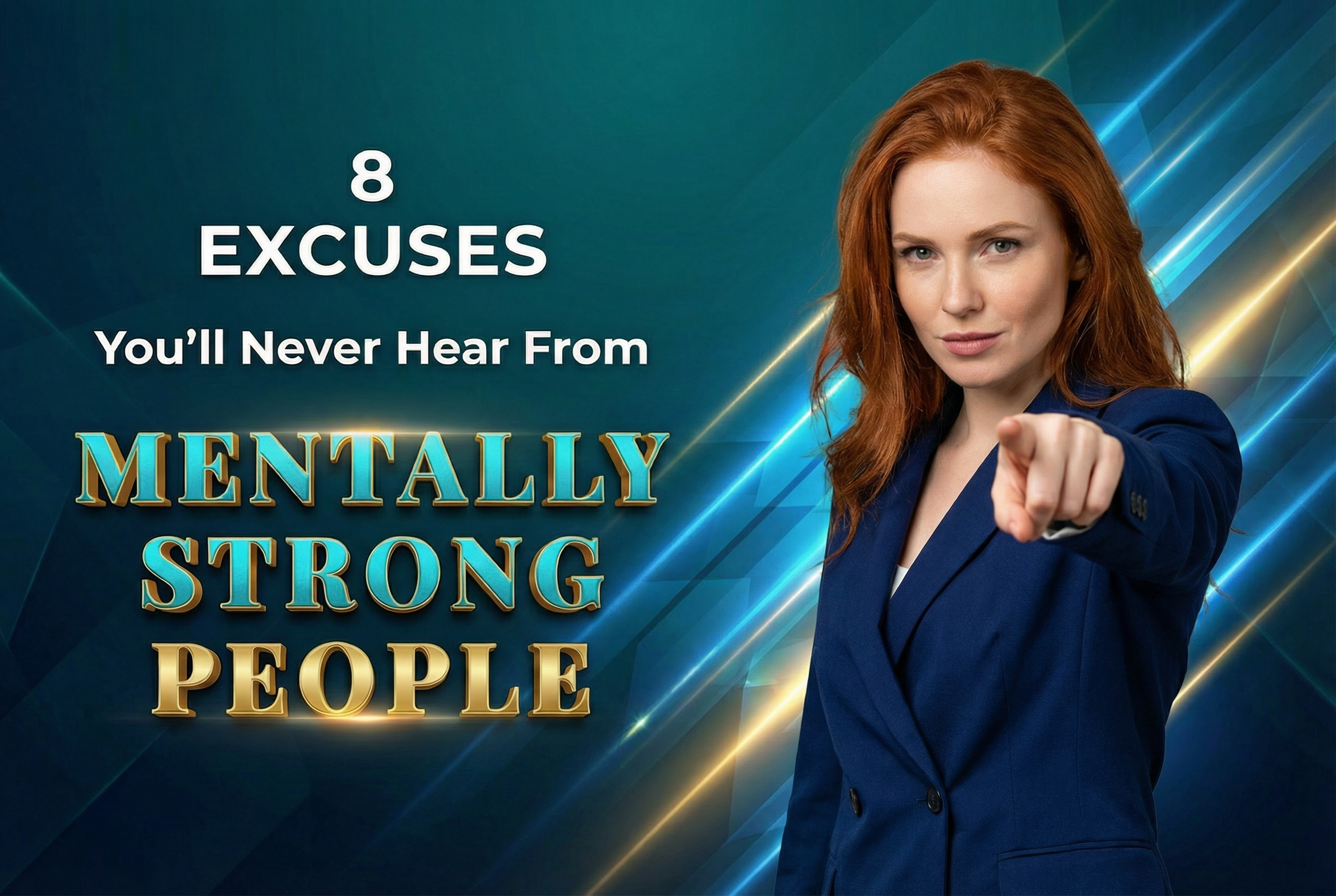
8 excuses you’ll never hear from someone who’s truly mentally strong
There’s always that one person who stays calm when everything is falling apart. They don’t overreact. They don’t spiral. And they don’t waste energy explaining themselves.
For a long time, I thought mental strength was a personality trait-something you’re either born with or not. I was wrong.
Mental strength isn’t about being tough all the time. It’s about what you stop saying to yourself.
Years ago, I noticed a pattern. The most grounded, resilient people around me weren’t using fancy affirmations or pretending life was easy. They had simply removed certain excuses from their inner dialogue. Once those excuses disappeared, clarity followed.
Here are eight excuses you’ll never hear from someone who’s truly mentally strong—and what they do instead.
1. Mentally Strong People are very clear with the phrase “I don’t have time for this”
Mentally strong people understand a simple truth:
Time is not found. It’s chosen.
When someone says they don’t have time to rest, reflect, or reset their mind, what they often mean is that they haven’t made it a priority.
Strong minds protect their mental energy the same way they protect their schedule. Even a few minutes of intentional calm-breathing, silence, or grounding sound-can reset the nervous system.
This is why short mental resets matter. Many people now use simple tools like a frequency tone generator for 5–10 minutes to calm their thoughts instead of scrolling endlessly. Strong people don’t wait for free time-they create it.
2. “That’s just how I am”
This sentence quietly kills growth.
Mentally strong people don’t confuse habits with identity. They understand that emotions, reactions, and even personality traits are patterns, not permanent labels.
Instead of saying:
“I’m just an anxious person”
They think:
“My nervous system is overstimulated-and I can regulate it.”
Growth begins the moment you stop defending your limitations.
3. “I’ll feel better when things improve”

This excuse keeps happiness permanently postponed.
Mentally strong people don’t wait for external conditions to settle before finding inner stability. They train their nervous system to feel safe now, not someday.
Calm isn’t a reward-it’s a skill.
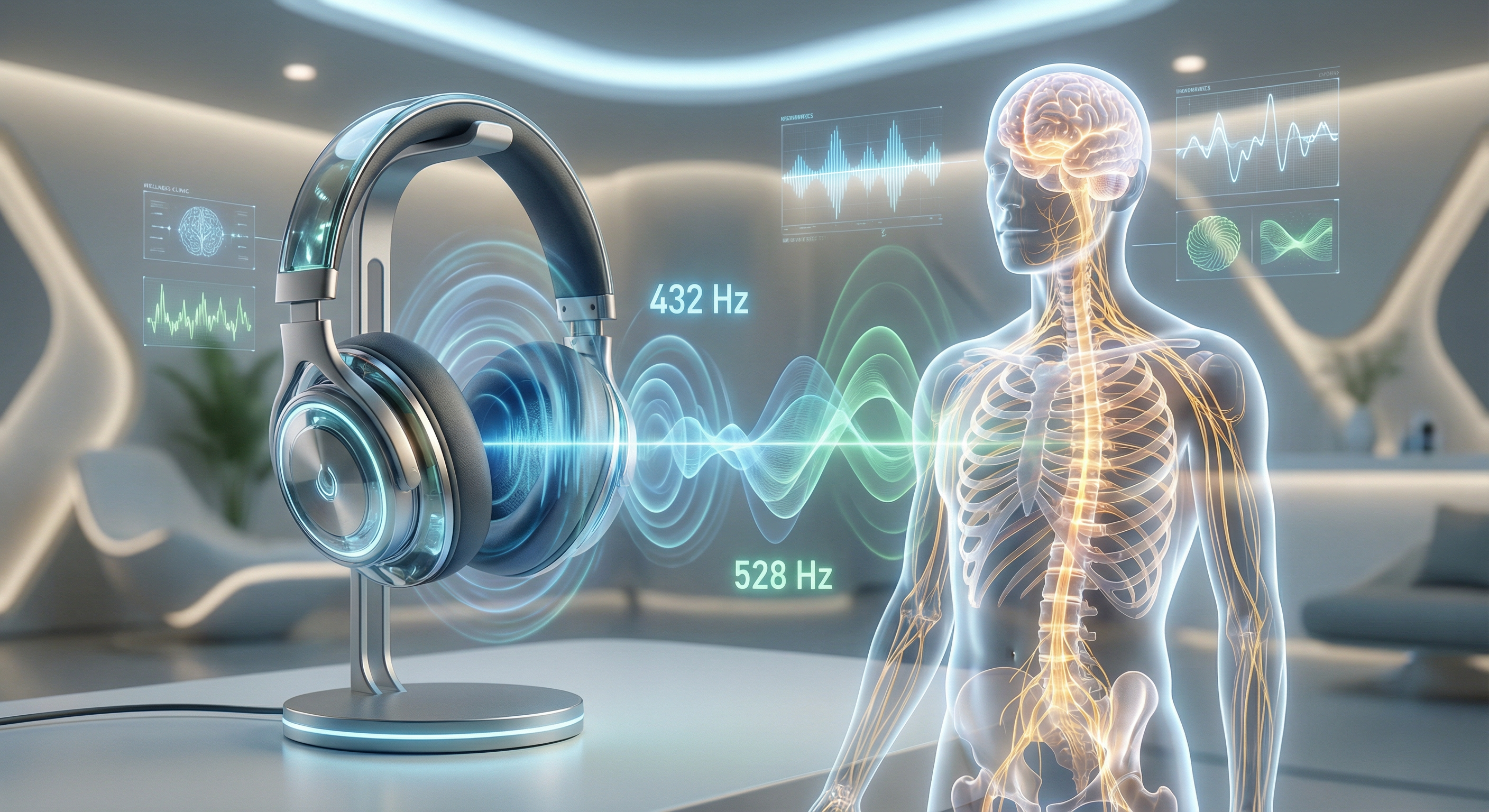
Many people discover that grounding sounds or steady tones (like 432 Hz or 528 Hz) help bring the mind back into the present moment. The goal isn’t escape-it’s regulation.
Strong people don’t delay peace. They practice it.
4. “It’s not my fault”

This one sounds reasonable-but it keeps people stuck.
Mentally strong individuals understand the difference between fault and responsibility. Something may not be your fault, but your response is always your responsibility.
Blame gives temporary relief. Responsibility gives power.
The moment you ask,
“What can I control right now?”
you step back into clarity.
5. “I’m too tired to deal with this”

Mental strength doesn’t mean pushing through exhaustion-it means knowing when your system needs resetting.
Strong people recognize emotional fatigue early. Instead of snapping, withdrawing, or numbing out, they pause.
They rest their mind before it breaks.
Even short grounding practices-silence, slow breathing, or calming frequency tones-can lower emotional reactivity. This isn’t weakness. It’s intelligent self-regulation.
6. “I don’t know where to start”

Mentally strong people don’t wait for clarity before action. They understand that clarity follows movement, not the other way around.
They start small:
• One boundary
• One honest conversation
• One calm breath
Momentum is built through motion, not overthinking.
7. “I’m waiting for the right moment”

There is no right moment—only readiness.
Strong minds don’t confuse fear with timing. They act imperfectly, adjust, and continue. Waiting for perfect conditions is often just fear wearing logic’s clothes.
Progress beats hesitation every time.
8. “Other people have it easier”

Comparison drains strength faster than failure.
Mentally strong people stay focused on their own lane. They know that unseen struggles exist behind every polished surface.
Instead of asking,
“Why them?”
They ask,
“What’s my next step?”
Energy flows where attention goes.
A simple daily mental reset (2 minutes)
Mentally strong people don’t rely on motivation—they rely on systems.
Try this once or twice a day:
• Sit comfortably
• Slow your breath
• Play a calming tone (432 Hz or 528 Hz works well) using a frequency generator
• Repeat silently:
“I respond with awareness, not emotion.”
This isn’t about belief. It’s about calming the nervous system so your mind can lead again.
Final thoughts

Mental strength isn’t loud. It doesn’t announce itself.
It shows up in pauses.
In restraint.
In the excuses you no longer use.
When you stop feeding your mind stories that weaken you-and start regulating your inner state-everything changes.
You don’t need to become someone new.
You just need to stop repeating the excuses that keep you stuck.
And once you do, you’ll realize:
calm isn’t passive-it’s power.
Frequently Asked Questions (FAQ)
What is a mentally strong person?
A mentally strong person is someone who can manage their emotions, stay calm under pressure, and respond thoughtfully instead of reacting impulsively. Mental strength is about self-control, awareness, and resilience-not being emotionless.
How do mentally strong people act?
Mentally strong people pause before responding, set clear boundaries, take responsibility for their reactions, and protect their peace. They don’t waste energy on drama, excuses, or unnecessary conflict.
Why are some people so mentally strong?
Some people are mentally strong because they’ve trained their mind through experience, self-reflection, emotional regulation, and healthy habits. Mental strength is built over time, not something you’re born with.
How can a person become mentally strong?
A person becomes mentally strong by practicing emotional control, stopping self-defeating excuses, setting boundaries, and learning to regulate their nervous system through habits like mindfulness, breathing, or calming sound frequencies.
How do I know if I’m mentally strong?
You’re mentally strong if you can stay calm during stress, don’t overreact to disrespect, take responsibility for your emotions, and recover quickly from setbacks instead of dwelling on them.
What are 5 qualities of a mentally healthy person?
A mentally healthy person usually shows:
-
Emotional awareness
-
Calm decision-making
-
Self-responsibility
-
Ability to adapt to stress
What are the 13 things mentally strong people don’t do?
Mentally strong people don’t:
• Blame others constantly
• Dwell on the past
• Seek validation from everyone
• Fear change
• Overreact emotionally
• Avoid responsibility
• Give up after failure
• Waste energy on drama
• Play the victim
• Fear alone time
• Compare constantly
• Make excuses
• Try to control others
Can a mentally weak person become mentally strong?
Yes. Mental strength is learned. Anyone can become mentally strong by practicing emotional regulation, self-discipline, awareness, and healthier responses to stress and conflict.
What are the four habits of emotionally strong people?
Emotionally strong people:
-
Pause before reacting
-
Set boundaries without guilt
-
Regulate their nervous system
-
Choose calm responses over emotional reactions
What do emotionally intelligent people not do?
Emotionally intelligent people don’t react impulsively, insult others during conflict, suppress emotions blindly, or seek control through anger. They communicate calmly and act with awareness.
What are 5 signs of poor mental wellbeing?
Common signs include:
• Constant irritability
• Emotional overwhelm
• Overthinking
• Poor stress tolerance
• Feeling mentally exhausted often
What are the 7 C’s of mental toughness?
The 7 C’s commonly include:
Confidence, Control, Commitment, Challenge, Composure, Consistency, and Clarity. Together, they help build emotional and mental resilience.
What makes a person mentally strong?
Mental strength comes from emotional regulation, self-awareness, responsibility, inner calm, and the ability to choose responses instead of reacting emotionally.
What are the four habits of emotionally strong people?
Emotionally strong people regulate their emotions, communicate clearly, stay grounded during stress, and detach from unnecessary negativity.
Who is the mentally toughest person in the world?
There is no single mentally toughest person. Mental toughness is subjective and depends on context-athletes, monks, leaders, and survivors all show strength in different ways.
Which zodiac signs are mentally strong?
Mental strength is not determined by zodiac signs. It depends on mindset, emotional awareness, life experiences, and self-discipline—not astrology.
👉 Schumann Waves Generator Explained Simply: What It Is, How People Actually Use It, and Who It’s For
Related 👇
- Kozyrev Mirror vs Mirror Meditation: Why You Don’t Need a Lab to Explore Consciousness
- How to Build a Kozyrev Mirror Step by Step Guide.
- What Does a Kozyrev Mirror Do? The Complete Guide
Most Read 👇
- 2026 Will Change Everything: What Your Life Path Number Must Prepare For
- The One Frequency You Must Avoid in 2026 (Based on Your Birth Number)
- Peer Pressure: What It Is, How to Identify It, and How to Overcome It
- What Is Walmart’s DEI Program? (Diversity, Equity & Inclusion Explained)
- 3I/ATLAS: Is the Interstellar Object Alien Technology?
- Mystery From the Sky: The Buga Sphere Appears in ColombiaOumuamua: The Mysterious Interstellar Visitor and the Cosmic Message in Prashyant Jha’s Song
- Hz Frequency Generator- Free Online Tone Generator
Frequency Articles- 👇
- 👉Complete Guide to Brainwave Frequencies (Hz Explained Simply)
- 👉 The One Frequency You Must Avoid in 2026 (Based on Your Birth Number)
- 👉What is the science behind sound bowls?
- 👉What is 7 Hz good for? A careful, evidence-based guide (with references)
- 👉Cymatics: From 2D Sand Patterns to 3D Sound Sculptures
- 👉 Hz Frequency Generator- Free Online Tone Generator
- 👉 What Frequencies Are Dangerous to Humans? Understanding Risks from Sound to Radiation
- 👉How to do a Cymatic Experiment
- 👉What is the science behind cymatics?
- 👉 NASA-Approved 30-Min Brain Boost
- 👉 What Is The Healing Power Of Sound Wave
- 👉 What does 528 hz do to the brain?
- 👉 The 7 Healing Frequencies: Unlocking the Power of Sound for Wellness
- 👉 The Sacred Science of Yantras: How Cymatics Validates Ancient Tantric Geometry
- 👉 Is 1111 a Lucky Number? A Deep Dive into Its Mystical, Numerological, and Cultural Significance
- 👉 Is 528 Hz Dangerous?
- 👉Delta Waves (0.5–4 Hz): Effects on Mind, Sleep, and Spiritual Energy
- 👉What Happens to Your Brain at 1 Hz Frequency?
- 👉Complete Guide to Brainwave Frequencies (Hz Explained Simply)
- 👉 White Noise for Sleep – Fall Asleep Fast (Free Online Tool)
- 👉 Is It Good to Sleep With White Noise? (Simple Guide for Better Sleep)
Numerology 👇
- Decoding the Mystery: What Happens If You Write 690452 on Your Wrist?
- Is 1111 a Lucky Number? A Deep Dive into Its Mystical, Numerological, and Cultural Significance
- What Does 1 Mean In Numerology
- What Does 2 Mean In Numerology
- What Does Number 3 mean in Numerology
- What Does 4 Mean In Numerology
- What Does 5 Mean In Numerology
- What Does 6 Mean In Numerology
- What Does 7 Mean In Numerology
- What Does 8 Mean In Numerology
- What Does 9 Mean In Numerology
- How to Use the 5 Elements for Personal Growth in Numerology
- Name Numerology Calculator: How to use it.
People Also Read
- 2030 A Doomsday According to Indian Texts or Misinterpretation?
- The Glory of Narasimha Bhagwan: An Exploration of Ancient Indian History
- Medusa and Mansa Devi: The Untold Myths Connecting Greek and Hindu Traditions
- “The Enigmatic Link Between the Bermuda Triangle and Hindu Mythology of Ramayan: Unveiling the Mystery”
- why is mt. Kailash Considered to be a Sacred Site?
- How Eastern Wisdom Can Transform Your Modern Life.
- Lord Shani and Lord Yam : God of Karma for Living and Death
- In which direction Ganesh Idol should face.
- What is the logic for existence of God?
- Who Is Mahadev Shiv ?
- How to increase love for Krishna?
- Hanuman Chalisa English Lyrics| Bhajle Ram Naam | Prashyant Jha
Free AI Tools To test yourself
- Love Percentage Checker Tool – Check For Free!
- Soulmates Initial Finder
- Hz Frequency Generator- Free Online Tone Generator
- Mental Health Check In Tool [ FREE TEST ]
- Best Free Phone Photos Download
- Image Converter (Online & Free)
Seotoolrank.com Free Ai Tools
- RankVortex – Implies pulling traffic and SEO rankings toward you.
- How do I convert a PNG file to BMP?
- ConvertEase PDF
- Website Speed Checker Tool
- SEO Word Counter with Character Count
- Free Stopwatch and Online Timer Countdown
- Age Calculator Tool
- Password Generator Tool
- Qr Code Generator Free