
How Does Meditation Reduce Stress?
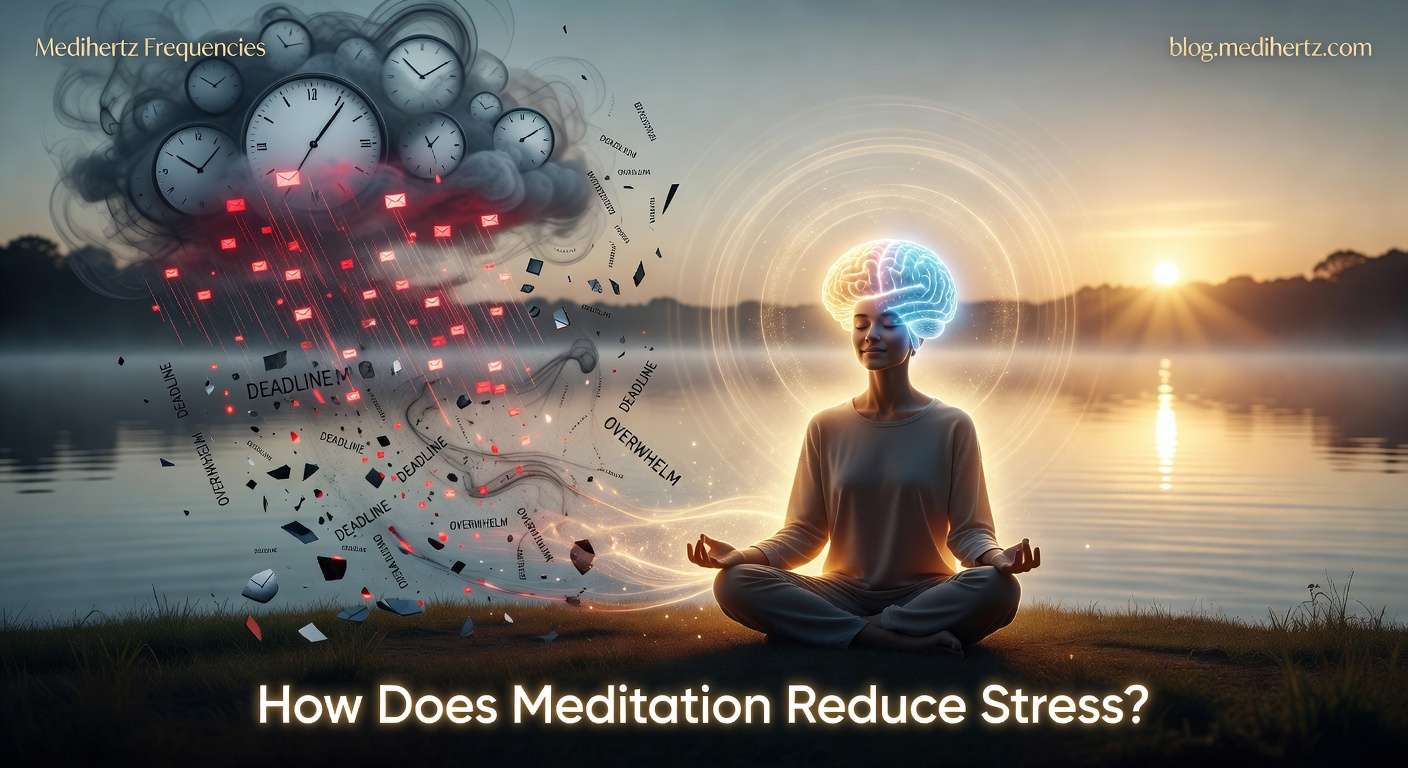
Meditation is a process that involves slow breathing, a still sitting posture, and keeping your body relaxed while trying to focus on nothingness. It helps you get distracted from constantly running thoughts.
This process definitely helps in distracting the mind from unstable and repetitive thoughts that often create stress about things that have mostly not happened yet and, in many cases, never will happen.
In this article, we will dig deeper into this topic and explore benefits that go beyond simply reducing stress. We will find out how does meditation reduce stress? and what actually happens inside the mind and body during the process.
What Happens in the Brain During Meditation?
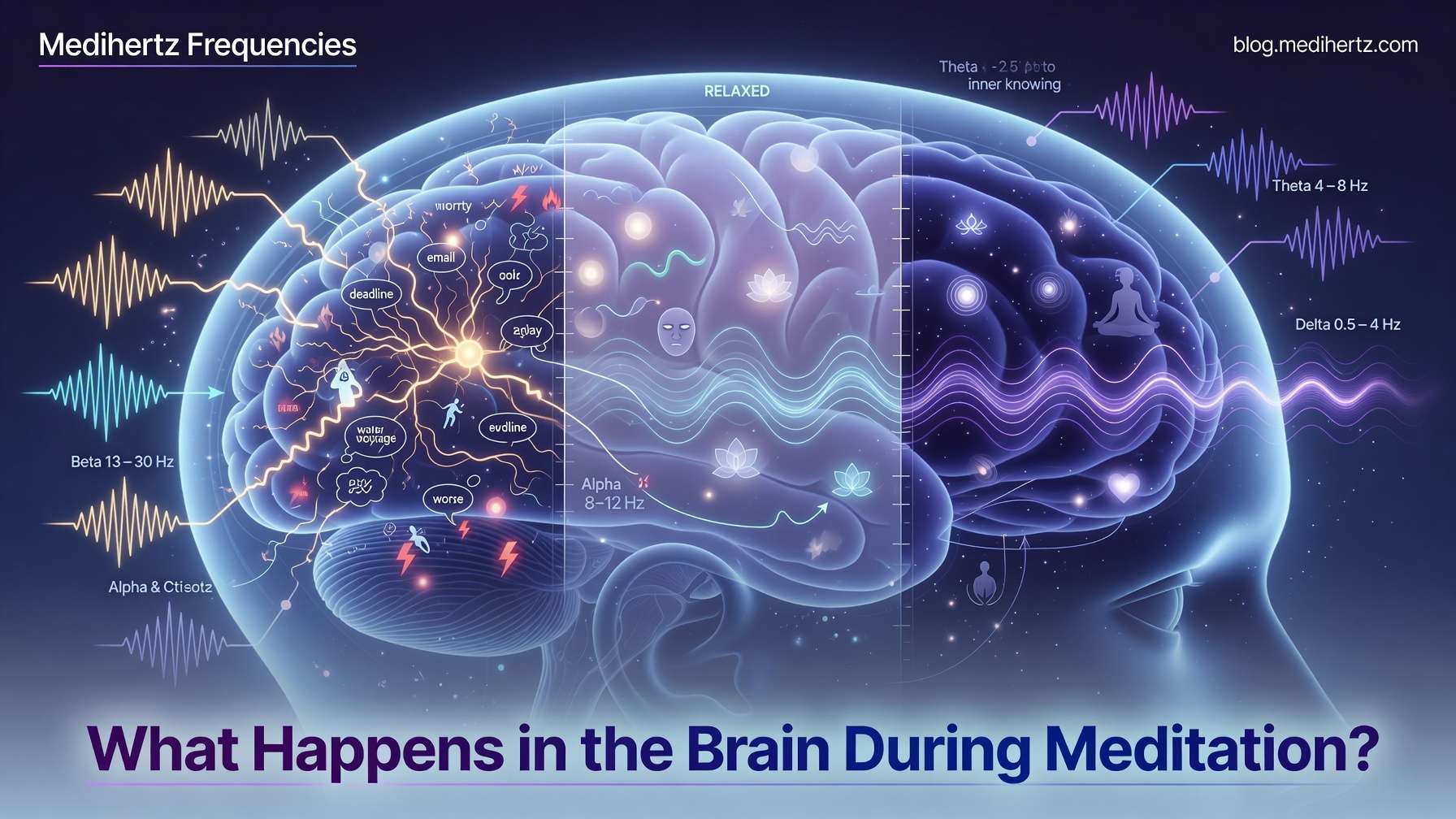
When we are curious about how meditation reduces stress, we eventually reach a point where we want to understand what happens in the brain during meditation.
While meditating, practitioners may start noticing changes in their mental state within the first few minutes. However, when you give your mind and body enough time—typically around 20 to 30 minutes—you may begin to observe additional benefits, such as relaxation, reduced stress, lower anxiety levels, greater inner peace, improved focus, and more.
Many users report feeling positive effects even during their first meditation session. This may be because the human body and mind are naturally designed to benefit from practices like meditation. However, over time, modern lifestyles have encouraged people to focus more on external goals and achievements rather than inner development and self-awareness.
Now let’s understand why these changes actually happen.
These changes occur because the brain gradually shifts through different mental states during meditation, moving from Beta waves toward slower states such as Alpha, Theta, and sometimes Delta. The experience can vary from person to person depending on factors such as meditation experience, environment, stress levels, and overall mental state.
Still, a general timeline observed in various studies is as follows:
EEG research On meditation Practioners entering different states
| Time | Common Brain State | What People Often Experience |
|---|---|---|
| 0–3 minutes | Beta (13–30 Hz) | Active thinking, planning, mental chatter |
| 3–10 minutes | Alpha (8–12 Hz) | Relaxation, calmer thoughts, reduced stress |
| 10–20 minutes | Theta (4–7 Hz) | Deep meditation, vivid imagery, intuition, dream-like awareness |
| 20–45+ minutes | Deep Theta / occasional Delta | Profound stillness, timelessness, very deep meditation |
How Does Meditation Reduce Stress Scientifically?
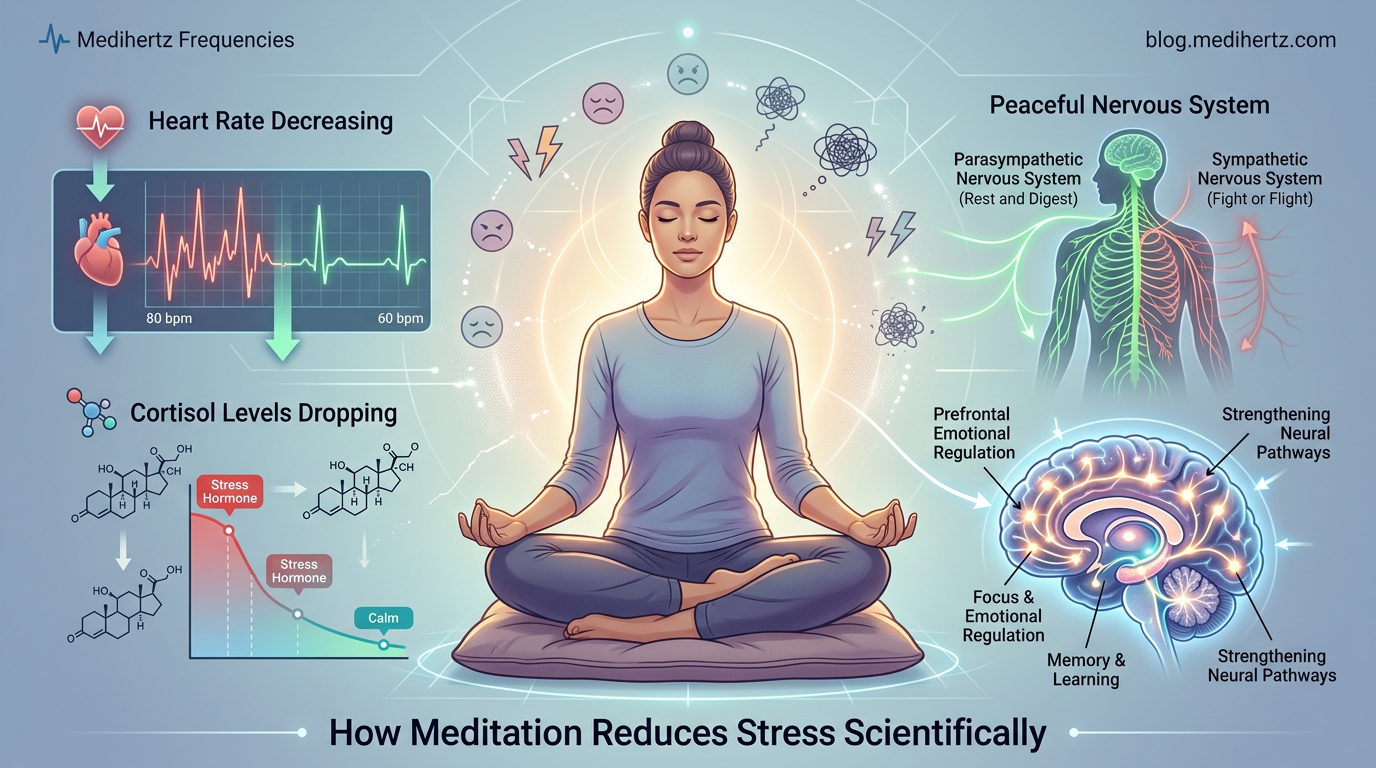
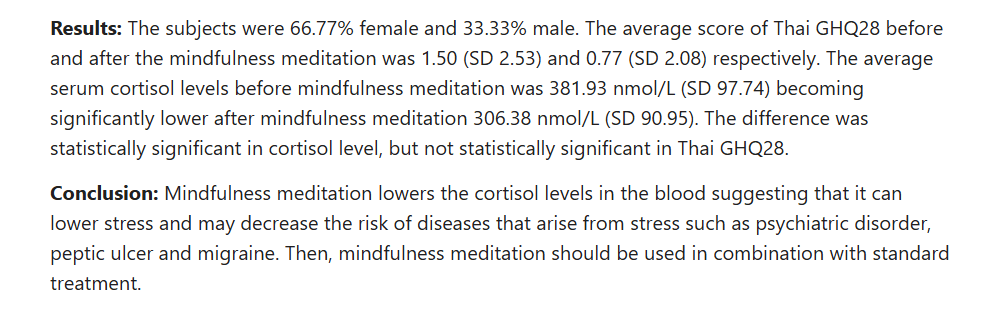
There have been many studies conducted that show the stress hormone cortisol is significantly reduced after mindful meditation practices. This reduction in cortisol levels is associated with lower stress and may also help reduce the risk of certain stress-related psychiatric conditions.
These findings suggest that regular meditation can positively affect both mental and physical well-being by helping the body manage stress more effectively.
When you dive deeper and try to find how meditation reduces stress scientifically, you come across many interesting things. For example, regular meditation practices can help lower the heart rate. When you meditate, your breathing speed naturally slows down, which can result in a lower heart rate.
Many people who have issues with high blood pressure or low blood pressure may find that practicing meditation helps promote relaxation in the heart, mind, and body.
Regular meditation also helps with emotional control. You may notice a deeper sense of control when regulating your emotions and responses. I can tell you from my own experience that, in the beginning of my meditation journey, I felt nothing. However, after a few days of regular practice, I started to notice a pause before responding to situations.
I realized that this was something I had been lacking. I felt that I often responded before fully thinking things through. Meditation helped me gain better control over my response rate. That pause held me back from saying things that I might have regretted later. Instead, it helped me avoid getting involved in unnecessary reactions and responses.
Well, these are still only surface-level changes that you can observe. When you dive deeper into meditation, you may start exploring many things that you might have only imagined before.
Does Meditation Reduce Stress Hormones?
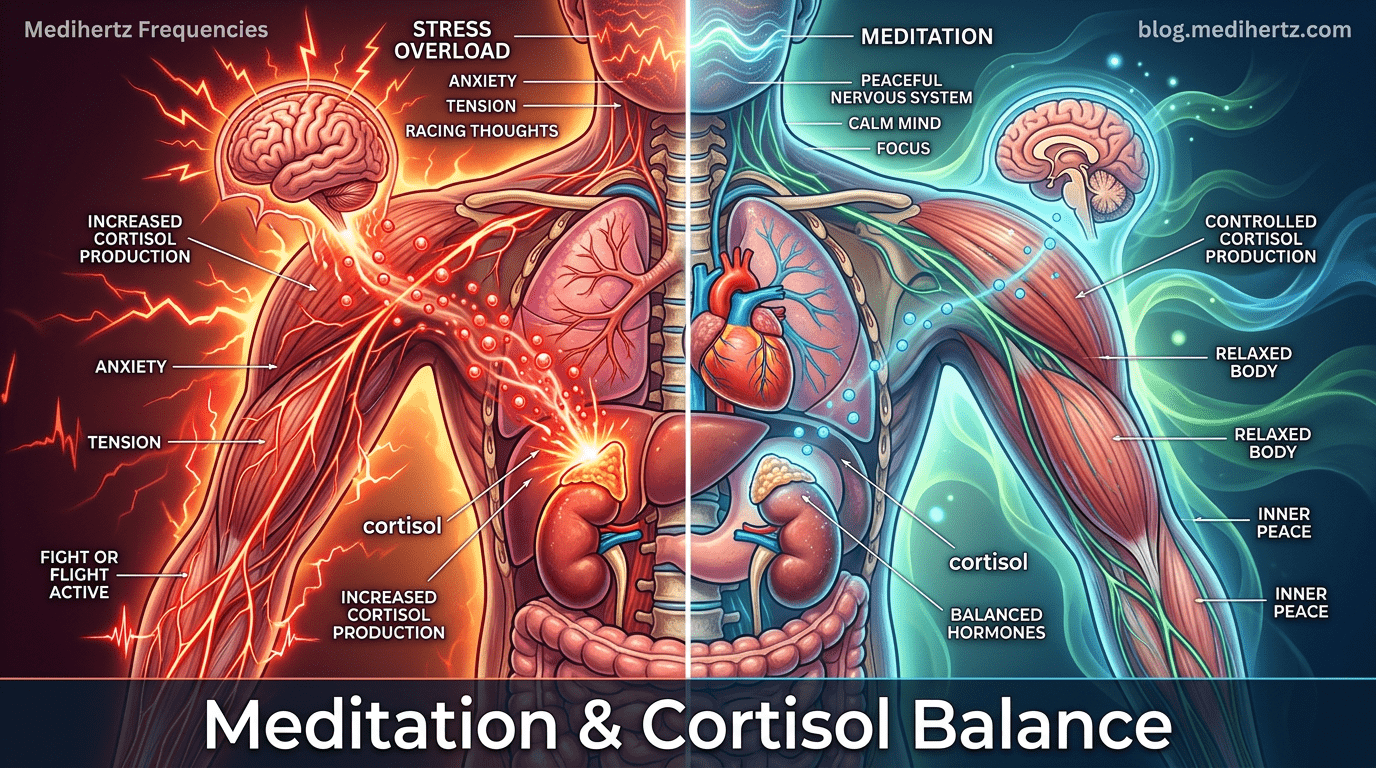
Okay, now I am not a medically trained person, just like most of us. But what I know about the stress hormone cortisol is that it is produced by our adrenal glands.
This hormone is very important for our body’s metabolism and plays a key role in helping us respond to different situations. However, when cortisol levels remain elevated for long periods due to chronic stress, it may start affecting both the mind and body in different ways.
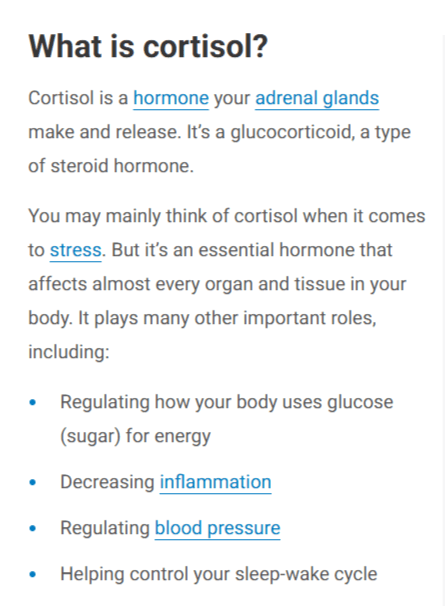
Cortisol regulates sugar (glucose) management in our body. It also helps manage our sleep-wake cycle. This hormone influences almost every organ in the body and is involved in controlling many important functions.
Cortisol is also closely related to stress. Whenever we are stressed, cortisol is released, which can amplify or regulate the body’s stress response, affecting things such as blood pressure and energy levels. If we learn to better manage the flow and regulation of this hormone, we can positively influence many processes in our body. And this is where meditation comes in.
When we meditate, cortisol starts returning to a more balanced state. Our mind begins to move into a more controlled mode rather than becoming overwhelmed and disoriented by thoughts. When we close our eyes and focus on our breathing, the mind gradually starts to relax.
The mind reacts to what we see, feel, and think. When we do not regularly practice activities that strengthen inner awareness, control often shifts toward the random thoughts and events around us. We begin to lose our inner control, and the mind starts looking to the external world for direction and instruction.
Imagine sitting in your office doing your work, and a colleague comes to you and says that the manager was looking for you. You do not know the reason. However, if your mind is already trained to react to external situations, and because external events are often filled with uncertainty, your mind may immediately start searching for possible reasons why the manager called you.
You may begin remembering incomplete tasks, mistakes, failures, and all sorts of negative possibilities that might have caused the manager to call you, even though you do not actually know the reason. As a result, your body may start releasing stress-related hormones, which can further train the mind to expect negative outcomes in future situations, creating long-lasting effects over time.
But what if you were meditating regularly?
This is where you come closer to know how does meditation reduce stress? When you meditate, your body and mind begin shifting inward. Your mind slowly starts regaining its natural strength. After regular practice, you may begin to feel greater control over your thoughts.
Now, instead of reacting automatically, you start responding consciously. You begin choosing what possibilities deserve your attention when thinking about why the manager may have called you. You may find yourself considering positive possibilities as well instead of only negative ones.
As a result, cortisol can remain more balanced, and this is one of the ways meditation may help reduce anxiety and stress over time.
How Does Meditation Help Reduce Stress and Anxiety?
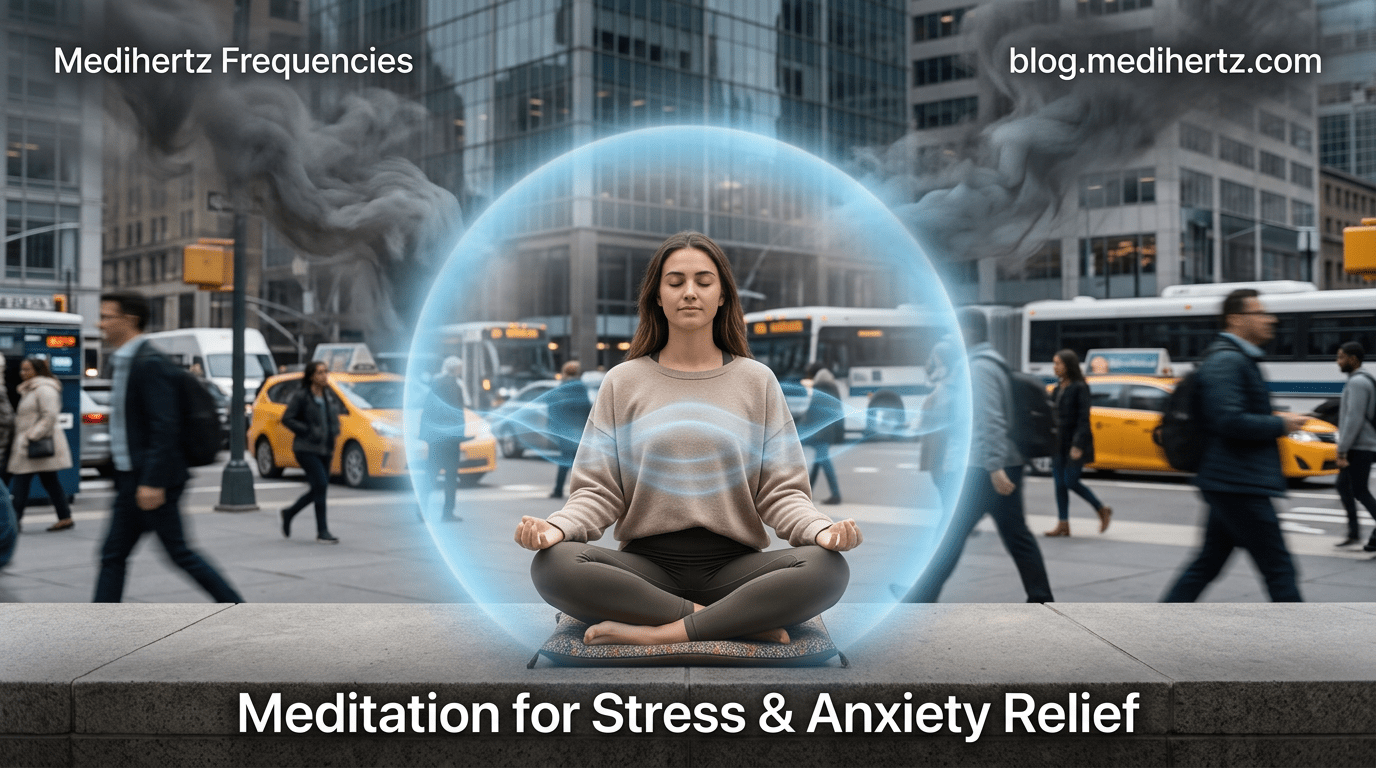
Meditation is one of the fastest natural ways to reduce stress and anxiety. You can practice it easily almost anywhere, whether you are waiting for a bus, sitting in a queue, or even taking a short break during a busy day. Just 5 minutes of meditation can help relax your mind and body and provide the mental clarity needed to focus on your next task.
In ancient times, meditation was often used to understand the deeper aspects of life, energies, natural forces, spiritual experiences, connecting with the divine, accessing Akashic records, and much more. Practitioners spent years following meditation practices and dedicating significant time to their inner development. In modern times, however, meditation is most commonly used as a tool to relax and relieve stress and anxiety.
Whenever you are under some kind of pressure and feel that you need clarity to focus on a task, meditation can help.
If you are dealing with anxiety, fear of the unknown future, or simply feel distracted by life, you can benefit from meditation regardless of your stage in life. Just find a quiet place where you can sit comfortably, gently close your eyes, and meditate for 5 minutes. You may start feeling more relaxed, calm, and mentally refreshed.
Try it for yourself. It may give a new direction to your life.
How Long Does It Take for Meditation to Reduce Stress?
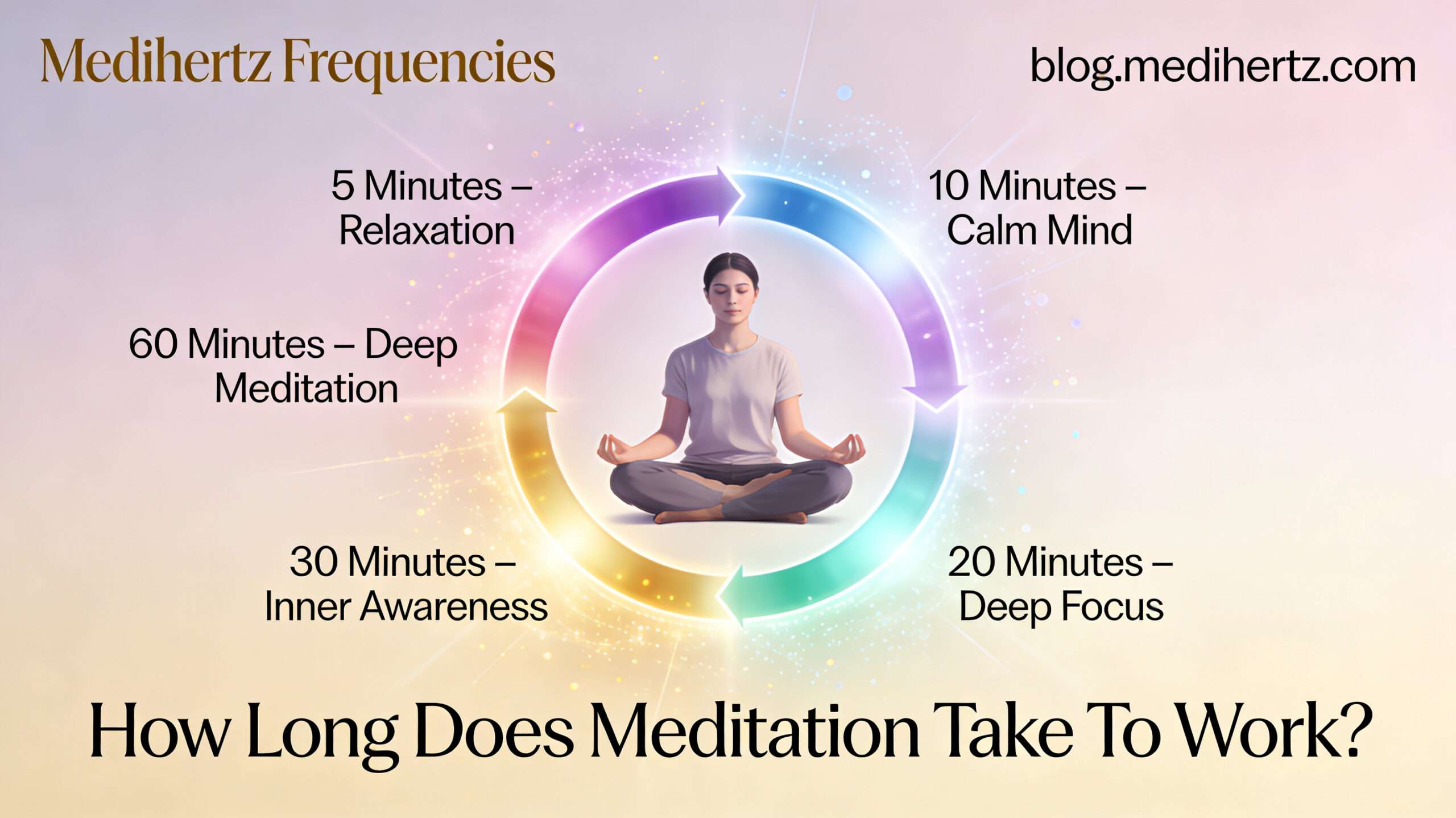
If you are looking for instant relief from stress and anxiety, meditation is one of the fastest and most natural ways to achieve it. You can start noticing results almost immediately.
Spending 5–20 minutes daily meditating can not only reduce stress and anxiety but also help you gain better control over yourself, improve focus, and support overall mental well-being.
As a beginner, you can also use our frequency generator tools to help create a more relaxing meditation environment. These tools can serve as a guide during your meditation journey.
The benefits of meditation often begin with immediate calming effects, but they continue to grow with consistency. The more regularly you practice, the more noticeable the improvements in stress management, emotional balance, and mental clarity become.
Even just 5–20 minutes a day can make a significant difference over time.
Immediate Calming Effects
Many people experience a sense of calm and relaxation within their very first meditation session. Slower breathing, reduced mental chatter, and a feeling of stillness can often be noticed within a few minutes.
Benefits Grow with Consistency
While meditation can provide immediate relief, the long-term benefits come from regular practice. Consistency helps train the mind to respond more calmly to stress, anxiety, and everyday challenges.
5–20 Minutes Daily
You do not need to meditate for hours to experience benefits. For most people, 5–20 minutes of daily meditation is enough to begin reducing stress, improving focus, and creating a greater sense of inner balance.
The Most Common Meditation Transition
For beginners:
- 5–10 minutes → noticeable relaxation
- 10–20 minutes → deeper meditative awareness
- 20–30 minutes → strongest meditation benefits often begin
For experienced meditators:
- Alpha states may appear within 1–3 minutes
- Theta states can appear within 5–10 minutes
Meditation States in Simple Terms
🧠 Beta State
- Normal waking consciousness
- Problem solving
- Stress and overthinking
- Dominant during daily activities
🧠 Alpha State (8–12 Hz)
- Calm and relaxed
- Reduced mental noise
- Enhanced focus
- Often reached after a few minutes of meditation
🧠 Theta State (4–7 Hz)
- Deep meditation
- Creativity and intuition
- Internal imagery
- Commonly associated with spiritual experiences
🧠 Delta State (0.5–4 Hz)
- Deep dreamless sleep
- Rarely maintained consciously
- Some advanced meditators report accessing delta-like states while remaining aware
Which Type of Meditation Is Best for Stress Relief?
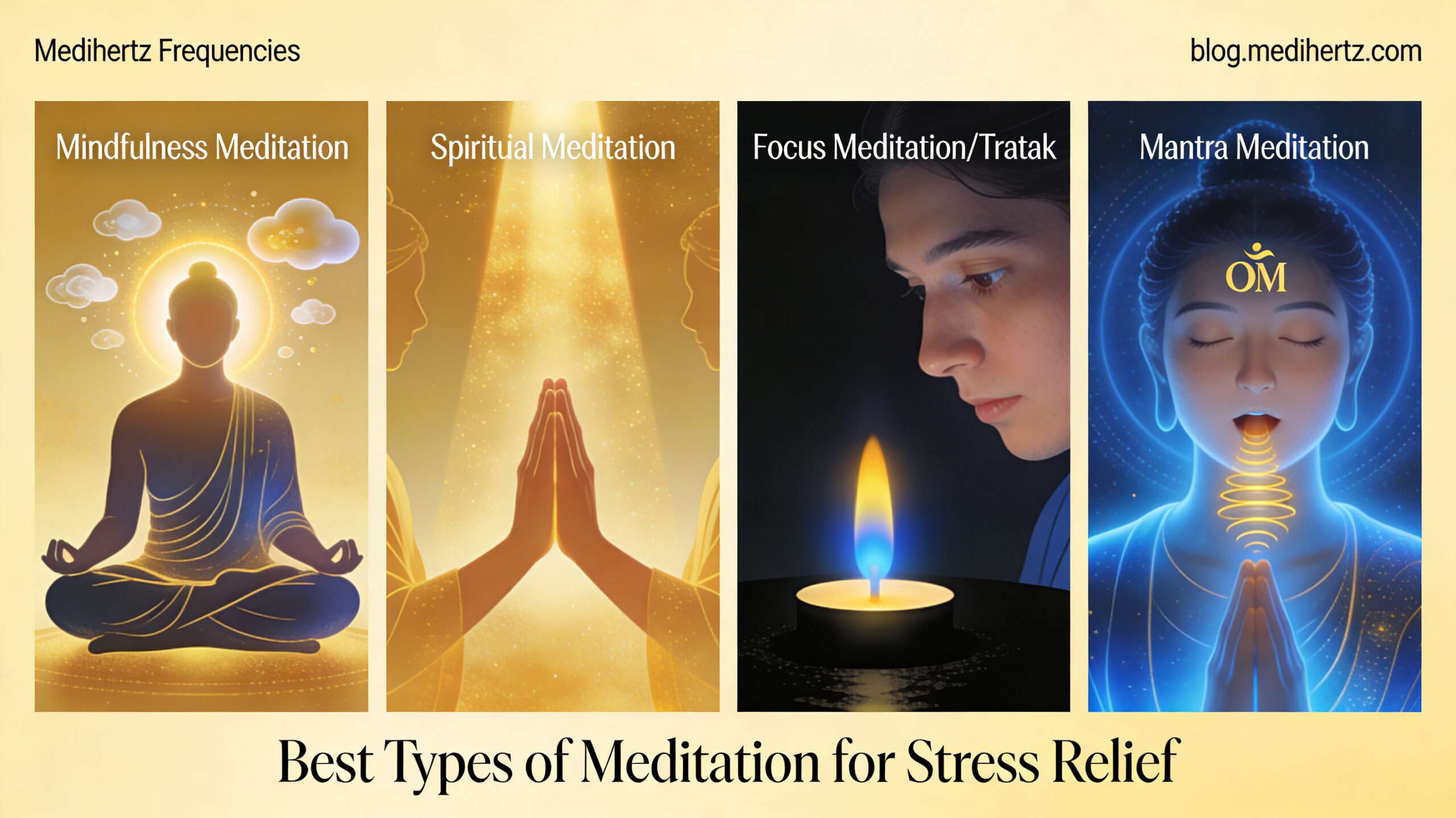
There are more than a thousand ways of meditation. If you would like to know more about them, comment “Ancient Meditations”, and I will provide a detailed and helpful article on the topic.
For now, we will discuss a few meditation practices. Most of them have received modern names, and you may have heard about them before.
Mindfulness Meditation
This is the meditation that usually comes first for every beginner practitioner.
Most people have a continuously running mind filled with all kinds of thoughts. This often leads to exhaustion, stress, and anxiety.
Mindfulness meditation is a practice that gives the mind rest, not by stopping what we are thinking, but by creating a second version of ourselves in our mind. Then we make it aware and tell it to simply watch the running thoughts that are appearing in the old version.
Do not participate, do not judge, and do not try to stop the thoughts. Just observe what is coming and going. Observe the patterns.
This practice helps you build a deeper connection with yourself. It is one of the most popular meditation practices in the Western world.
Spiritual Meditation
This is the type of meditation that helps you connect spiritually.
Most of the time, practitioners connect with their chosen deity, spiritual guide, or divine form by remembering them, chanting their names, praying, or simply focusing on their presence.
The purpose is to create a deeper spiritual connection and experience inner peace, devotion, and guidance.
Focus Meditation
This is a type of meditation where you focus on a single object, such as the flame of a candle, a diya, or even a point on a wall placed at eye level.
In this process, you focus on that single point without blinking for as long as possible. This helps reduce unnecessary eye movement and improves concentration after regular practice.
This meditation process is commonly known as Tratak in ancient India.
Students often use this meditation to improve concentration in their studies, while many entrepreneurs use this technique to develop deeper focus on their goals and decision-making.
Mantra Meditation
Mantra meditation is exactly what it sounds like.
You choose a mantra and repeat it regularly whenever you are free. While working, walking, or sitting quietly, you continue repeating it softly or silently in your mind.
Some of the most common mantras include OM, AUM, and OM NAMAH SHIVAYA.
Mantras are specific words or groups of words traditionally associated with spiritual practices, rituals, deities, or divine energies. Many practitioners believe these sacred sounds carry spiritual significance because they have been repeated by countless seekers over thousands of years.
According to traditional beliefs, when you repeatedly chant a mantra, you begin aligning your energy with the qualities associated with that mantra. Some practitioners feel this connection quickly, while others experience it gradually through consistent practice.
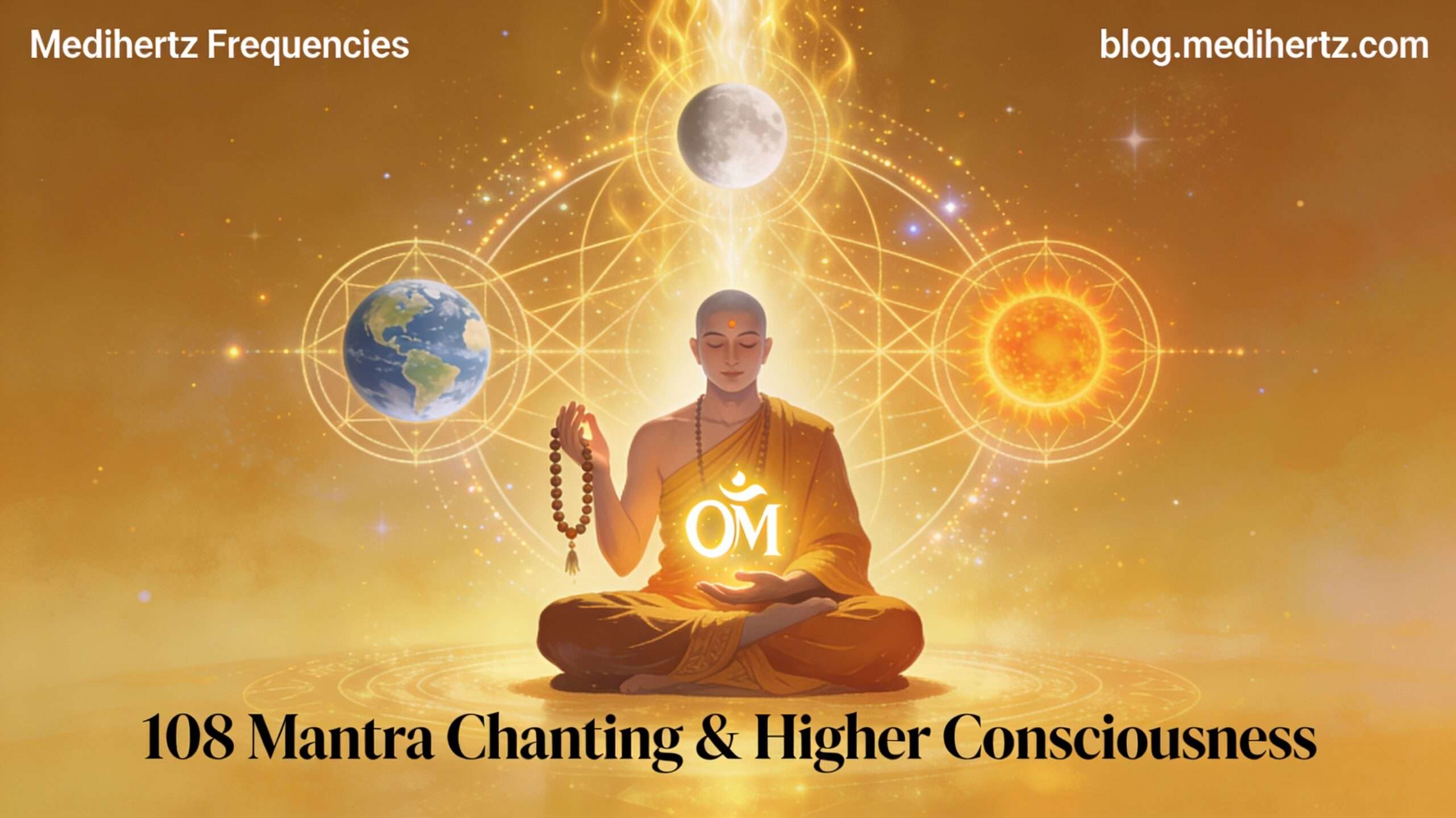
One of the most fascinating aspects of mantra meditation is the use of 108 repetitions. In many spiritual traditions, a complete chanting cycle consists of repeating a mantra 108 times using a mala (prayer beads).
Many practitioners believe that the number 108 is not random. It is often associated with the approximate relationship between the Earth, the Sun, and the Moon. According to traditional interpretations, the Sun’s diameter is about 108 times the Earth’s diameter, and the average distance between the Earth and the Sun is roughly 108 times the Sun’s diameter. Similar symbolism is often associated with the Earth and Moon.
Because of this connection, many practitioners view 108 as a sacred cosmic number that represents the relationship between the human being and the universe.
From a spiritual perspective, every cycle of 108 chants is seen as a symbolic journey toward higher awareness. Many practitioners believe that when you complete one cycle of 108 repetitions, you take your energy and consciousness one step closer to the Sun’s spiritual symbolism of light, wisdom, and higher consciousness.
Repeating multiple cycles is believed to gradually elevate your vibration, deepen concentration, and help shift your awareness toward higher states of consciousness.
Other Types of Meditation
There are many other forms of meditation practiced throughout the world, each influenced by different cultures, traditions, and spiritual paths.
No matter which meditation practice you choose, one helpful addition can be the use of meditation frequency tones.
Many users enjoy using our Medihertz Frequencies Tone Generators to create a focused meditation environment. For chakra-focused meditation, users especially enjoy our Chakra Alignment Tool.
The chakra system commonly works with seven major energy centers. In traditional Indian practices, each chakra is associated with specific seed sounds (Bija Mantras), including:
LAM, VAM, RAM, YAM, HAM, OM, and AUM
Many practitioners use these sounds during meditation to support concentration, mindfulness, and spiritual practice.
Does Sound Meditation Work?
When meditating, you might have come across a thought like, “Let’s play some meditation music from YouTube,” or a sound that a friend recommended.
Now, most people make a common mistake here. They play just any sound from YouTube, thinking it will help, but unfortunately, they do not know what it may be doing to their mind and body at such an important stage of meditation.
Many YouTube meditation tracks are designed primarily to attract more views. They often use reused sounds, generic background music, and unknown frequencies that claim to heal. But do they really?
Now, how do I know this?
Because I did it myself.
I started creating Medihertz sound tracks on YouTube and made plenty of lengthy meditation audio tracks focused on original frequencies. However, YouTube did not promote my content as much. Instead, I was often recommended to follow already popular tracks and create something similar to get more views.
But I refused.
My focus has always been to provide sounds that are actually useful and meaningful. Yes, I want views too, but not at the cost of providing content that minimizes the actual effect or purpose of meditation.
Sound has a deeper impact on all states of matter—solids, liquids, and gases—as you can see below.
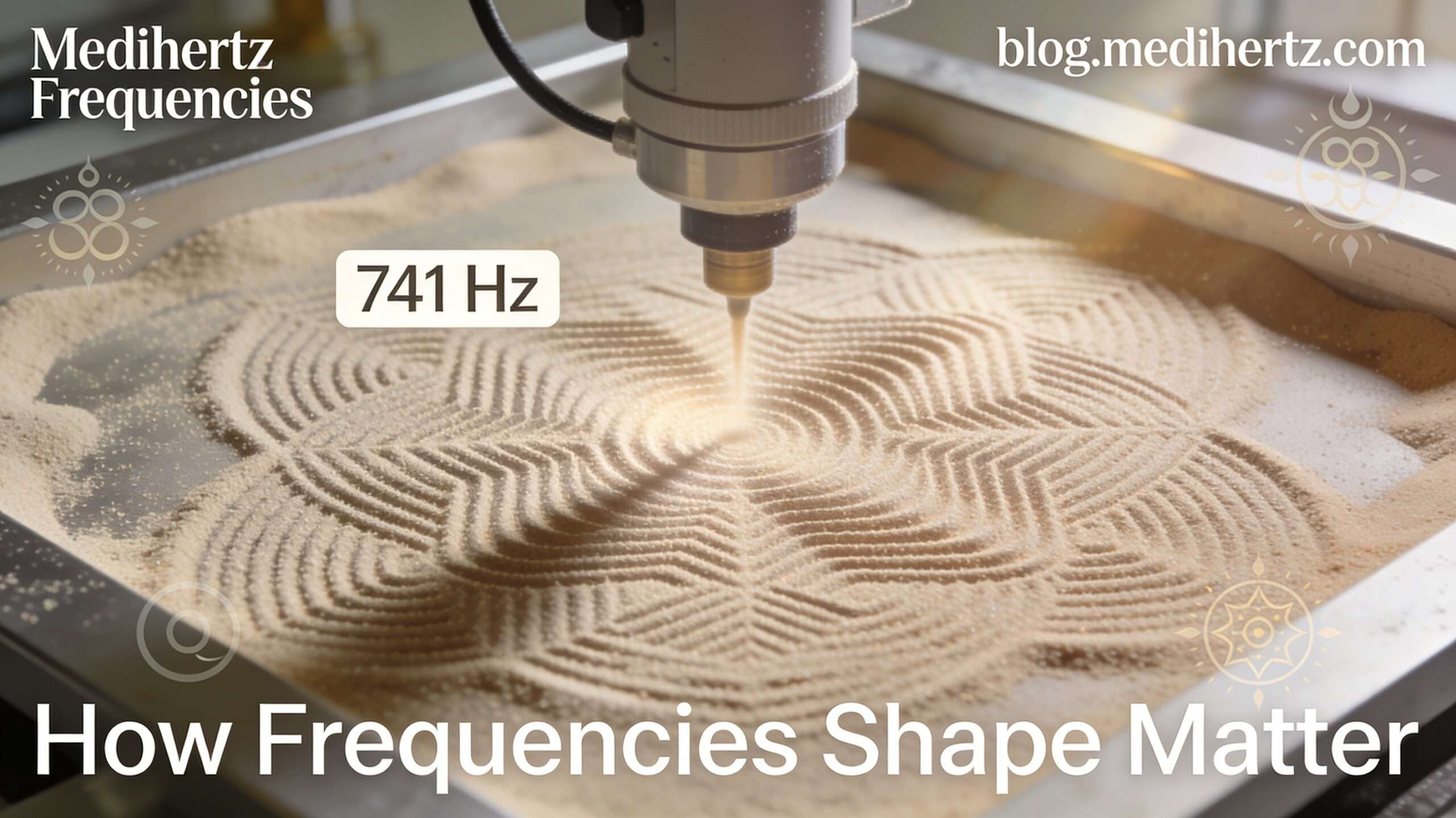
The bellow screenshot shown is from my Cymatics Sand Pattern Generator, a tool I created to explore how sound affects matter. As you can see in the screenshot, I am playing a pure tone of 741 Hz, and the sand pattern shifts into synchronized wave formations.
This demonstrates how vibration can influence physical matter. If sound can organize and reshape visible matter into patterns, it naturally raises interesting questions about how different sounds and frequencies may influence our focus, mood, relaxation, and meditation experience as well.
That is one of the reasons many practitioners choose to include sound meditation as part of their daily practice.
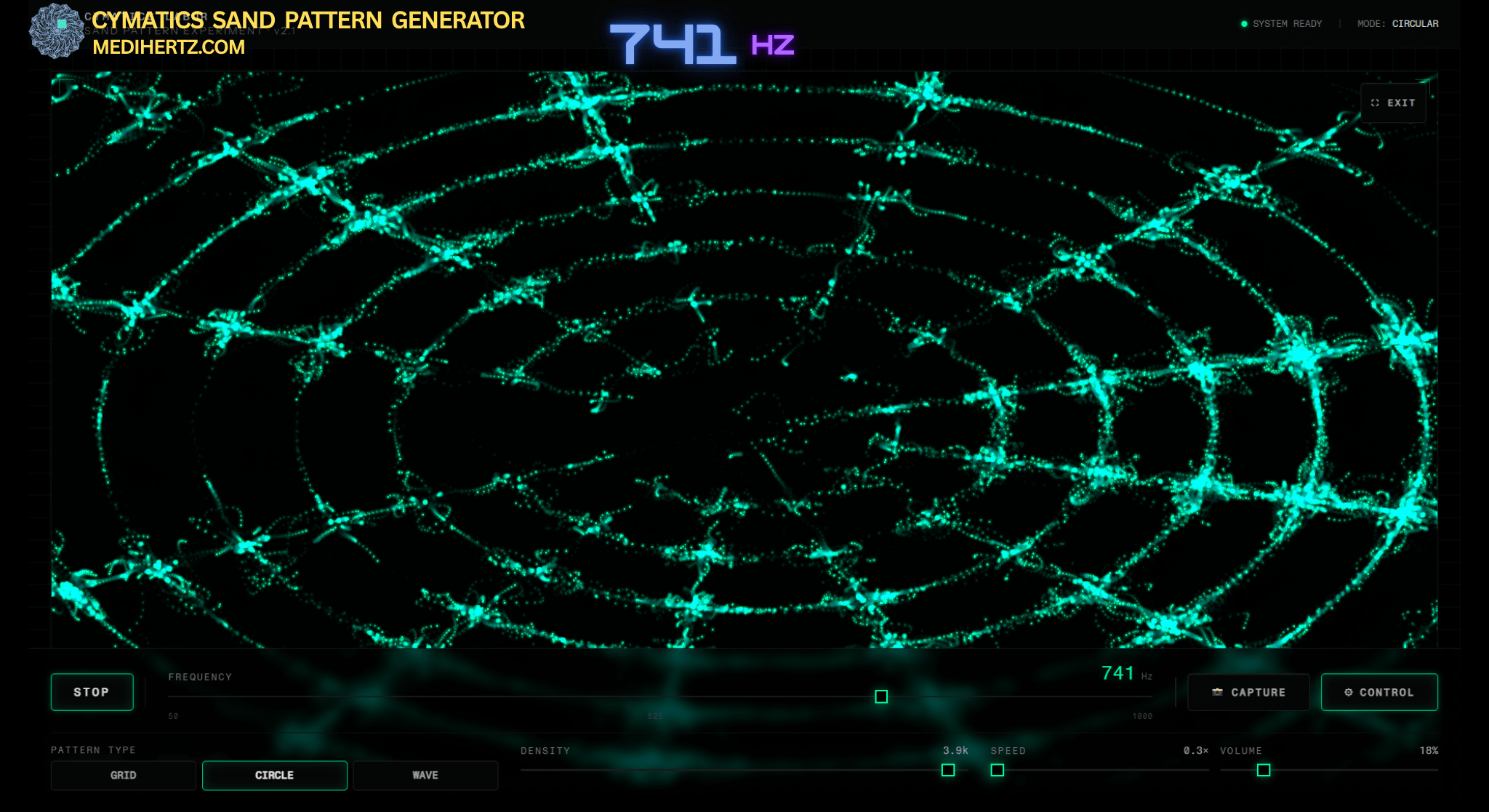
cymatics sand patern generator
When you play any sound, your body, which is made up of solids, liquids, and gases, starts reacting to it instantly.
This is one of the main aids you can use to train a distracted mind.
Many of us unknowingly train our minds to constantly react to thoughts, notifications, people, and activities happening outside our bodies. Over time, our attention becomes scattered in many directions.
Sound meditation can help reverse this process.
When you play a frequency and consciously listen to it, your mind and body begin focusing on a single source of vibration. Your body’s matter starts synchronizing with the tone, and your attention is gradually pulled away from the rushing thoughts that normally occupy your mind.
Instead of continuously jumping from one thought to another, your mind begins following a single rhythm.
With regular practice, many people start feeling that they have gained deeper control over their thoughts and reactions. This increased sense of awareness and focus can contribute to stress relief, anxiety reduction, and a calmer state of mind.
If you would like to experience this yourself, you can try our simple Instant Hz Listener, which allows you to listen to pure frequency tones instantly and explore different meditation frequencies.
Simple Meditation Technique for Beginners
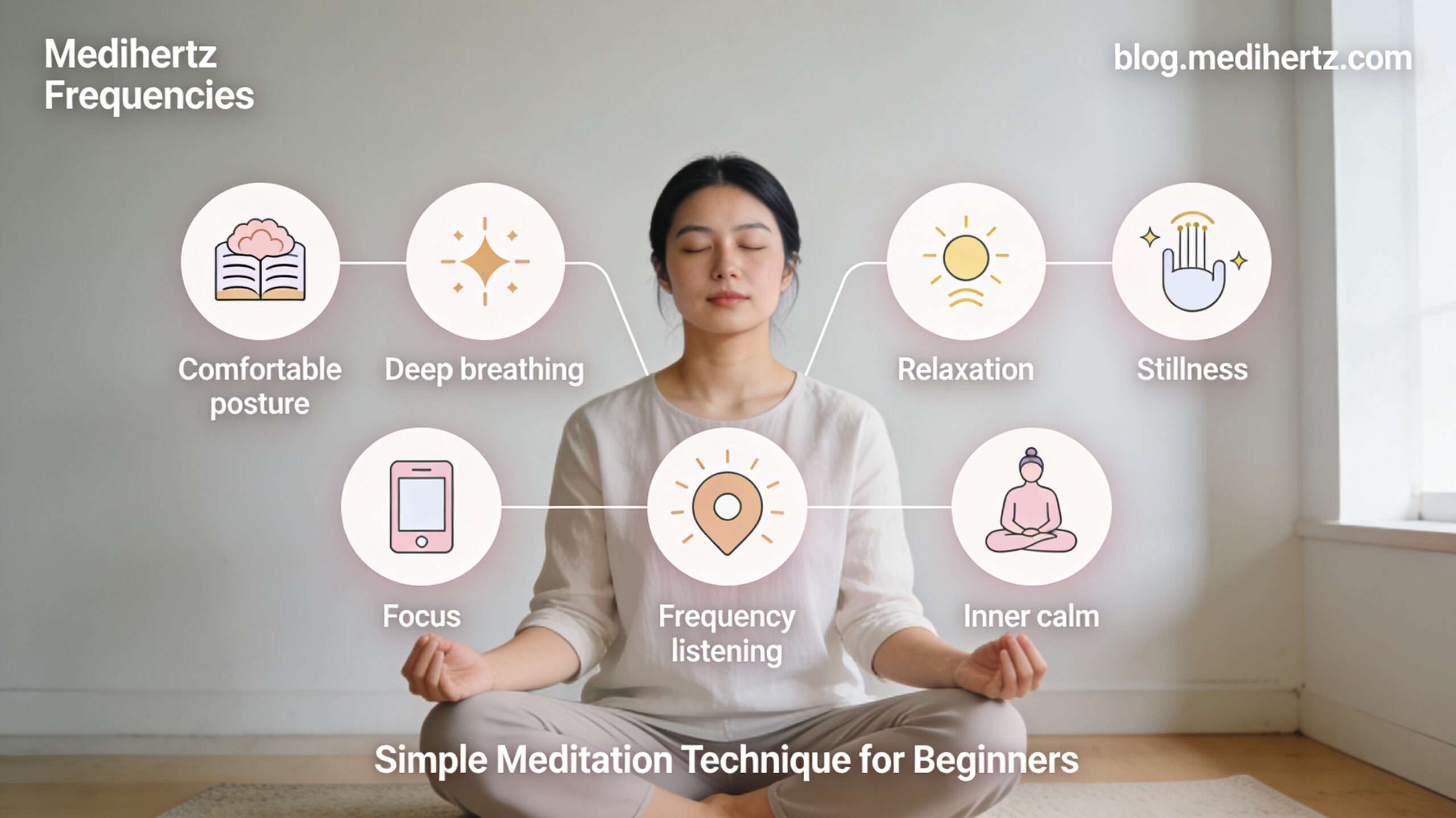
Now here comes the most important part. Most of the content online focuses on basic practices like sitting comfortably, focusing on the breath, etc., while ignoring a basic fact: is this process alone enough?
Most of the time, we forget that although our body will start to feel changes after some regular practice, this delay can differ from person to person, environment, pressure, and the most important thing—that we have unknowingly trained our mind to focus outward, and now we want it to focus inward, that too very fast. It will take time.
The best process is to take some external help. Now, I would recommend doing it with the help of a Guru or an expert in this field. But if you do not have access to a Guru, you can use simple steps like keeping a quiet environment and listening to a calm audio.
In this stage, we will use Medihertz Frequencies pure tones to begin meditation. This can be used by both beginners and experienced practitioners. Frequencies will help you focus more intensely, helping you get distracted less. Follow the steps as mentioned below.
1. Choose the Frequency You Want to Play
In the beginning, you can start with 528 Hz. I personally use 70 Hz.
2. Sit in a Comfortable Position
Sit comfortably by folding your legs and keeping your spine straight.
3. Close Your Eyes
Close your eyes and allow yourself to see complete darkness.
4. Focus on Your Breath
Take a few deep breaths first, and then gradually calm down your breathing.
5. Relax Your Muscles
Relax the muscles of your head, shoulders, and back. Make your whole body relaxed.
6. Stay Still
Be still while focusing only on your breath.
7. Let Thoughts Come and Go
Let your thoughts come and go naturally. Do not force your thoughts to stop.
8. Allow the Frequency to Work
The frequency you are playing will automatically start syncing your body and mind.
9. Let Your Thoughts Synchronize
Slowly, your thoughts may also begin syncing with the frequency.
10. Start Small and Build Consistency
Begin with a small session once a day for 2–3 minutes. As you become more comfortable with the process, try reaching a meditation time that matches your age. For example, if you are 30 years old, meditate for 30 minutes. However, that is not compulsory. You can sit for hours if you want.
The more time you spend in this state, the slower and calmer your energies become, gradually settling and stabilizing.
This simple practice can enhance your focus, relax your body, improve creativity, reduce stress, help control your mind and body, and much more.
Use this following Frequency generator tools to start your free sessions.
Om Chanting Meditation Tool
This tool contains a single OM frequency. Chanting along while playing this frequency can help activate your inner vibrations and support a deeper meditation experience. It is suitable for both beginners and experienced practitioners.
Third Eye & Chakra Alignment Frequency Tool
This tool contains 7 frequencies associated with the 7 major chakras. It can help you focus on chakra meditation, chakra alignment, and energy awareness practices. Each frequency is linked to a specific chakra, making it easier to concentrate on individual energy centers during meditation.
Hz Frequency Generator
Use this tool to explore different sounds and frequencies and understand how various frequencies differ from each other. You can experiment with pure tones, binaural beats, and other frequency-based audio experiences.
For meditation, many practitioners enjoy exploring Brainwave frequencies between 30–70 Hz to support focus, relaxation, and deeper meditation states.
Disclaimer⚠️
⚠️ Start at a comfortable volume. Beginners should begin with 2–5 minute sessions and avoid listening above 60% volume, especially with headphones. Stop use if discomfort occurs. This tool is for educational and meditation purposes only and is not medical advice.
FAQ
Does meditation really reduce stress?
Yes, meditation can help reduce stress by calming the mind and reducing the body’s stress response. When you meditate, your breathing slows down, your heart rate becomes more balanced, and your attention moves away from constant worrying thoughts. Regular practice can help you feel calmer, more focused, and emotionally balanced.
How fast does meditation reduce stress?
Many people notice a calming effect within their first meditation session. Even 5–10 minutes of meditation can help relax the mind and body. However, the deeper benefits of stress reduction usually become stronger with daily practice over several days or weeks.
What happens in the brain during meditation?
During meditation, the brain gradually shifts from active thinking states into calmer states associated with relaxation and focus. Many practitioners report feeling more peaceful, less distracted, and more aware of their thoughts. With regular practice, meditation can improve emotional control, concentration, and stress management.
Does meditation lower cortisol levels?
Research suggests that regular meditation may help reduce elevated cortisol levels, often called the stress hormone. Cortisol plays an important role in the body, but when stress becomes chronic, cortisol levels can remain high. Meditation helps the body enter a more relaxed state, which may support healthier cortisol regulation.
Can meditation help with anxiety?
Yes, meditation is one of the most commonly used natural techniques for managing anxiety. It helps slow down racing thoughts, improves awareness of emotions, and creates mental space before reacting to stressful situations. Many people use meditation daily to reduce anxiety and improve emotional balance.
How long should I meditate each day for stress relief?
Beginners can start with just 5 minutes per day. Many practitioners find that 10–20 minutes daily provides noticeable benefits. The key is consistency rather than long sessions. Even short meditation sessions performed regularly can be effective.
Which meditation is best for stress relief?
There is no single best meditation for everyone. Popular options include:
• Mindfulness Meditation
• Spiritual Meditation
• Focus Meditation (Tratak)
• Mantra Meditation
The best meditation is usually the one that you enjoy and can practice consistently.
Does sound meditation work?
Many people find sound meditation helpful because sound gives the mind something simple to focus on. Pure tones, frequency generators, singing bowls, mantras, and calming sounds can help reduce distractions and support deeper concentration during meditation.
What frequencies are used for meditation?
Some commonly used meditation frequencies include:
• 70 Hz
• 174 Hz
• 285 Hz
• 396 Hz
• 417 Hz
• 528 Hz
• 639 Hz
• 741 Hz
• 852 Hz
Many practitioners use pure frequency tones as a meditation aid. You can explore and listen to these frequencies using the Medihertz Frequencies tools available on blog.medihertz.com.
Is 528 Hz good for meditation?
528 Hz is one of the most popular frequencies used in meditation and relaxation practices. Many people use it to improve focus, calm the mind, and create a peaceful meditation environment. Individual experiences may vary.
Can beginners use meditation frequencies?
Yes. Beginners often find meditation frequencies useful because they provide a steady sound to focus on. This can make it easier to stay present and reduce distractions during meditation sessions.
Is it better to meditate in silence or with sound?
Both methods can be effective. Some people prefer complete silence, while others find that sounds, mantras, or frequency tones help them maintain focus. The best approach depends on personal preference and meditation goals.
What is the best sound for meditation?
Popular meditation sounds include:
• OM chanting
• Singing bowls
• Nature sounds
• Binaural beats
• Pure frequency tones
Many meditators experiment with different sounds until they find one that helps them relax and focus most effectively.
Can meditation improve focus and concentration?
Yes. Meditation trains attention and awareness. Over time, many practitioners notice improved concentration, better decision-making, reduced mental clutter, and stronger focus during work, study, and daily activities.
Can meditation help with sleep?
Meditation may help improve sleep quality by reducing stress, calming racing thoughts, and relaxing the body before bedtime. Many people use meditation as part of their nightly routine to support better sleep.
Can I meditate anywhere?
Yes. Meditation can be practiced almost anywhere, including at home, in a park, during a break at work, while traveling, or in any quiet place where you can sit comfortably and focus for a few minutes.
Where can I learn more about meditation frequencies and sound healing?
You can explore meditation frequencies, chakra frequencies, pure tone generators, binaural beats, cymatics experiments, and other sound-based meditation tools on Medihertz Frequencies at blog.medihertz.com.
