

Your Frequency Hub for Mind & Awareness
Acoustic levitation sounds impossible—but it is real.
Imagine making small objects float in the air using only sound waves. No magnets. No strings. Just frequency.
👉 Try it yourself using the simulator below.
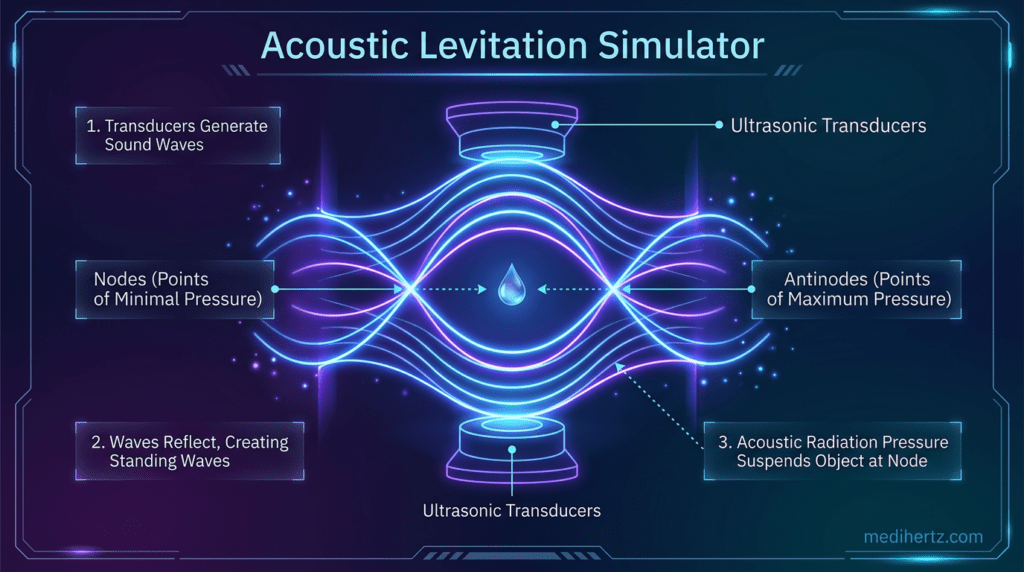
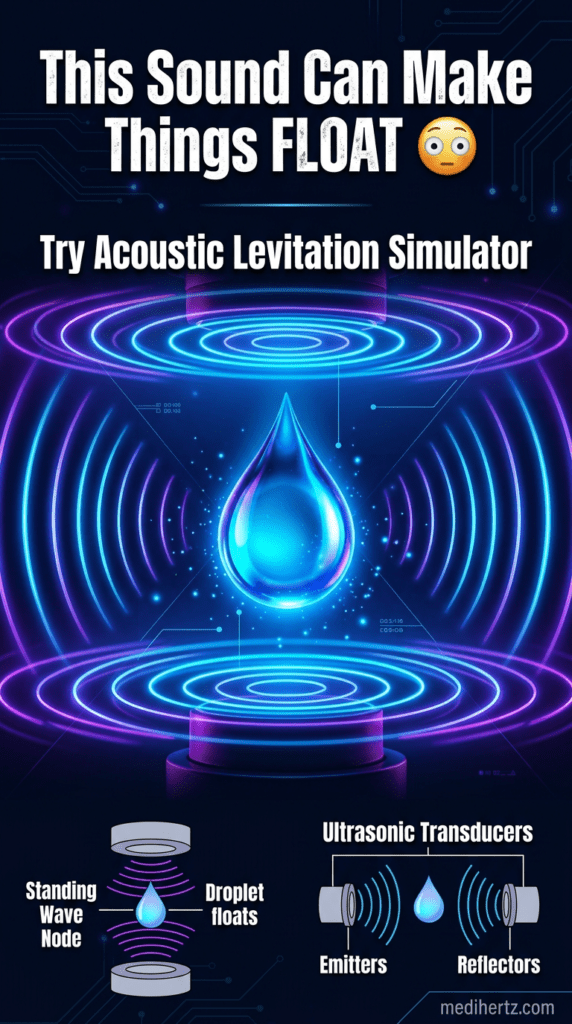
Acoustic levitation is a technique that uses sound waves to make small objects float in air. It works by creating standing waves that produce pressure points, allowing lightweight objects to stay suspended without physical contact.
Use the tool below to experiment with sound frequencies and see how levitation works in real-time.
👉 Adjust frequency, switch modes, and observe how standing waves create floating effects.
Use the simulator below to see how sound frequency creates levitation in real time.
Acoustic Levitation Simulator Pro
0.04
Acoustic levitation is a method of making small objects float using sound waves.
In simple words:
👉 Sound creates pressure
👉 Pressure can push objects
👉 When balanced perfectly → objects float
This is called sound wave levitation.
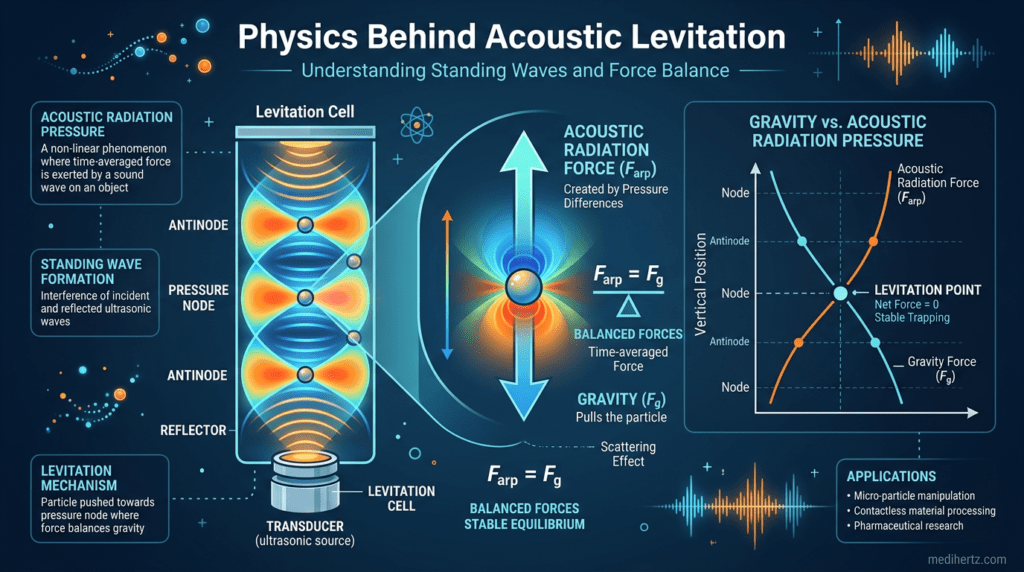
Acoustic levitation works due to acoustic radiation pressure.
When sound waves hit an object, they apply force.
If this force balances gravity → the object floats.
This principle is used in advanced physics experiments and material science.
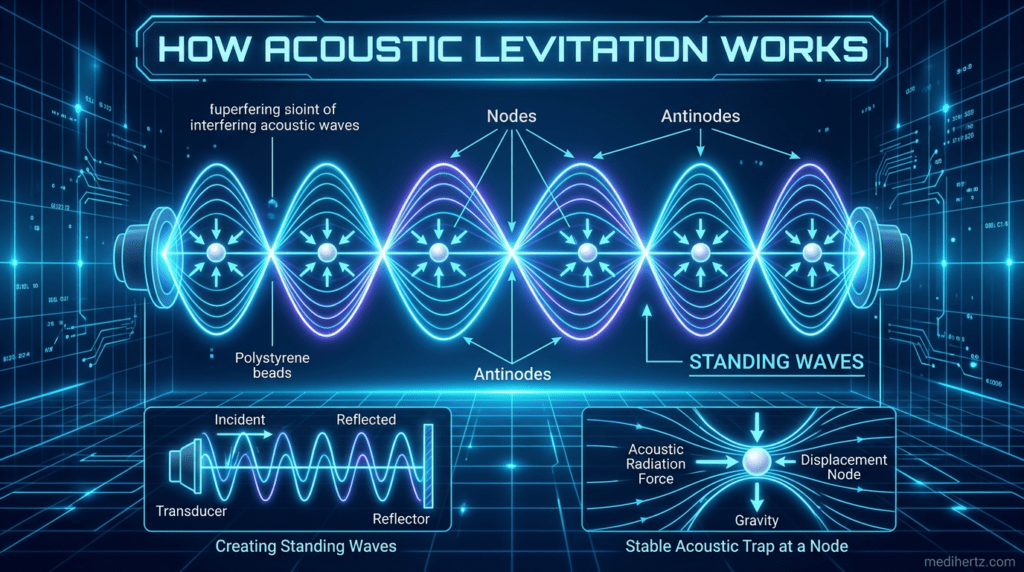
It works using something called standing waves.
Here’s the simple idea:
Sound waves travel through air
When two waves meet → they form a standing wave
This creates:
Nodes (low pressure)
Antinodes (high pressure)
👉 Small objects get trapped between these points and start floating
Yes—but with limitations.
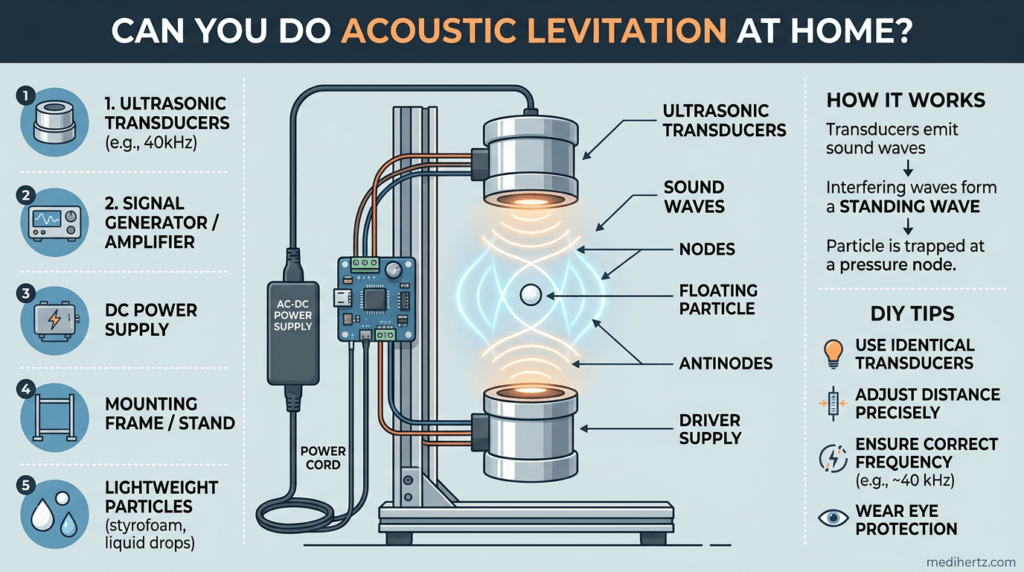
You need:
Ultrasonic transducers
Power supply
Proper alignment
👉 Most DIY setups can only lift:
Foam
Small droplets
Tiny particles
That’s why using an online acoustic levitation simulator is easier and safer.
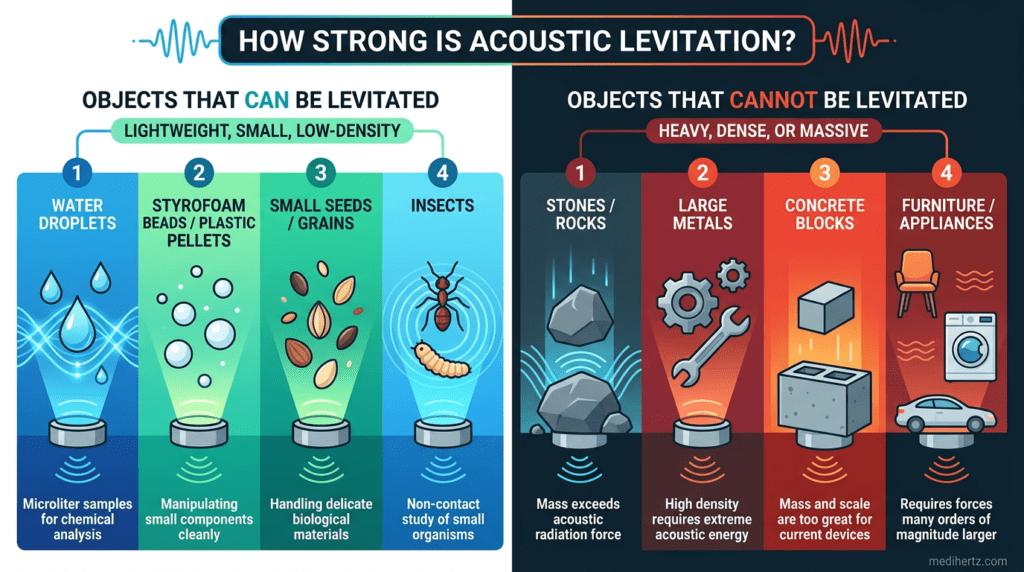
Not very strong (yet).
👉 It can lift:
Water droplets
Small insects
Tiny beads
👉 It cannot lift:
Heavy objects
Large items
Scientists are improving this technology, but it’s still limited.
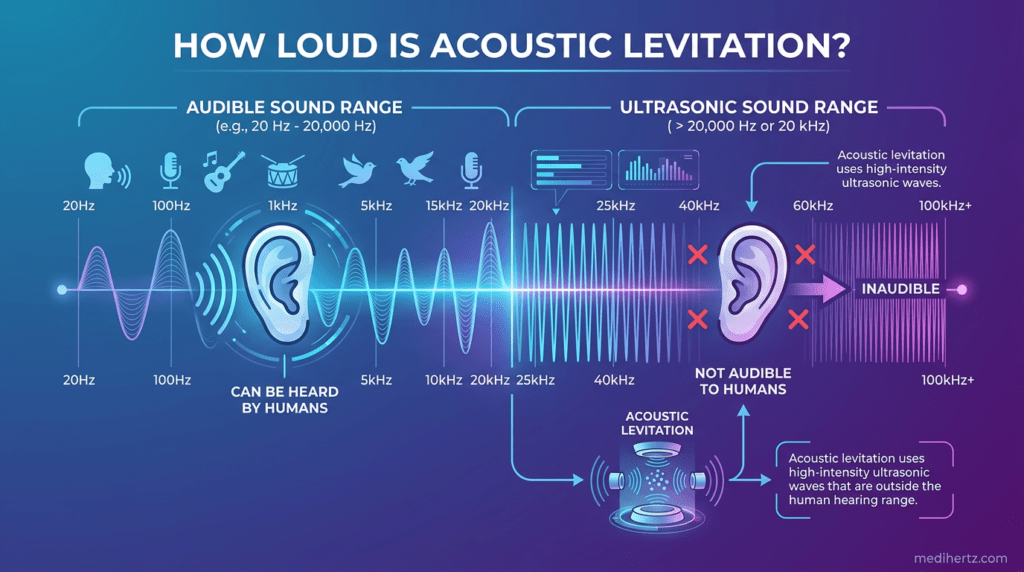
Most systems use ultrasonic sound.
👉 That means:
Humans cannot hear it
But it still creates strong pressure
Some setups can be loud if using audible frequencies, but most advanced systems are silent.
This is not just a science trick.
It is used in:
Studying materials without touching them
Handling dangerous chemicals safely
Organizations like NASA use it to study materials in microgravity.
Drug research
Cell manipulation
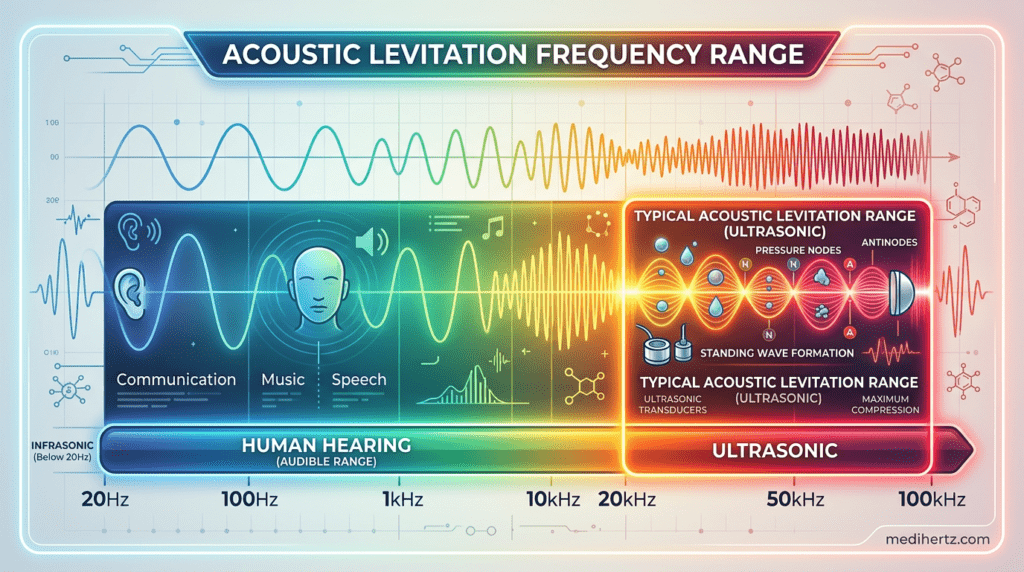
Most levitation systems use:
👉 20 kHz to 100 kHz (Ultrasonic range)
Higher frequency = better control
Lower frequency = more visible waves
No.
👉 Current limitation:
Only very light objects can float
Future research may improve this—but right now, it’s mainly for small-scale use.
If you enjoy this experiment, try these tools:
Yes, acoustic levitation is real and used in scientific research.
It works using standing sound waves that create pressure points to hold objects in air.
Yes, but only for small objects and requires special equipment.
Most systems use ultrasonic sound, which humans cannot hear.
Usually between 20 kHz and 100 kHz.
Acoustic levitation is a perfect example of how powerful sound can be.
With the simulator, you don’t just read about it—you experience it.
👉 Try different frequencies
👉 Observe wave patterns
👉 Understand real physics in action
This article is for educational purposes, not medical advice.
acoustic levitation experiment
sound wave levitation physics
ultrasonic levitation frequency
standing wave simulator
acoustic levitation science project