

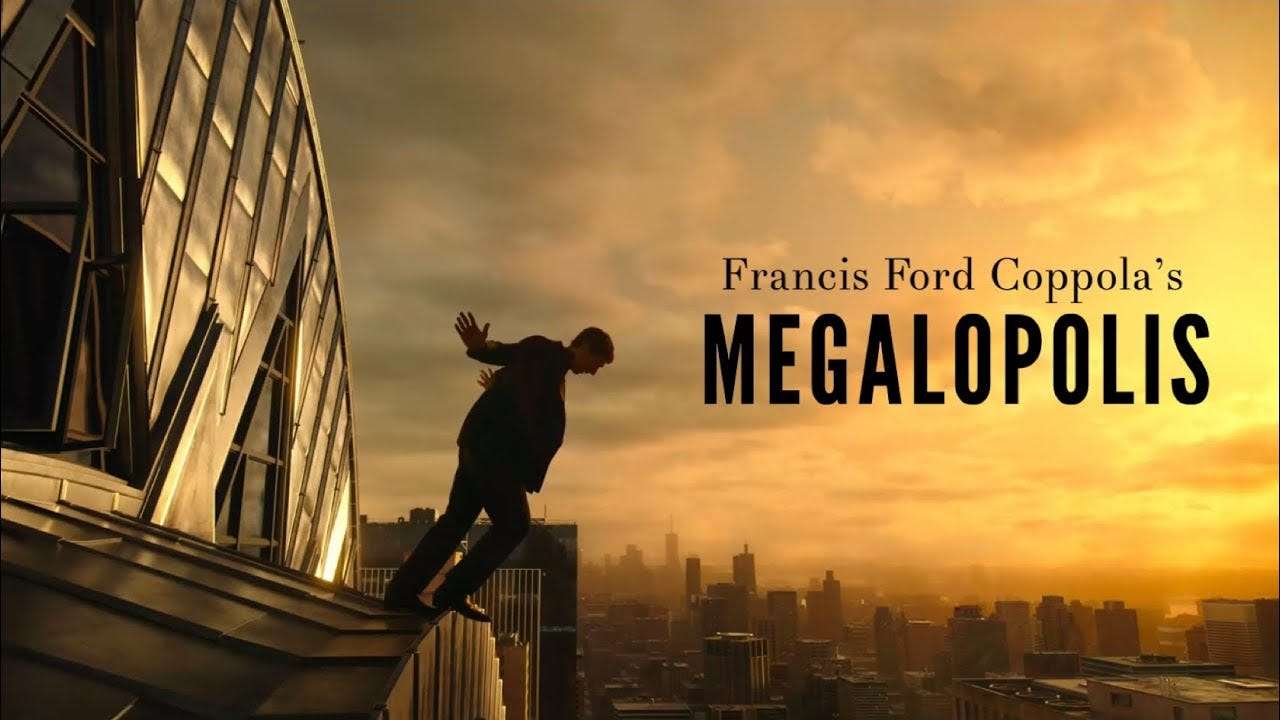
Megalopolis is one of those films that completely immerses you in the wild, untethered mind of its creator. Watching it, I couldn’t help but feel like I was sitting across from Francis Ford Coppola himself, listening to him excitedly unravel the ideas that have been swirling around in his head for years.
It’s like a dinner conversation with an old friend who’s a legendary filmmaker—and who, at this point, doesn’t feel the need to answer to anyone. The film is a pure, personal expression from a man who’s been in the industry long enough to make whatever he wants, with no external pressure holding him back.
Francis Ford Coppola’s Megalopolis: A Bold Vision Echoing Neil Breen, Struggling in Near-Empty Theaters
This era of cinema, where legends like Coppola are freely exploring their personal themes and obsessions, has been fascinating. I mean, we’ve got Killers of the Flower Moon where Martin Scorsese tackles the dark legacy of American history, and The Fabelmans, Steven Spielberg’s autobiographical ode to his childhood. But then there’s Megalopolis, Coppola’s vanity project that goes so far off the rails it almost feels like a companion piece to Neil Breen’s so-bad-it’s-good cult classic Fateful Findings.
Now, I’m not saying Coppola’s latest work is bad—far from it. But like Breen, Coppola has taken all the money and clout he’s earned and funneled it into this sprawling, confounding project that doesn’t care about adhering to traditional filmmaking rules.
Megalopolis is messy and beautiful, disjointed and hypnotic, and the whole thing feels like Coppola pouring his soul into a cinematic kaleidoscope. I couldn’t help but think of Breen as I watched. Breen, an architect-turned-filmmaker who’s built a cult following with his bizarre, earnest, self-funded films, also fills his work with messianic heroes, supernatural elements, and stiff dialogue delivered with deadly sincerity.
It’s like Coppola is channeling that same spirit, albeit with a much bigger budget and decades of experience in the craft.
Megalopolis follows Cesar Cataline, played by Adam Driver, a visionary architect in a futuristic version of Rome. He’s an idealist—a playboy with a heart of gold—who wants to build a utopia.

He’s got a monopoly on a mysterious super-material called Megalon (because of course he does) and even wins the Nobel Prize before you’ve figured out what’s going on. The story is all over the place, yet I was never bored. It’s a film where the plot almost feels secondary to Coppola’s sheer will to create something that defies the expectations of modern cinema.
There’s a point where Cesar stops time and starts preaching about the future—an odd, grandiose monologue that Coppola himself quoted during a Q&A I attended before the screening. “We are in need of a great debate about the future!” Cesar declares. I couldn’t help but laugh a little; it’s such an out-there statement, delivered with the same intensity and vagueness as one of Breen’s famous speeches in Fateful Findings: “You now have all the truths, the real truth. Act now! On your own!”
But that’s what makes Megalopolis so fascinating. Coppola’s film isn’t about giving us answers—it’s about stirring up thoughts and emotions, even if it does so in the most convoluted, overly dramatic way possible. And like Breen, Coppola’s sincerity is what makes it all work.
He believes in every bit of this mad, sprawling vision, and even when I didn’t fully get what he was going for, I couldn’t help but admire the sheer audacity of it.
The film is full of eclectic visuals that veer from stunning to baffling. Coppola’s use of split screens, garish CGI, and stage-like theatricality is as bold as it is inconsistent. At times, it felt like I was watching a student film with a budget; at other moments, I was genuinely floored by the artistry.
There’s this restlessness in the way Coppola throws everything at the screen, as if he’s desperate to communicate every idea he’s ever had before the credits roll.
This makes Megalopolis feel like an extension of Coppola himself, a reflection of his age and the immense freedom that comes with being a filmmaker who’s essentially financing his own projects. When there’s no studio breathing down your neck, you don’t need a coherent plot, polished dialogue, or even a clear message. You can make the film for yourself and hope that someone out there gets it—or at least appreciates the ride.
It’s this freedom, I think, that connects Megalopolis with Breen’s work. They’re both indulging their most personal, esoteric visions without having to answer to anyone. For Breen, that means using stock footage and DIY special effects; for Coppola, it’s about blending cinematic influences from across the decades and pushing the boundaries of visual storytelling. Both filmmakers are presenting raw, unfiltered expressions of their perspectives, and it’s this earnestness that makes their films so hypnotic.
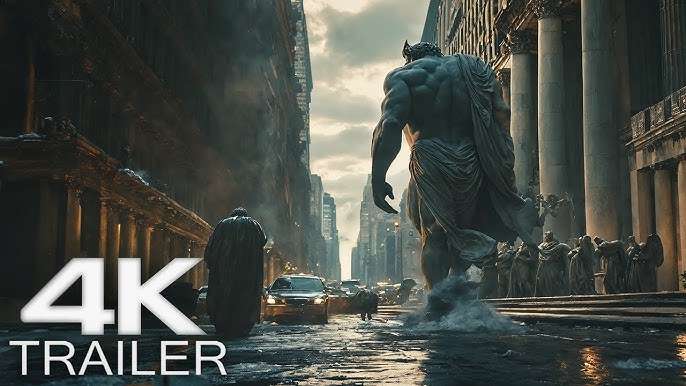
In an industry where so many films feel designed by committee, made to appeal to the broadest possible audience, Megalopolis stands out because it’s exactly the opposite. It’s a self-contained, unapologetically weird, and deeply personal project that could only come from Coppola.
Like Fateful Findings, it might not be traditionally good, but it’s so undeniably pure in its intentions that I found myself captivated by it, flaws and all.
By the time the credits rolled, I felt like I’d spent a few hours inside Coppola’s mind, listening to his rambling, sometimes incoherent thoughts about the world, art, and the future. It wasn’t always enjoyable, but it was absolutely valuable.
Also Read
The Perfect Couple Cast and Characters: Meet the Stars of Netflix’s New Series
“Uglies” Ending Explained: Will There Be a Sequel?
