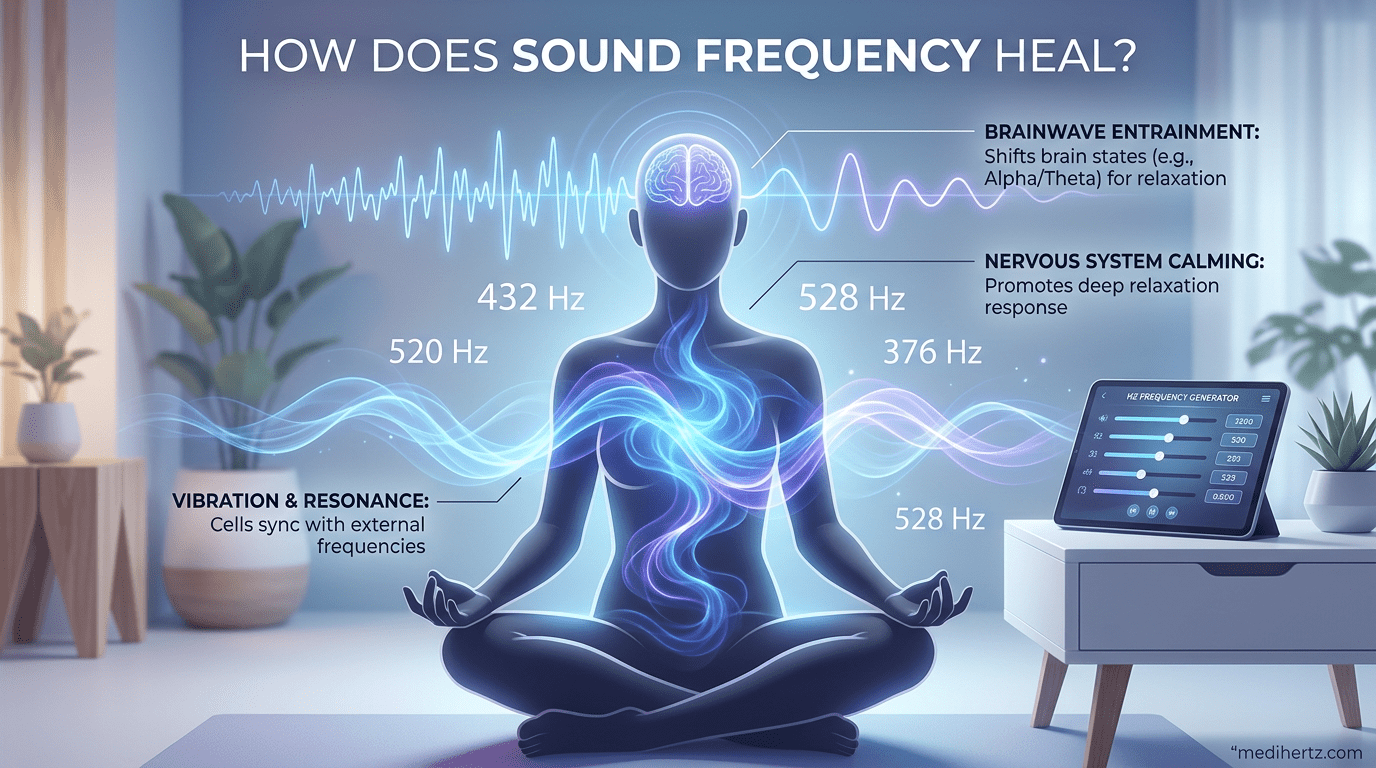
How Does Sound Frequency Heal?
Sound frequency healing works by using vibrations that influence the brain, nervous system, and emotional state. Certain tones such as 432 Hz or 528 Hz may help promote relaxation, meditation, and stress relief.
10 Healing Frequencies: 174 Hz to 963 Hz for Meditation & Wellness
Sound has been used for healing and relaxation for thousands of years. Ancient cultures used chanting, drums, bells, and singing bowls to calm the mind and support wellbeing. Today, many people explore sound frequency healing through meditation music, binaural beats, and specific tone frequencies such as 528 Hz or 432 Hz.
But an important question remains:
How does sound frequency heal the body and mind?
To understand this, we need to look at how sound interacts with the brain, nervous system, and physical body.
Play Frequencies Now
What Is Sound Frequency Healing?
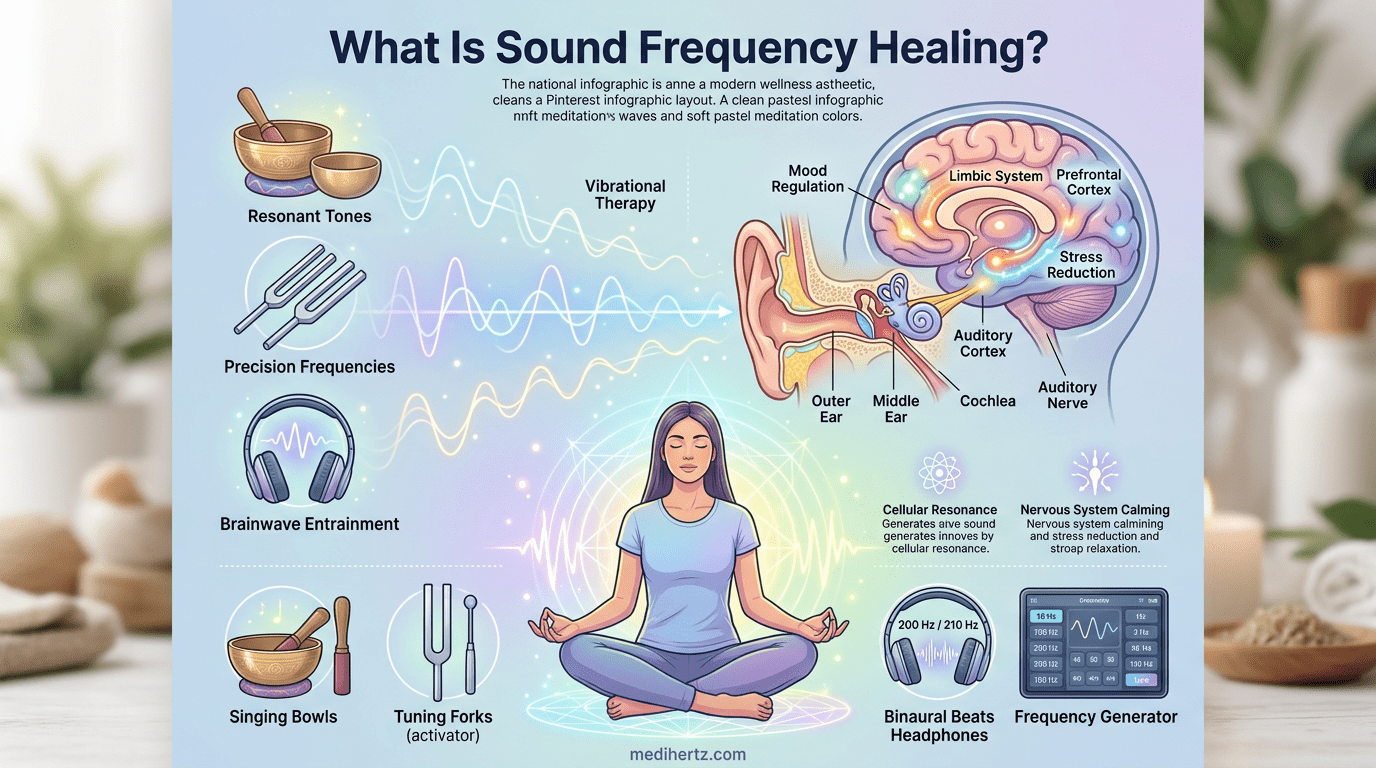
Sound frequency healing is the idea that specific sound vibrations can influence the body’s physical and mental state.
Sound travels in waves. These waves create vibrations in the air and in the body when we hear them.
Because the human body is largely composed of water and soft tissue, it can respond strongly to vibration. When certain frequencies are played repeatedly, they can encourage the body and brain to shift into calmer and more balanced states.
Many modern wellness practices use sound frequencies for:
-
deep relaxation
-
stress relief
-
meditation
-
focus improvement
-
sleep support
Common methods include:
-
meditation music
-
tuning forks
-
singing bowls
-
binaural beats
-
frequency generators
These methods aim to help the mind enter a calm, focused, or meditative state.
Transform your workspace into a calming creative zone with this immersive 432 Hz
🌌 Sound Frequency Healing Desktop Live Wallpaper ✨
How Does Sound Frequency Heal the Body?
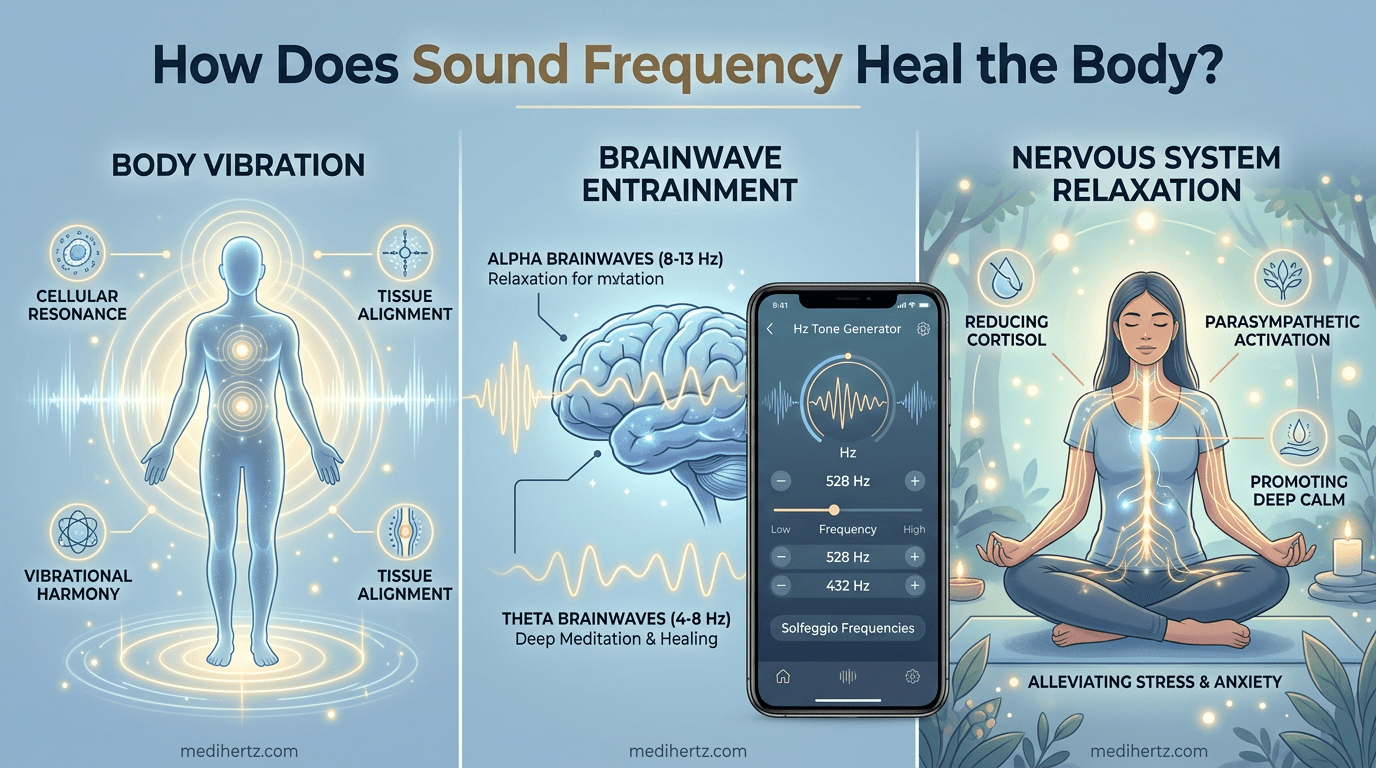
Sound healing works through several natural processes in the body. The three most important mechanisms are vibration, brainwave entrainment, and nervous system regulation.
1. Resonance and Vibrations in the Body
Sound is not just something we hear. It is also something we feel physically.
When sound waves travel through the body, they create small vibrations in tissues and fluids. This is called resonance.
Resonance happens when a system responds strongly to a specific frequency.
For example:
-
A guitar string vibrates when the right note is played.
-
A glass can vibrate when exposed to a certain pitch.
The human body behaves in a similar way.
Because the body contains around 60% water, sound waves travel efficiently through it. This means vibrations from sound can move through muscles, organs, and tissues.
Some researchers believe these vibrations may help:
-
relax tight muscles
-
stimulate circulation
-
influence cellular communication
-
release physical tension
This is why people often feel vibrations in the chest or head when listening to deep tones or singing bowls.
Even simple sounds like humming or chanting create vibration inside the body, which can produce a calming effect.
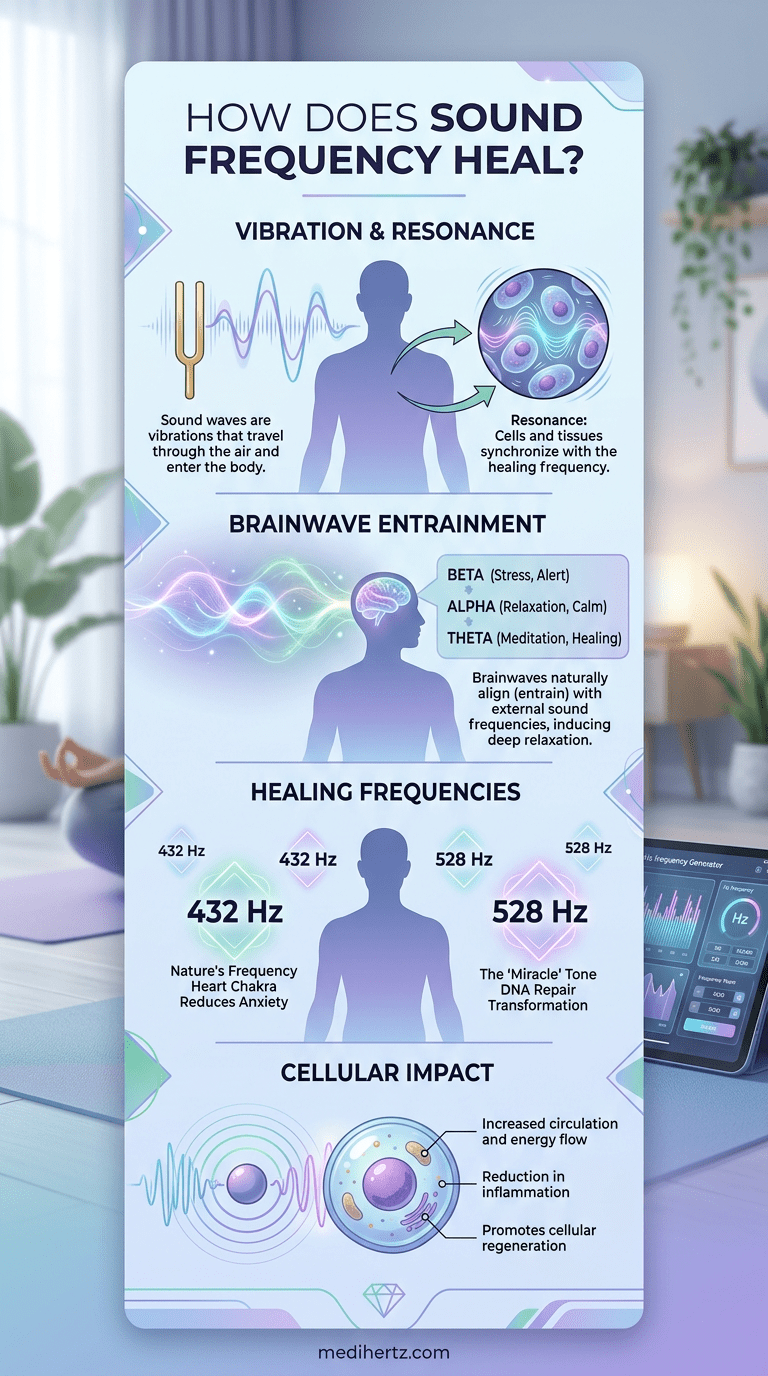
2. Brainwave Entrainment
Another major way sound frequencies influence the body is through brainwave entrainment.
The brain produces electrical activity known as brainwaves. These waves change depending on your mental state.
For example:
| Brainwave | Frequency Range | Mental State |
|---|---|---|
| Delta | 0.5 – 4 Hz | Deep sleep |
| Theta | 4 – 8 Hz | Meditation and creativity |
| Alpha | 8 – 12 Hz | Relaxation |
| Beta | 12 – 30 Hz | Active thinking |
When the brain hears repeated rhythmic sounds, it often begins to synchronize with the rhythm.
This is called entrainment.
Certain sound techniques use this principle intentionally.
One well-known example is binaural beats.
Binaural beats occur when:
-
one ear hears a tone
-
the other ear hears a slightly different tone
The brain then perceives a third rhythmic beat equal to the difference between the two tones.
This can encourage the brain to move toward alpha or theta states, which are linked to relaxation and meditation.
Many people use binaural beats to:
-
improve meditation
-
reduce anxiety
-
increase focus
-
support sleep
If you want to explore this effect yourself, you can experiment using the Medihertz Binaural Beats Generator to create custom brainwave tones for meditation and relaxation.
3. Nervous System Relaxation
Sound also affects the autonomic nervous system, which controls automatic body functions such as heart rate and breathing.
There are two main branches:
Sympathetic nervous system
-
responsible for stress and alertness
-
often called the “fight or flight” response
Parasympathetic nervous system
-
responsible for relaxation and recovery
-
often called the “rest and digest” state
Slow rhythmic sounds and calming frequencies can stimulate the parasympathetic nervous system.
When this happens, the body begins to relax naturally.
Possible effects include:
-
slower heart rate
-
deeper breathing
-
reduced cortisol levels
-
calmer thoughts
-
improved mood
This is why gentle music, chanting, or low-frequency tones can quickly create a feeling of calm.
Transform your workspace into a calming creative zone with this immersive 432 Hz
🌌 Sound Frequency Healing Desktop Live Wallpaper ✨
Popular Healing Frequencies and Their Effects
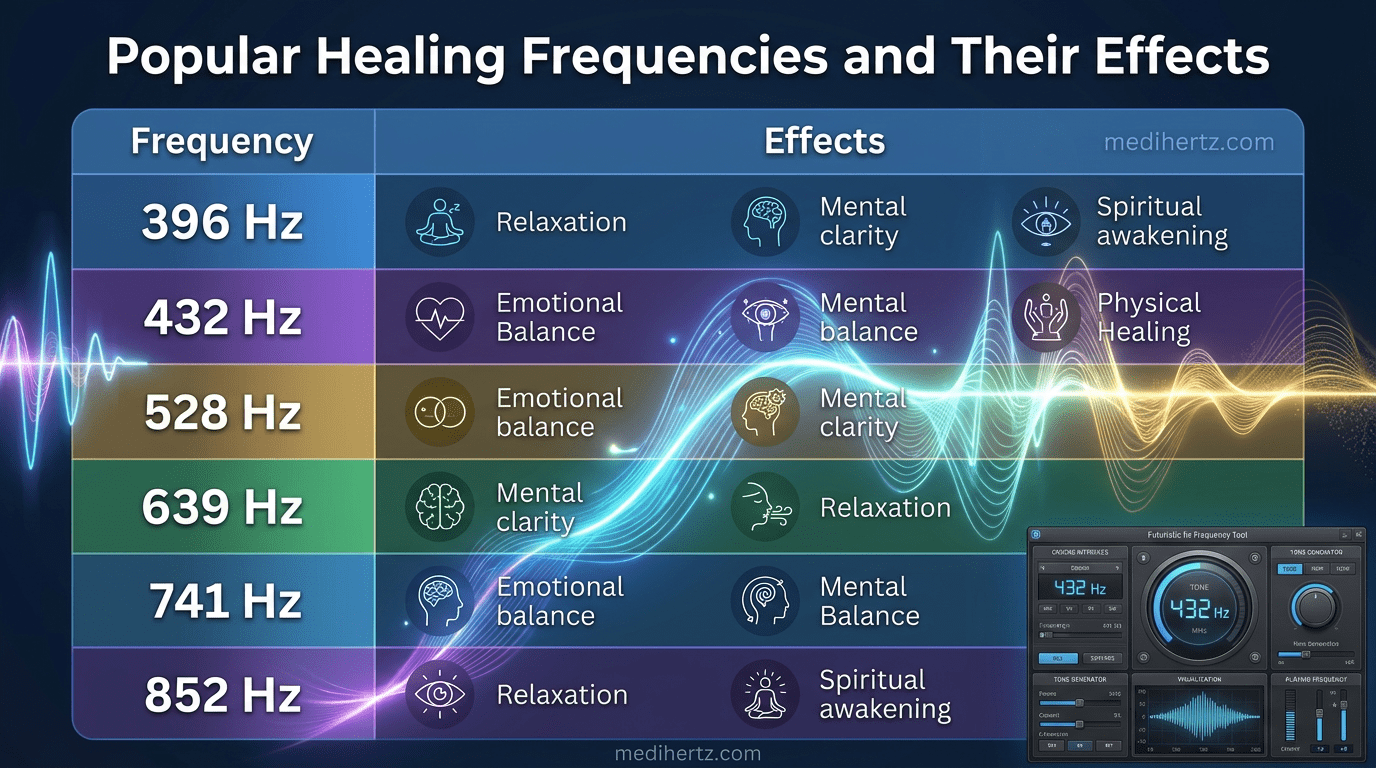
Many people exploring sound healing are curious about specific healing frequencies. While scientific research is still ongoing, certain frequencies have become widely used in meditation and wellness communities.
Below are some commonly discussed sound frequencies.
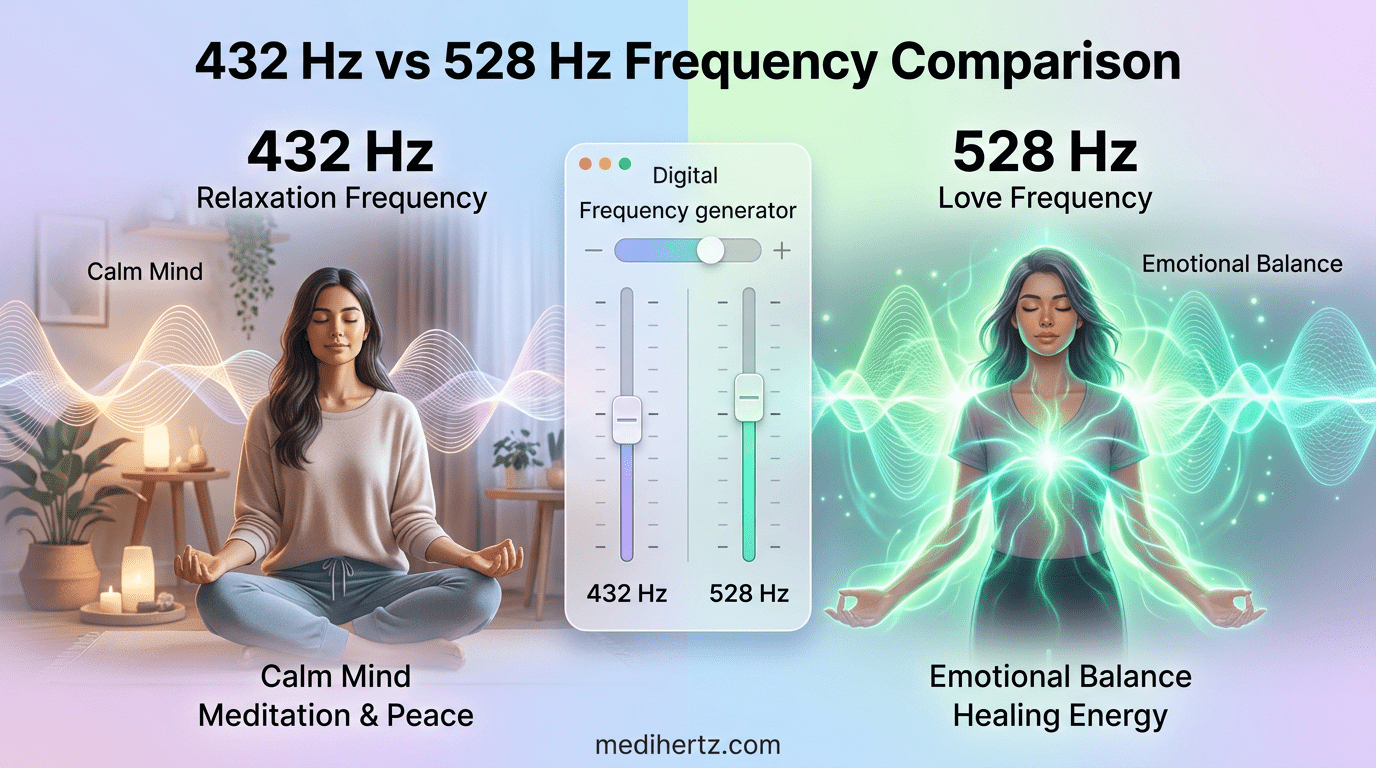
432 Hz Frequency
432 Hz is sometimes described as a natural harmony frequency.
People often report that music tuned to 432 Hz feels:
-
softer
-
warmer
-
more relaxing
Many meditation tracks use this tuning to create a calm listening experience.
528 Hz Frequency
528 Hz is one of the most famous sound frequencies used in meditation.
It is sometimes called the “love frequency.”
Supporters claim it may help with:
-
emotional balance
-
stress reduction
-
mental clarity
Some people use 528 Hz tones during meditation sessions lasting 10–20 minutes to promote relaxation.
396 Hz Frequency
396 Hz is often associated with releasing fear and emotional tension.
Meditation music using this tone is commonly used in guided healing or emotional release practices.
741 Hz Frequency
741 Hz is linked in some traditions with mental clarity and intuition.
People sometimes use it during:
-
journaling
-
deep meditation
-
mindfulness practices
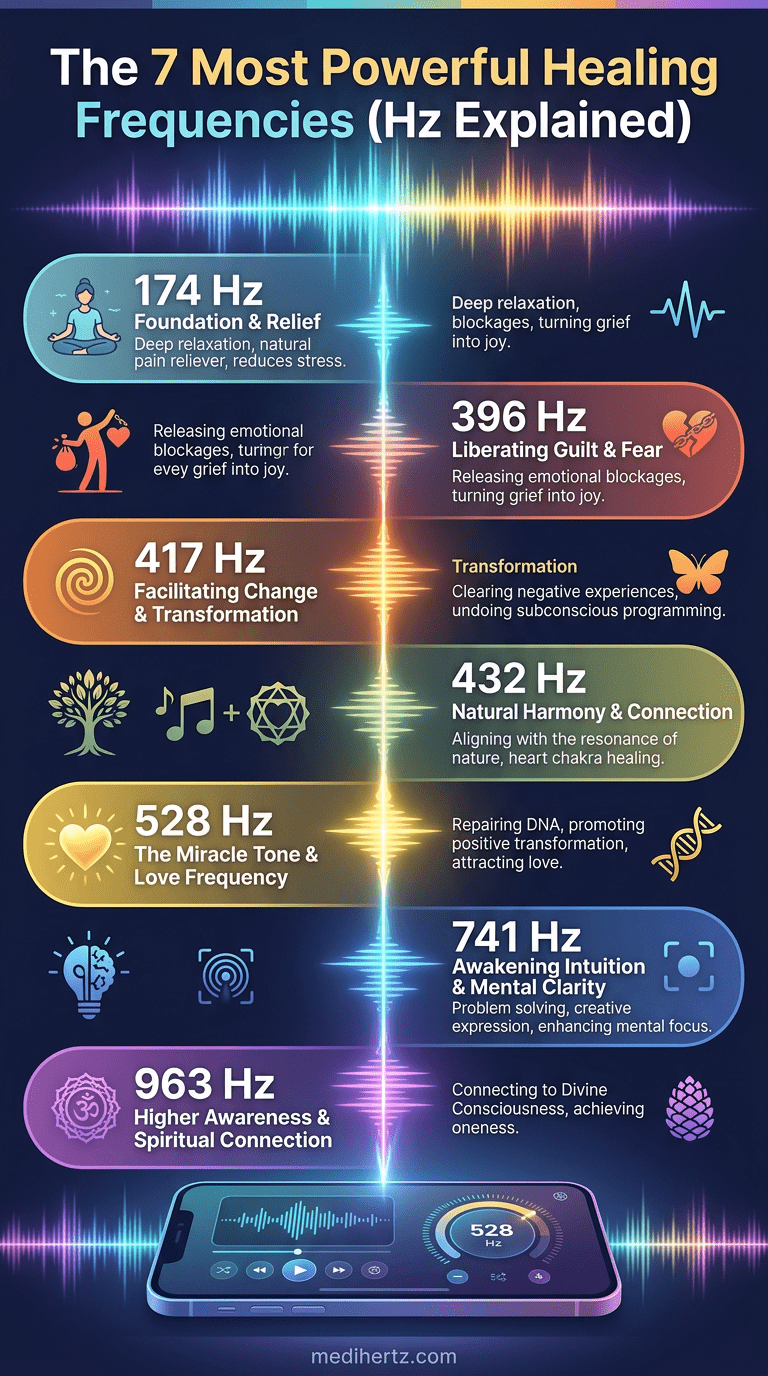
Quick Guide to Popular Healing Frequencies
| Frequency (Hz) | Common Purpose | Reported Effects | When People Use It |
|---|---|---|---|
| 174 Hz | Deep relaxation | May help reduce tension and create a feeling of safety | Stress relief, grounding meditation |
| 285 Hz | Energy balancing | Often associated with restoring calm and emotional stability | Quiet meditation or reflection |
| 396 Hz | Emotional release | Linked with reducing fear, guilt, and negative thoughts | Emotional healing sessions |
| 417 Hz | Change and renewal | Associated with breaking negative patterns | Personal growth meditation |
| 432 Hz | Natural harmony | Many listeners say it sounds warmer and more relaxing than standard tuning | Relaxation, music listening |
| 528 Hz | Emotional balance | Sometimes called the “love frequency” and used for calm meditation | Meditation and mindfulness |
| 639 Hz | Relationship harmony | Associated with compassion and connection | Heart-centered meditation |
| 741 Hz | Mental clarity | Linked with intuition and clearer thinking | Study, journaling, focus |
| 852 Hz | Awareness | Associated with deeper awareness and spiritual reflection | Deep meditation |
| 963 Hz | Higher consciousness | Sometimes called the “crown frequency” for spiritual practices |
Do Sound Frequencies Really Work?
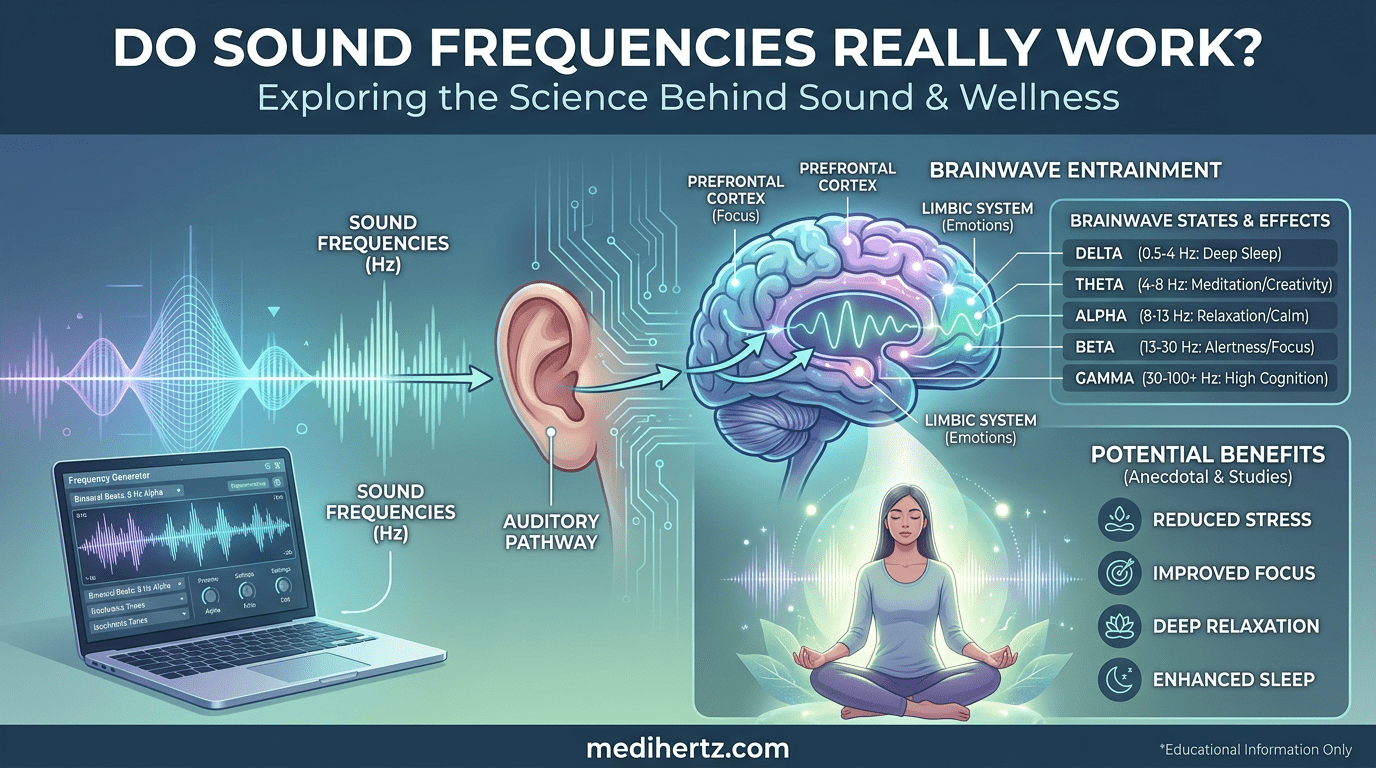
This is one of the most common questions people ask.
Scientific research does support some benefits of sound-based practices, especially for relaxation and stress reduction.
Studies on meditation music and sound therapy suggest that sound can help:
-
reduce anxiety
-
improve mood
-
support sleep
-
deepen meditation
-
increase mindfulness
However, it is important to understand that specific healing frequencies are not proven medical treatments.
Sound healing should be seen as a wellness tool, not a cure for diseases.
Many people still find it helpful because it encourages:
-
relaxation
-
mindfulness
-
emotional balance
These effects alone can greatly improve overall wellbeing.
Ways Sound Frequencies Are Used in Healing
Sound healing appears in many forms around the world.
Common methods include:
Singing bowls
Metal bowls that create deep resonant tones used in meditation and yoga.
Tuning forks
Precise frequencies applied near the body for vibrational therapy.
Chanting and mantra
Repetitive vocal sounds such as “Om” that produce internal vibration.
Meditation music
Ambient music designed to guide relaxation and focus.
Binaural beats
Two slightly different tones played through headphones to influence brainwaves.
How to Try Sound Frequency Healing
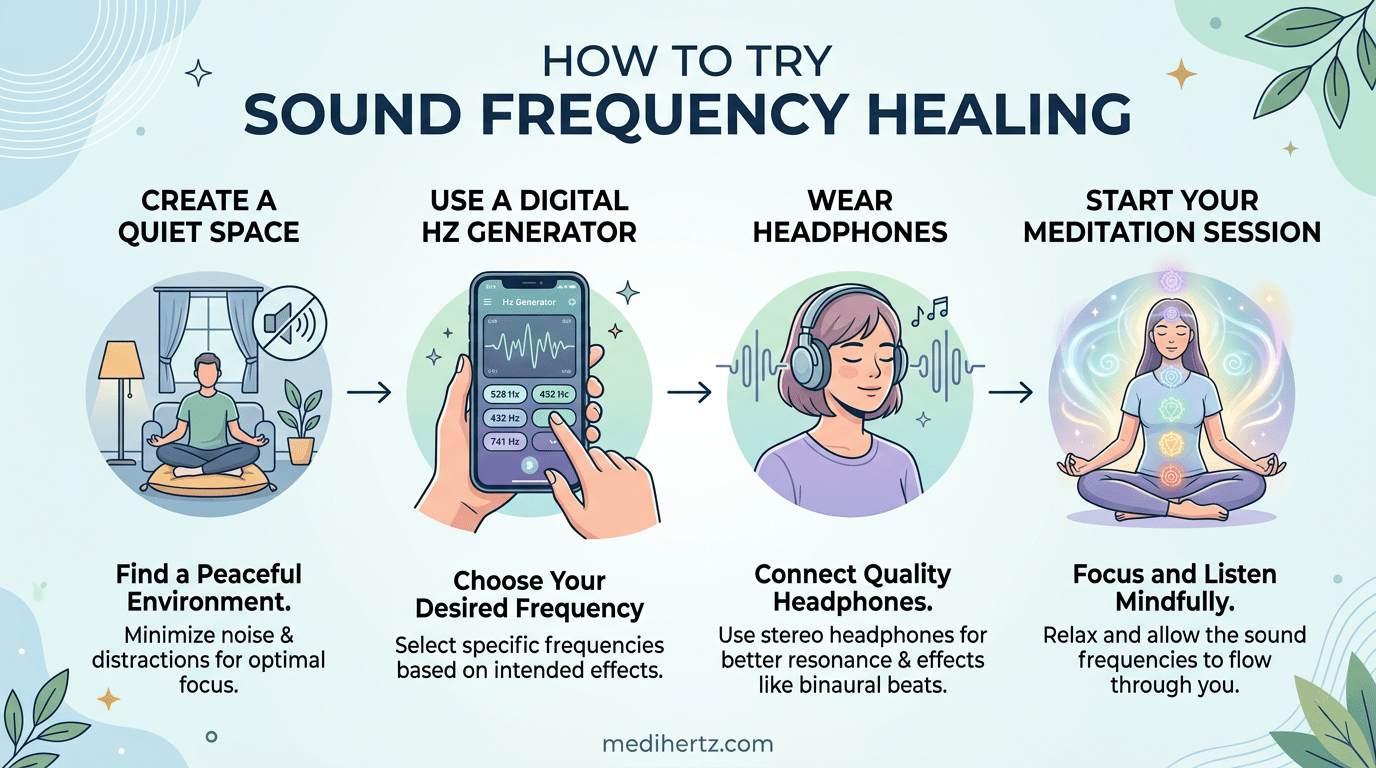
You can experiment with sound frequencies easily at home.
Here is a simple beginner approach.
Step 1: Find a quiet environment
Choose a calm space where you will not be interrupted.
Step 2: Select a relaxing frequency
Popular beginner choices include:
-
432 Hz
-
528 Hz
-
alpha brainwave tones
Step 3: Use headphones if needed
Headphones are especially important for binaural beats, because each ear must receive a different tone.
Step 4: Listen for 10–20 minutes
Regular sessions of 10–20 minutes daily often produce the best results.
Step 5: Focus on breathing
Slow breathing helps your nervous system relax while listening.
Try Healing Frequencies Yourself
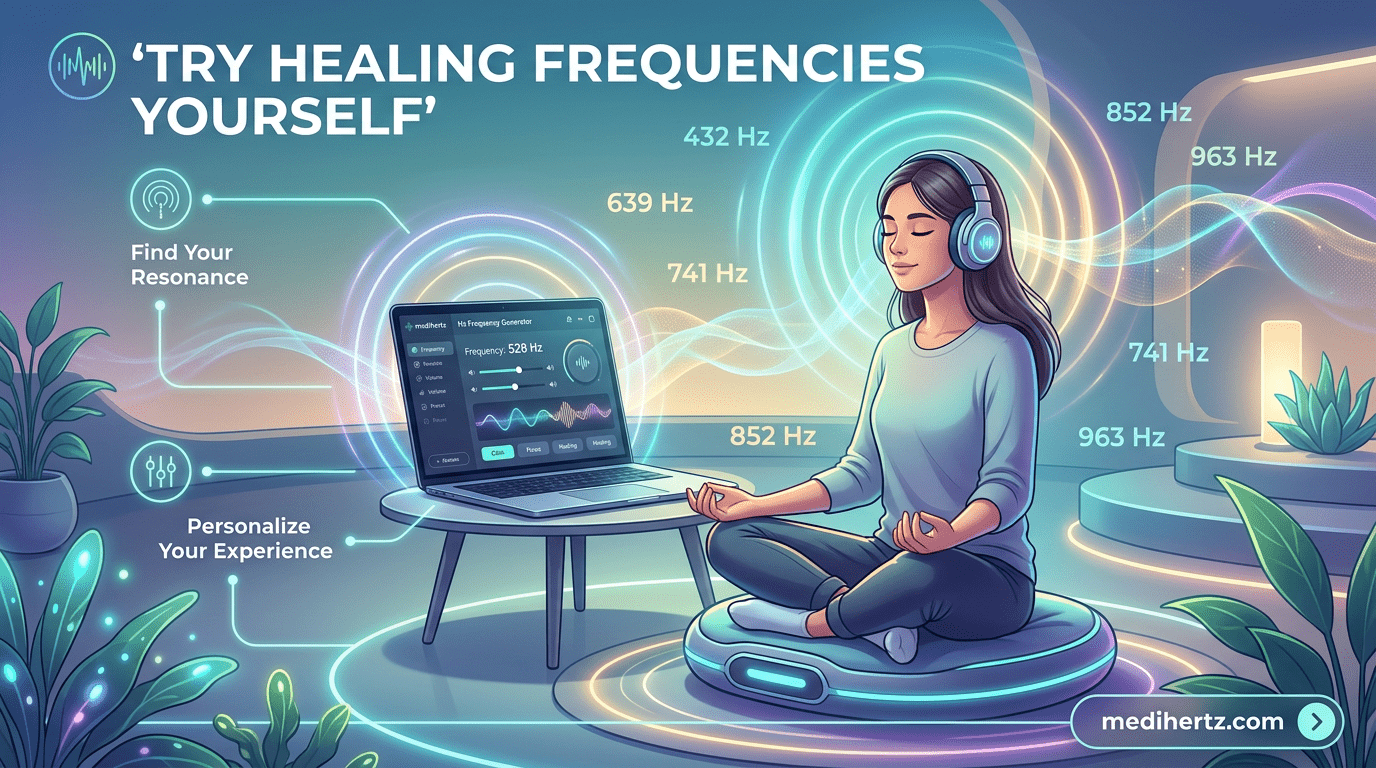
If you want to explore sound healing more deeply, you can experiment with different tones using the Medihertz Frequency Generator.
This tool allows you to:
-
play any frequency in Hz
-
test meditation tones
-
experiment with healing sound vibrations
-
create custom meditation sessions
You can also try the Medihertz Binaural Beats Generator to produce brainwave tones designed for:
-
relaxation
-
meditation
-
sleep
-
focus
Many users report that consistent practice for 1–2 weeks makes the calming effects easier to notice.
Safety Tips for Sound Healing
Sound therapy is generally safe, but a few precautions are important.
Avoid or limit use if:
-
you have epilepsy or sound-triggered seizures
-
you are sensitive to repetitive sounds
-
the volume is too high
Always keep volume comfortable and moderate.
Listening at safe levels protects your hearing and ensures a relaxing experience.
Conclusion
Sound frequency healing works mainly through three natural mechanisms:
-
vibration and resonance in the body
-
brainwave entrainment
-
nervous system relaxation
While scientific research is still developing, many people use sound frequencies to support meditation, stress relief, and emotional balance.
With simple tools like frequency generators and binaural beats, anyone can explore how sound influences the mind and body.
Consistent listening sessions combined with mindfulness and deep breathing can help create a calm and focused mental state over time.
⚠️ This article is for educational purposes, not medical advice.
Frequently Asked Questions About Sound Frequency Healing
Can sound frequency heal the body?
Sound frequencies cannot medically cure diseases, but they can influence the body through vibration, relaxation, and brainwave responses. Certain sounds may help reduce stress, calm the nervous system, and support meditation. Many people use healing frequencies such as 432 Hz or 528 Hz to improve relaxation and emotional balance.
Does sound frequency healing really work?
Sound frequency healing can work as a wellness and relaxation technique. Research shows that calming sounds and meditation music can reduce anxiety, improve mood, and help the brain enter relaxed states. However, scientific evidence for specific healing frequencies is still developing, so they should be used as supportive practices rather than medical treatments.
How does sound frequency heal the body?
Sound frequencies heal mainly through vibrations and brainwave entrainment. When sound waves enter the body, they create small vibrations in tissues and fluids. Repetitive tones can also influence brainwave activity, helping the mind shift into relaxed states such as alpha or theta brainwaves, which are linked to meditation and stress relief.
What sound frequency is best for healing?
There is no single frequency that works for everyone, but several tones are commonly used in meditation and sound therapy. Popular healing frequencies include 432 Hz for relaxation, 528 Hz for emotional balance, and 741 Hz for mental clarity. Many people experiment with different frequencies to see which one produces the most calming effect.
Does listening to healing frequencies work?
Listening to healing frequencies can help many people relax, focus, or meditate more easily. Slow rhythmic sounds encourage the brain to slow down and activate the parasympathetic nervous system, which supports calmness and recovery. Regular listening sessions of 10–20 minutes are often recommended for meditation or relaxation.
How do healing frequencies work?
Healing frequencies work by influencing the body’s vibrational and neurological systems. Sound waves create physical vibrations and can also affect brainwave patterns. When the brain synchronizes with certain rhythms, it may enter relaxed mental states that support meditation, focus, or sleep.
How do different sound frequencies affect the body?
Different sound frequencies can influence the body and mind in different ways. Lower frequencies often feel grounding and calming, while higher frequencies may stimulate alertness and focus. Certain tones are used in meditation practices to help guide the brain into relaxation or deep concentration.
What does 528 Hz do to the human body?
The 528 Hz frequency is commonly used in meditation music and is sometimes called the “love frequency.” Many people report that listening to 528 Hz helps them feel calmer, more emotionally balanced, and mentally clear. Although scientific research is limited, it is widely used for relaxation and mindfulness practices.
What does 432 Hz do to your brain?
Music tuned to 432 Hz is often described as softer and more relaxing than standard tuning. Some listeners feel that it creates a more natural or calming listening experience. It is frequently used in meditation music to support stress reduction and deep relaxation.
Where are high frequency sounds detected?
High frequency sounds are detected in the inner ear, specifically in the cochlea. Tiny sensory hair cells inside the cochlea respond to different frequencies and send signals to the brain’s auditory cortex. High-frequency sounds are processed near the base of the cochlea, while lower frequencies are detected deeper inside the structure.
Read Next👇
Best Sound Healing Frequencies for Meditation (Complete Guide)
Explore More Medihertz Tools
🔊 Healing Frequency Tools
-
- Vocal Pitch & Ear Scale Trainer
- TuneNaad 🎸
- Daily Weight Loss Frequencies
- Instant Hz Listener
- Hz Frequency Generator (Advanced)
- Om Chanting Meditation Tool
- CatPurrTone Tool
- Third Eye & Chakra Alignment Frequency Tool
- TradeMind Frequency Analyzer – for Traders
- White Noise & Binaural Beats Generator Free
- CalmMind Quiz
- Manifestation Tools
- Magic Ball Prediction Tool
