


What Foods Increase Gamma Waves? A 7-Day Food and Brain Focus Ritual
Written by Prashyant Jha | Certified Music Therapist | Medihertz Frequencies
What foods increase gamma waves? No specific food has been scientifically proven to reliably increase gamma brainwaves in humans. However, eating a balanced diet, getting enough sleep, staying hydrated, and practising focused meditation can help support normal brain function, attention, and mental well-being.
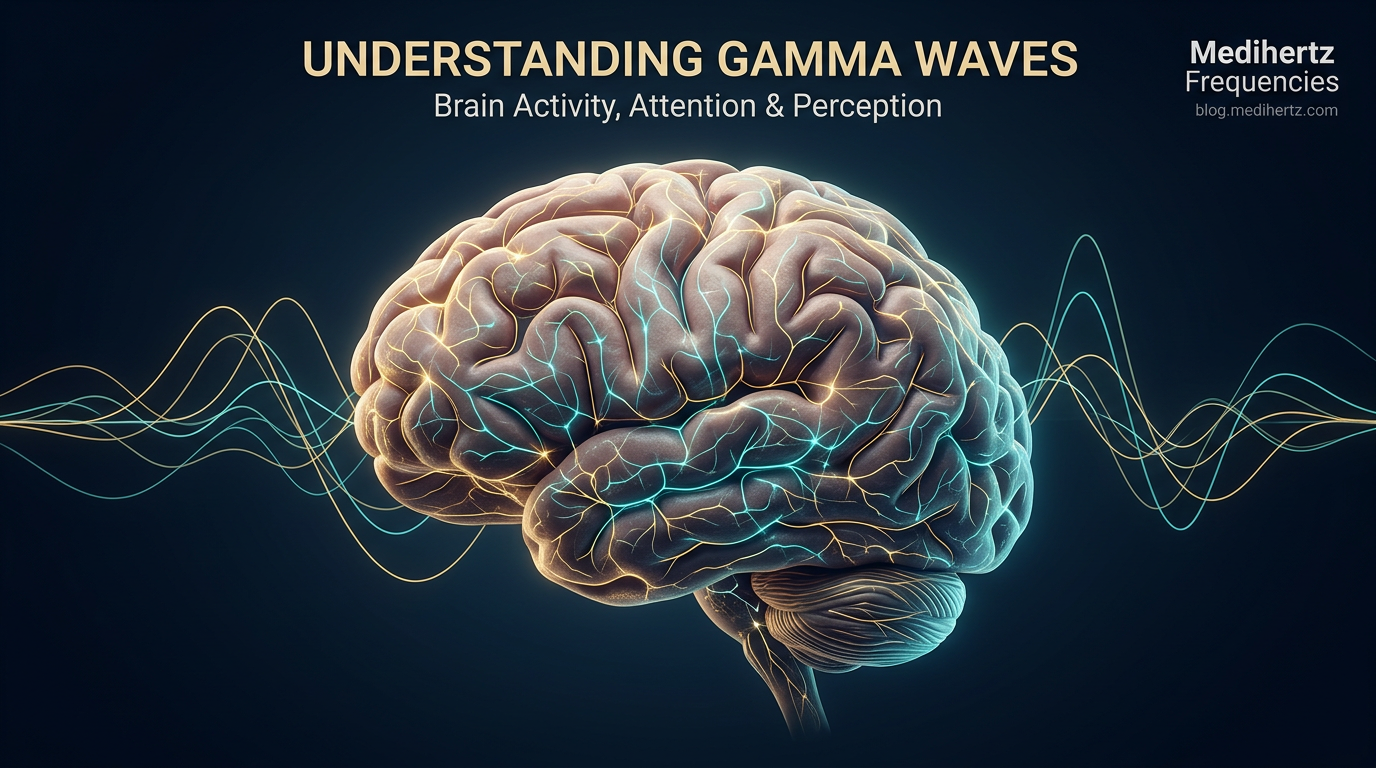
Gamma waves are high-frequency patterns of electrical activity in the brain, generally discussed in the range of approximately 30–100 Hz. Researchers study these patterns in connection with attention, perception, memory, and information processing.
If you want to support your brain’s natural ability to focus, you can begin with a simple daily routine that combines brain-supportive foods, mindful breathing, meditation, and a regular sleep schedule.
At Medihertz Frequencies, you can explore a practical seven-day routine using food, sound, and mindfulness tools to build a consistent daily wellness habit.

Which foods may support healthy brain activity?
There is no proven gamma-wave diet. The following foods provide nutrients that support general brain health and can form part of a balanced eating pattern.
1. Fatty fish
Salmon, sardines, and other oily fish contain omega-3 fatty acids, including DHA, which is an important structural component of the brain.
How to include them: Eat fish as part of a balanced meal if it suits your diet. If you do not eat fish, walnuts, chia seeds, and flaxseeds provide plant-based omega-3 ALA.
Remember: omega-3 intake supports nutritional health, but eating these foods has not been shown to reliably raise gamma-wave activity.
2. Walnuts, almonds, and seeds
Walnuts, almonds, pumpkin seeds, and sunflower seeds provide healthy fats, minerals, and other nutrients. They can be useful additions to a balanced diet.
How to include them: Try a small handful of unsalted nuts or seeds as a snack, or add them to breakfast.
3. Eggs and other protein-rich foods
Eggs provide protein, choline, and other nutrients. Beans, lentils, dairy products, tofu, and other protein-rich foods can also contribute to a balanced diet.
How to include them: Add a suitable source of protein to breakfast or lunch to make your meals more balanced and satisfying.
4. Leafy green vegetables
Spinach, mustard greens, and other leafy vegetables provide folate and a range of vitamins and minerals.
How to include them: Add leafy greens to lunch, dinner, soups, or other familiar meals.
5. Berries and other colourful fruits
Berries, oranges, guava, and other fruits provide vitamins, fibre, and beneficial plant compounds.
How to include them: Eat whole fruit as part of breakfast or as a snack. Choose fruits that are accessible and suitable for your dietary needs.
6. Whole grains and legumes
Oats, whole-wheat foods, lentils, chickpeas, and beans provide fibre and other nutrients that help make meals nutritionally balanced.
How to include them: Choose a variety of whole grains and legumes rather than relying mainly on highly processed snack foods.
7. Water and other unsweetened drinks
Dehydration can affect how you feel and perform mentally. Drinking enough fluids throughout the day helps support normal body function.
How to include them: Keep water available and drink regularly, adjusting your intake for your activity, climate, and individual needs.
The important point: These are brain-supportive food choices, not gamma-wave boosters. Your overall eating pattern matters more than any single food.

Can meditation increase gamma brainwaves?
Research has examined brainwave patterns during different forms of meditation. Some studies have found increased gamma activity in experienced meditators, while other research reports mixed results.
A 2017 study comparing practitioners of three meditation traditions with a control group found higher gamma activity in certain brain regions among the meditators. A 2026 systematic review and meta-analysis also reported positive pooled effects for several brainwave bands, including gamma, while noting substantial differences across studies and the need for more standardised research.
These findings are interesting, but they do not mean that every person will increase gamma activity by following a particular meditation routine. You also cannot know whether your gamma waves have increased simply because you feel calmer or more focused. Measuring brainwave activity requires appropriate equipment, such as electroencephalography (EEG).
Still, you can build a daily routine that combines mindful attention, relaxation, good sleep, and balanced nutrition.
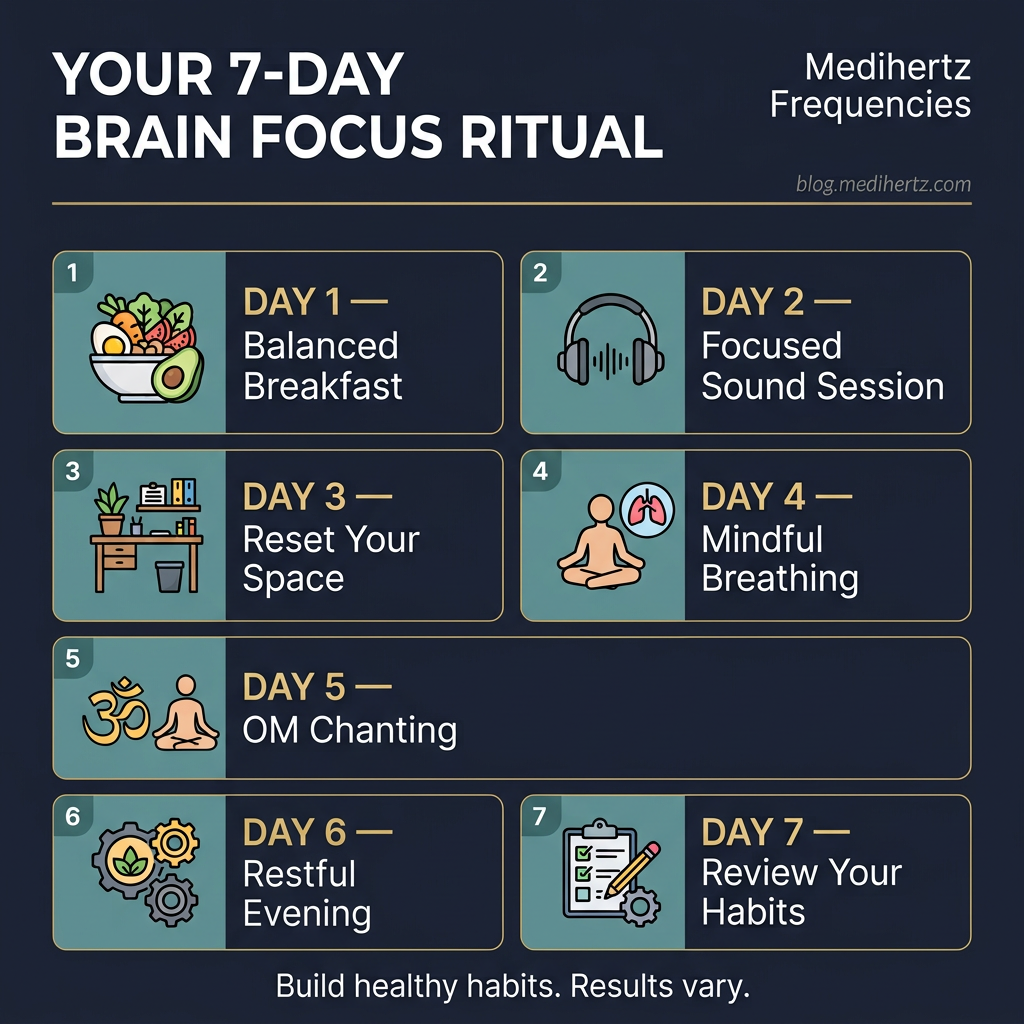
The Medihertz 7-Day Gamma Focus Ritual
This seven-day plan is designed to help you build a consistent wellness routine. It is not a clinically validated gamma-wave training programme, and the benefits will vary from person to person.
Try to practise at approximately the same time each day. Begin with 15–25 minutes and adjust the routine to suit your schedule.

Day 1: Build your brain-supportive breakfast
Goal: Start the day with balanced nutrition.
- Drink a glass of water after waking, if appropriate for you.
- Eat a balanced breakfast containing protein, fibre, and other nutrients. Examples include oats with nuts and fruit, eggs with whole-grain toast, or a suitable plant-based alternative.
- Spend two minutes sitting quietly without checking your phone.
- Notice your breathing and choose one realistic priority for the day.
What you may notice: A more structured morning and a clearer sense of what you want to accomplish. Do not expect a measurable change in gamma waves.

Day 2: Create a focused sound session
Goal: Practise giving your attention to one activity.
- Choose a quiet place where you can sit comfortably.
- Open the Medihertz Instant Hz Listener.
- Explore an available sound or frequency setting at a comfortable volume.
- Listen for five to ten minutes while gently returning your attention to the sound whenever your mind wanders.
- Finish by spending one minute in silence.
Treat the sound as a focus or relaxation aid, not as a scientifically established way to force your brain into gamma activity. No particular frequency is proven to produce the same gamma-wave response in everyone.
What you may notice: You may find it easier to settle into a quiet activity or discover which listening environment you prefer.
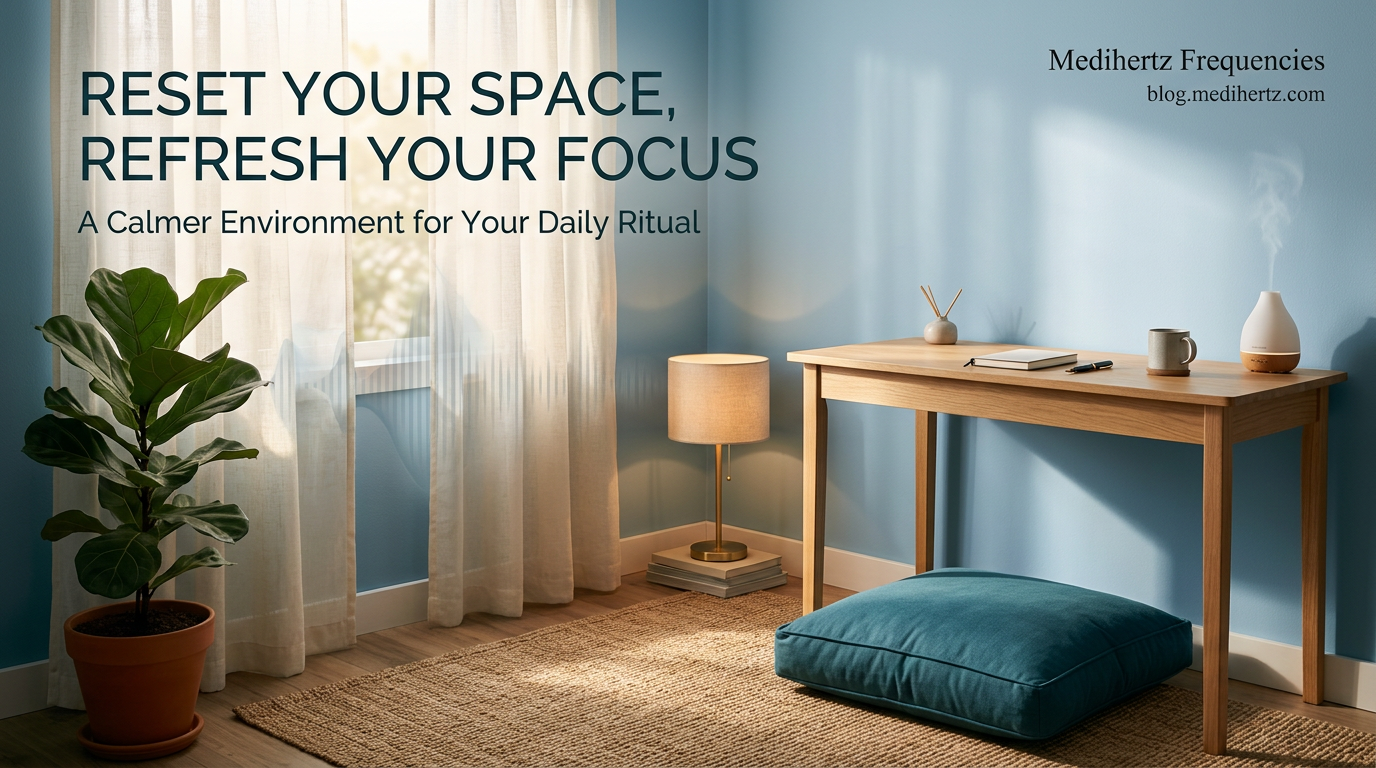
Day 3: Reset your surroundings
Goal: Reduce distractions and make space for attention.
- Clear a small part of your desk or meditation area.
- Reduce unnecessary noise and silence nonessential notifications.
- Explore the Medihertz Room Energy Reset through the Tools Hub, if the tool is available there.
- Use the available sound or ambience options for a short, comfortable session.
- Sit quietly for five minutes and focus on your breathing.
A calmer environment may make it easier to concentrate, but the term “energy reset” here describes a wellness experience rather than a scientifically measured change in room energy.
What you may notice: A more organised space and fewer environmental distractions.
Day 4: Practise an anger and stress reset
Goal: Notice emotions before reacting.
- Eat your usual balanced meals and drink enough fluids.
- When you notice frustration, pause before responding.
- Try slow, comfortable breathing for two minutes. Do not force deep breaths or hold your breath if it feels uncomfortable.
- Explore the Medihertz Anger Management tool through the Tools Hub, if available.
- Write down one situation that caused stress and one constructive response you could try next time.
What you may notice: You may become more aware of emotional triggers and practise responding more deliberately. This is not evidence that gamma waves have increased.

Day 5: Use OM chanting for focused attention
Goal: Practise attention through sound and repetition.
- Sit comfortably with your back supported.
- Take a few natural breaths.
- Chant “OM” softly, or listen to an OM sound if chanting is not comfortable for you.
- Continue for five to ten minutes at a comfortable pace.
- When your attention wanders, gently return it to the sound.
- Sit quietly for one minute before continuing your day.
Explore the Medihertz OM chanting and focus tools through the Tools Hub, if available.
Research on OM meditation has explored relaxation and brain activity, but the evidence does not establish OM chanting as a guaranteed gamma-wave enhancer.
What you may notice: A quiet pause in your day and an opportunity to practise sustained attention.

Day 6: Improve your evening wind-down
Goal: Build a more consistent sleep routine.
- Eat a balanced dinner that suits your schedule and dietary needs.
- Reduce stimulating activities before bed.
- Open Medihertz Nox Nidra through the Tools Hub, if the tool is available there.
- Choose a comfortable relaxation or sleep sound, if offered.
- Keep the volume low and set a timer if the tool supports one.
- Aim for a regular bedtime and enough sleep for your age and needs.
What you may notice: A more deliberate transition from daily activity to rest. Better sleep can support attention and general well-being, but this routine does not guarantee changes in gamma-wave activity.
Day 7: Combine your routine and review your progress
Goal: Find a realistic routine you can continue.
- Eat a balanced breakfast containing a protein source, whole grains or another fibre-rich food, and fruit or vegetables.
- Spend five to ten minutes with your preferred sound or frequency setting in the Instant Hz Listener.
- Practise OM chanting or quiet breathing for five minutes.
- Take a short break from screens and unnecessary notifications.
- Use your preferred room-reset or relaxation tool if it helps you settle.
- Review your sleep, concentration, mood, and consistency over the past week.
Ask yourself:
- Did I follow my routine more consistently?
- Was it easier to create quiet time for myself?
- Did I notice any change in my sleep or ability to focus?
- Which practice felt useful enough to continue?
What you may notice: Greater awareness of your habits, your preferred relaxation methods, and the conditions that help you concentrate. Seven days is too short to promise a lasting cognitive change, and these observations cannot confirm that your gamma waves increased.
A simple daily schedule to continue after Day 7
You do not need to use every tool every day. Choose a manageable routine and repeat it consistently.
| Time | Daily activity |
|---|---|
| Morning | Water as needed and a balanced breakfast |
| After breakfast | Five minutes of quiet breathing or focused attention |
| During work or study | Take short breaks and reduce unnecessary distractions |
| Evening | Explore a comfortable Medihertz sound or relaxation tool |
| Before bed | Wind down and follow a regular sleep schedule |
You can rotate the Instant Hz Listener, Room Energy Reset, Anger Management, OM chanting, and Nox Nidra according to your needs. Use only the tools and features currently available on the website.
Can listening to 40 Hz increase gamma waves?
Forty hertz falls within the commonly discussed gamma-frequency range. Researchers have investigated 40 Hz auditory and visual stimulation in experimental settings, but a sound generated at 40 Hz is not proof that a listener’s brain is producing more gamma activity.
The brain’s response depends on several factors, and research findings cannot automatically be translated into a wellness claim for a consumer sound tool. Do not assume that 40 Hz, 432 Hz, 528 Hz, or another popular frequency will produce a specific brain state or improve memory or intelligence.
If you use a frequency generator, start at a comfortable volume, stop if you experience discomfort, and do not use it as a substitute for medical care.
Frequently asked questions
What foods increase gamma waves the most?
No particular food has been established as the best food for increasing gamma waves in humans. Fish, nuts, seeds, eggs, leafy greens, fruit, whole grains, and legumes can contribute to a balanced diet that supports general brain health.
Does eating walnuts increase gamma waves?
Walnuts provide healthy fats and other nutrients. However, there is not enough evidence to claim that eating walnuts directly increases gamma-wave activity.
Can bananas increase gamma brainwaves?
Bananas provide carbohydrates, fibre, and nutrients such as vitamin B6. They can be part of a balanced diet, but bananas have not been shown to reliably increase gamma waves.
Which frequency is best for gamma waves?
Gamma activity is generally discussed in the range of approximately 30–100 Hz. There is no single audio frequency proven to increase gamma activity in every listener. A sound’s frequency is not the same thing as a measured brainwave response.
How long does it take to increase gamma waves?
There is no established timeline for increasing gamma activity through food or a consumer sound routine. Research involving meditation often examines particular groups, practices, and measurement conditions; it does not establish a universal seven-day result.
Can meditation improve focus?
Meditation may help some people practise attention and manage stress. Research findings vary by practice and study design, so individual experiences differ. Better focus does not necessarily mean gamma-wave activity has increased.
What can I expect after seven days?
You may find it easier to maintain a daily routine, make time for quiet, or recognise which relaxation practices suit you. You might not notice a clear change, and any improvement in how you feel does not prove a change in brainwave activity.
Final thoughts: Support your brain, one habit at a time
If you want to support your brain’s natural function, start with the basics: eat a varied, balanced diet, sleep consistently, stay hydrated, move regularly, and practise focused attention in a way that feels comfortable.
Use Medihertz Frequencies as a place to explore sound, mindfulness, and relaxation tools that fit your routine. Choose the experiences you find useful, track your habits honestly, and avoid expecting any particular frequency or food to produce a guaranteed brainwave result.
The goal of the seven-day ritual is not to force your brain into a particular frequency. It is to build daily habits that support focus, rest, and well-being.
Scientific references
- Lutz, A. and colleagues’ research on meditation and gamma activity, including findings among experienced meditators. Study indexed on PubMed.
- Review of the Neural Oscillations Underlying Meditation, Frontiers in Neuroscience (2018). Read the review.
- EEG oscillatory correlates of meditation practice: A systematic review and exploratory meta-analysis (2026). Read the research record.
- Brain foods: the role of diet in brain performance and health. Read the review on PubMed.
Health note: This article is for general educational purposes. It does not diagnose, treat, or prevent a medical condition, and it does not establish that any food, sound, or meditation practice increases gamma waves in a particular person.
☸
