Nighttime Light and Sleep: Create a Calmer Environment for Deeper Rest
Could the environment around you be affecting how you sleep?
A new study has brought renewed attention to a simple part of the sleep environment that is easy to overlook: light at night.
Researchers studying 225 adults with schizophrenia found that higher nighttime light exposure was associated with several objectively measured sleep differences, including less total sleep, lower sleep efficiency, longer time to fall asleep and more time awake after initially falling asleep. The study used wrist actigraphy and bedside light measurements over seven consecutive days.
The finding does not mean that nighttime light causes sleep problems, and the study was conducted specifically in people with schizophrenia. The researchers say further longitudinal research is needed to establish the relationship more clearly.
But it raises a useful everyday question:
What can we do to make the environment around bedtime calmer, darker and more relaxing?
This is where a simple bedtime ritual can become useful.
At Medihertz Frequencies, two different browser-based experiences can be combined into such a routine:
Room Energy Reset — a sound and frequency-inspired visualization experience for changing the atmosphere of a room.
Nox Nidra — a sleep-focused sound generator designed around calming audio, binaural beats, isochronic tones, ambient layers and delta-oriented sleep experiences.
Try Room Energy Reset
Try Nox Nidra – Engineered for Delta Sleep
What did the new nighttime-light study find?
The study was part of the Light Exposure and Neurobiology in Schizophrenia (LENS) research program.
Researchers monitored 225 outpatients with schizophrenia. Participants wore actigraphy devices for seven consecutive days, while a portable photometer measured nighttime illumination beside the bed.
The researchers reported that participants in the highest nighttime-light exposure group, compared with the lowest group, had:
- 10% lower sleep efficiency
- 55.6 minutes less total sleep
- longer sleep-onset time
- 31 minutes more wakefulness after sleep onset
The median nighttime illumination measured by wrist actigraphy was 1.4 lux, while the bedside photometer recorded a median of 4.1 lux. Higher blue-light exposure showed similar associations.
An interesting detail is that the relationship appeared in the objective sleep measurements, but not in the participants’ subjective sleep-quality measurements.
Does this prove that light causes poor sleep?
No.
That distinction is important.
This was a cross-sectional observational study. It identified an association between nighttime light exposure and sleep measurements, but it cannot establish that nighttime light itself caused the differences.
The population was also specifically adults with schizophrenia. The results should therefore not be presented as evidence that everyone exposed to bedroom light will lose 55.6 minutes of sleep.
The study does, however, fit into a larger body of research showing that light and darkness are important environmental signals for the human sleep-wake system. The NIH explains that light and darkness help regulate the body’s internal clock, while artificial light can interfere with normal sleep-wake timing.
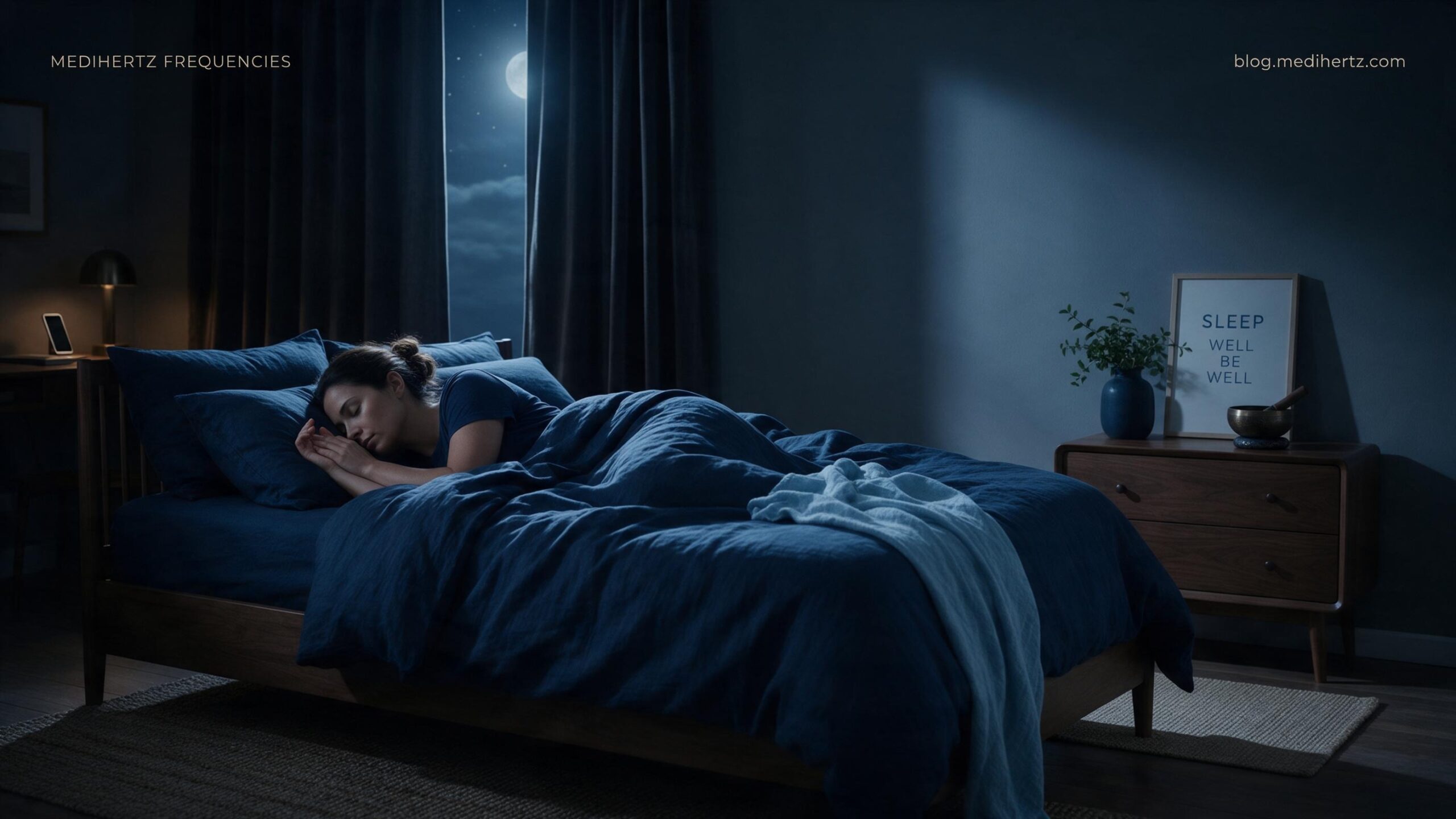
Why darkness matters before sleep
Your bedroom is not just a place where you physically lie down.
It is also part of your sleep environment.
Light, noise, temperature, activity, screens and mental stimulation can all influence what happens during the transition from wakefulness to sleep.
The body’s circadian system responds strongly to environmental light. Research on residential lighting has also found that evening home lighting can affect the circadian system and sleep, although individual responses vary considerably.
One expert consensus recommendation for healthy adults suggests keeping the sleep environment as dark as possible, with specific limits for nighttime light exposure.
So a practical bedtime routine can begin with something very simple:
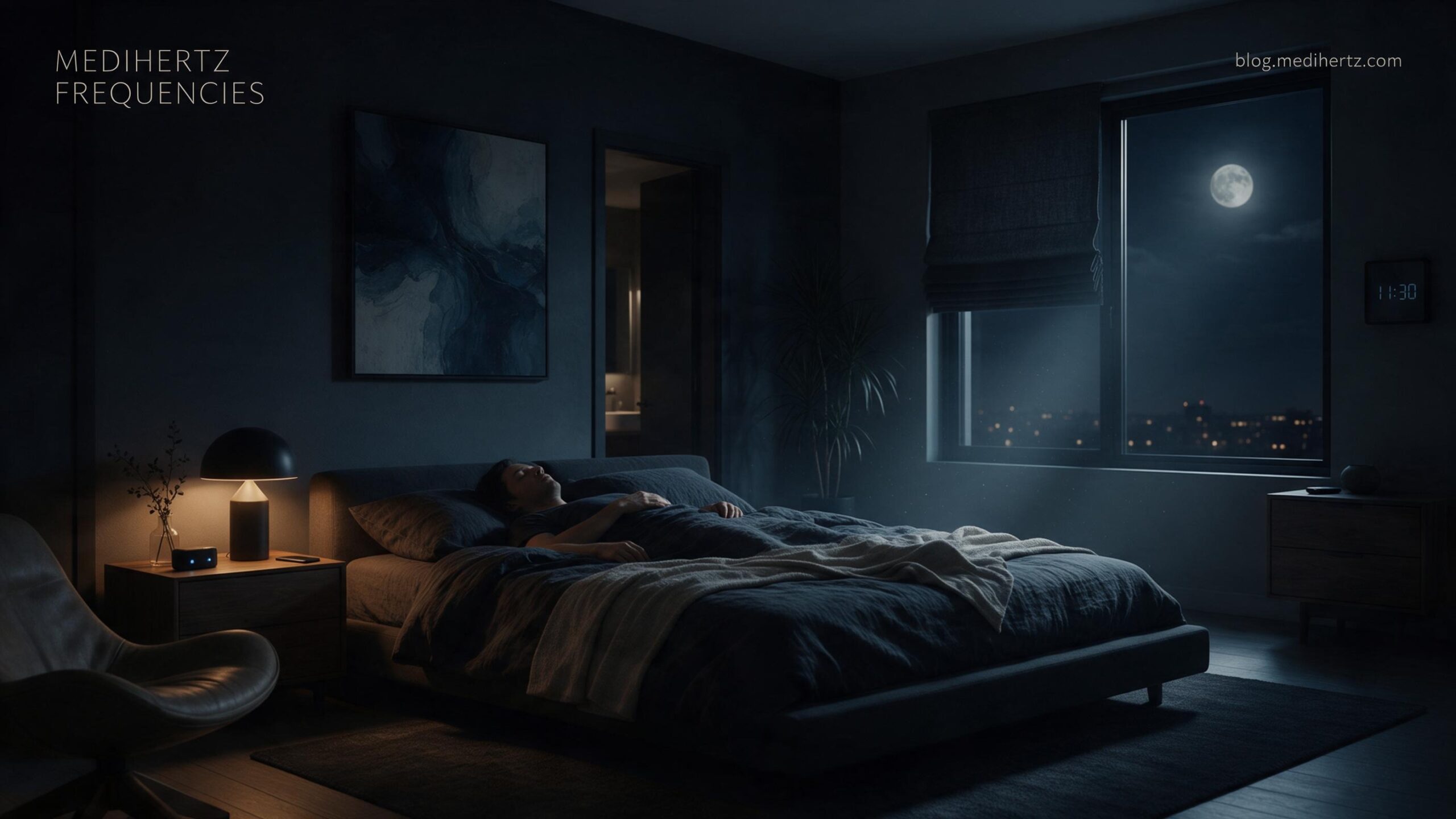
Make the room darker.
Turn off unnecessary lights.
Reduce bright screens.
Cover or switch off unnecessary LEDs.
Use comfortable, low-level lighting while preparing for bed.
Then allow the room to become genuinely dark when you are ready to sleep.
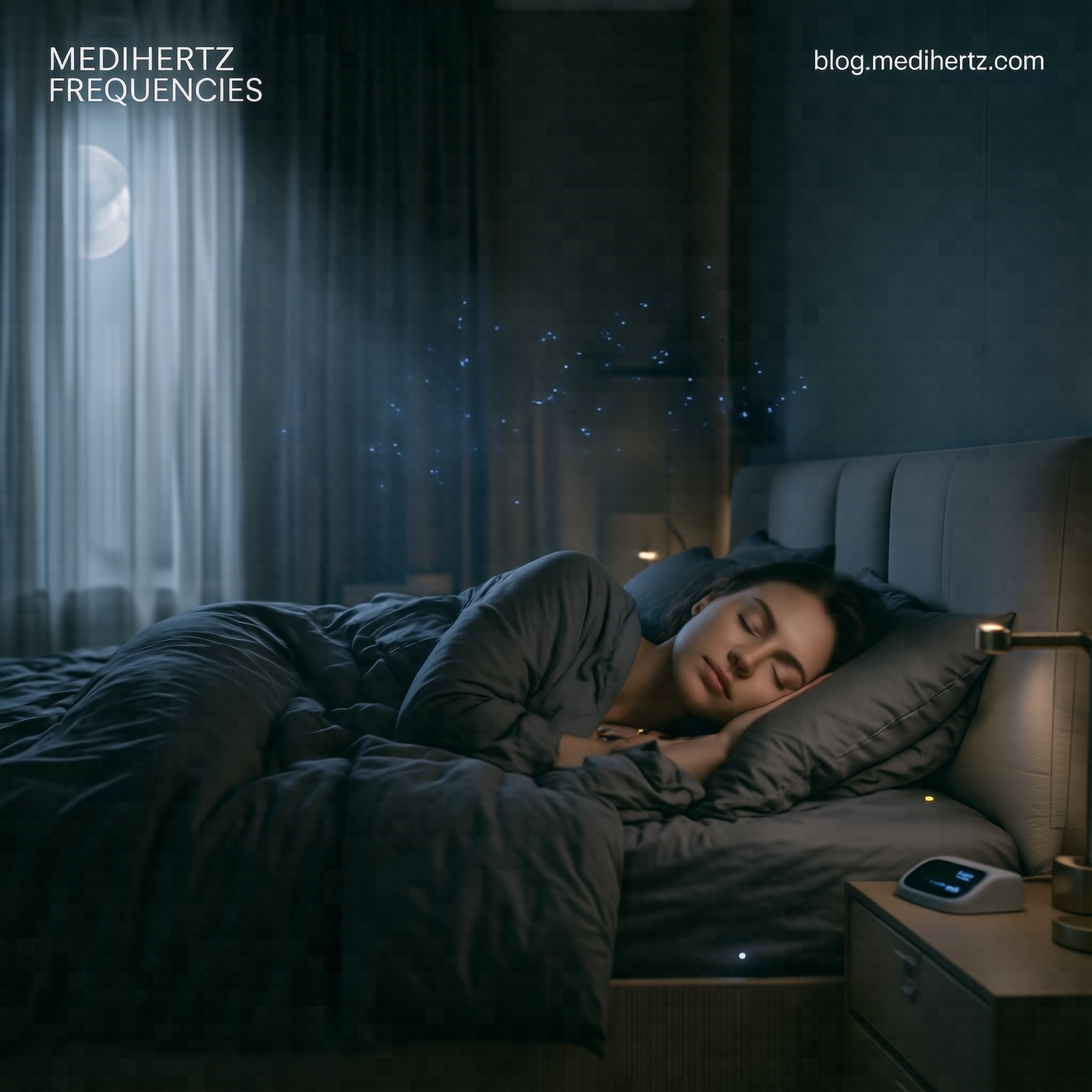
But darkness is only one part of the bedtime environment
For many people, the problem isn’t simply light.
It may also be:
- work stress
- overthinking
- traffic noise
- television
- phone notifications
- household activity
- anxiety about tomorrow
- an unfamiliar environment
- difficulty mentally switching from work mode to rest mode
This is where a ritual can be more useful than simply pressing a sleep button.
Instead of suddenly trying to fall asleep, create a short transition between your active day and your sleeping environment.
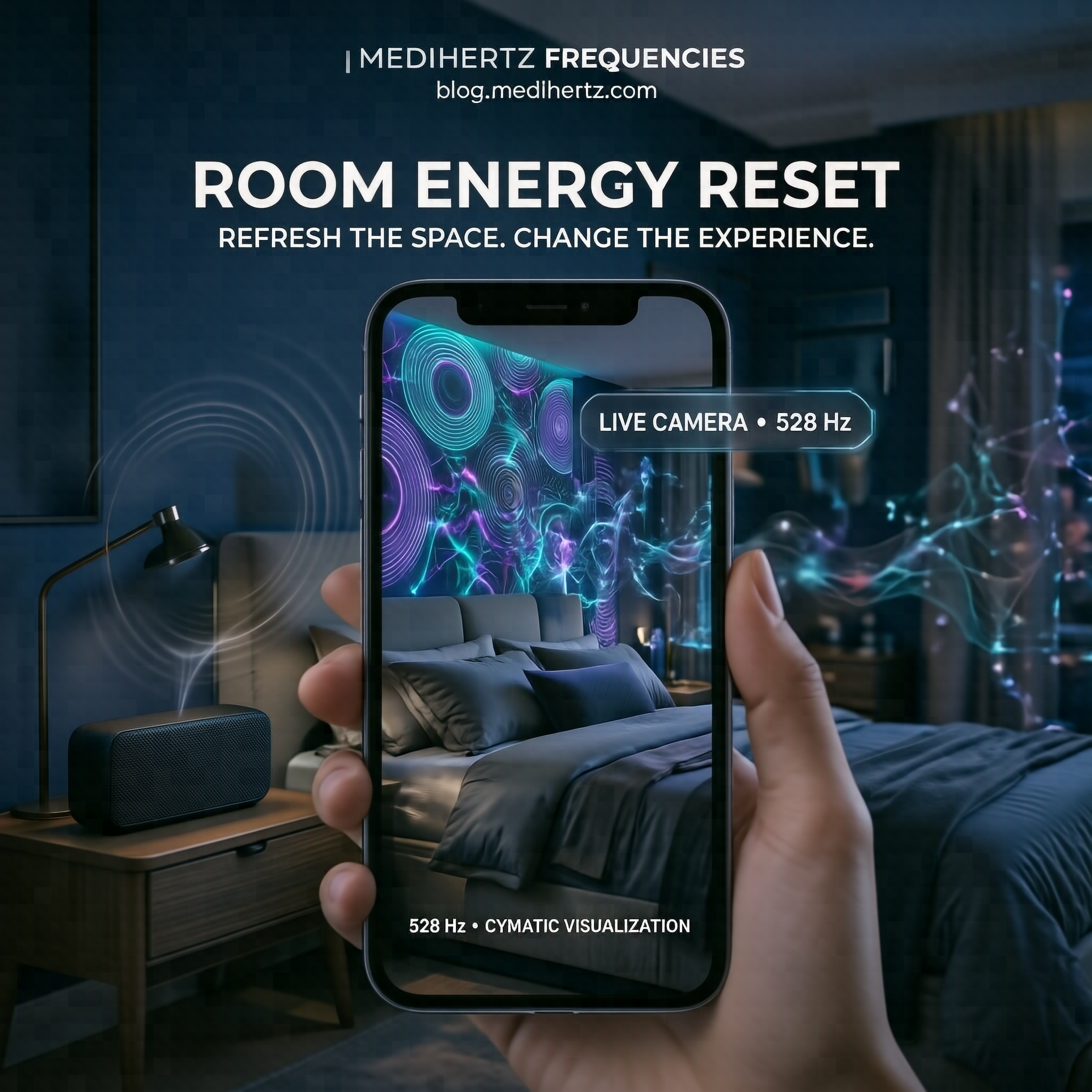
Room Energy Reset: prepare the space
Room Energy Reset by Medihertz Frequencies
Room Energy Reset combines sound, frequency-inspired visualizations and camera-based effects to create an interactive room-reset experience.
The tool includes experiences such as:
- Wave
- Ripples
- Cymatics
- Particles
- Energy Field
- Cymatic Lens
- Aura-style visualizations
- frequency selection
- sound playback
- camera visualization
- snapshot and recording features
The important point is that the camera is not a scientific detector of invisible room energy.
It does not measure negative energy, spiritual energy, auras or supernatural activity. The visual patterns are digital effects inspired by frequency, vibration and cymatics.
That makes Room Energy Reset better understood as a mindful sound-and-visualization ritual.
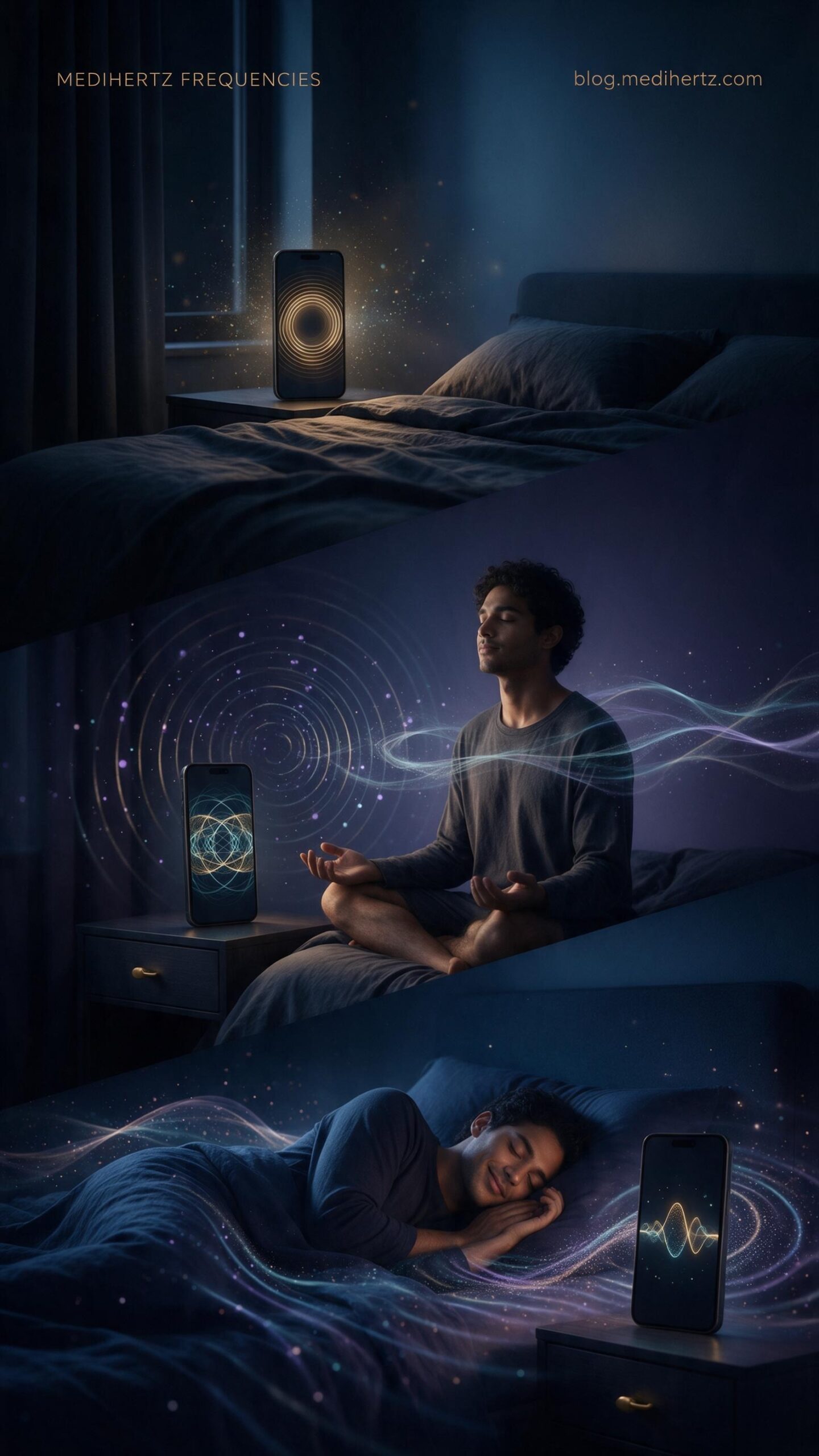
A simple Room Energy Reset bedtime ritual
Before starting Nox Nidra, you can use Room Energy Reset as a short preparation phase.
Step 1: Physically reset the room
Put away unnecessary clutter.
Open a window if appropriate.
Remove obvious distractions.
Make the bed comfortable.
Step 2: Reduce unnecessary light
Turn off bright ceiling lights.
Reduce screen brightness.
Switch off unnecessary LEDs.
Prepare the room for darkness.
Step 3: Choose your intention
You don’t need complicated meditation.
Simply decide:
“I’m finished with today. Now I’m preparing to rest.”
Step 4: Start Room Energy Reset
Choose a comfortable frequency and visual mode.
The tool can be used through a phone, computer or connected speaker.
Step 5: Let the room become quieter
Don’t treat the visualization as something that must scientifically remove an invisible force.
Instead, use it as a transition ritual.
You are deliberately changing the atmosphere around you and giving your mind a recognizable signal that the day is ending.
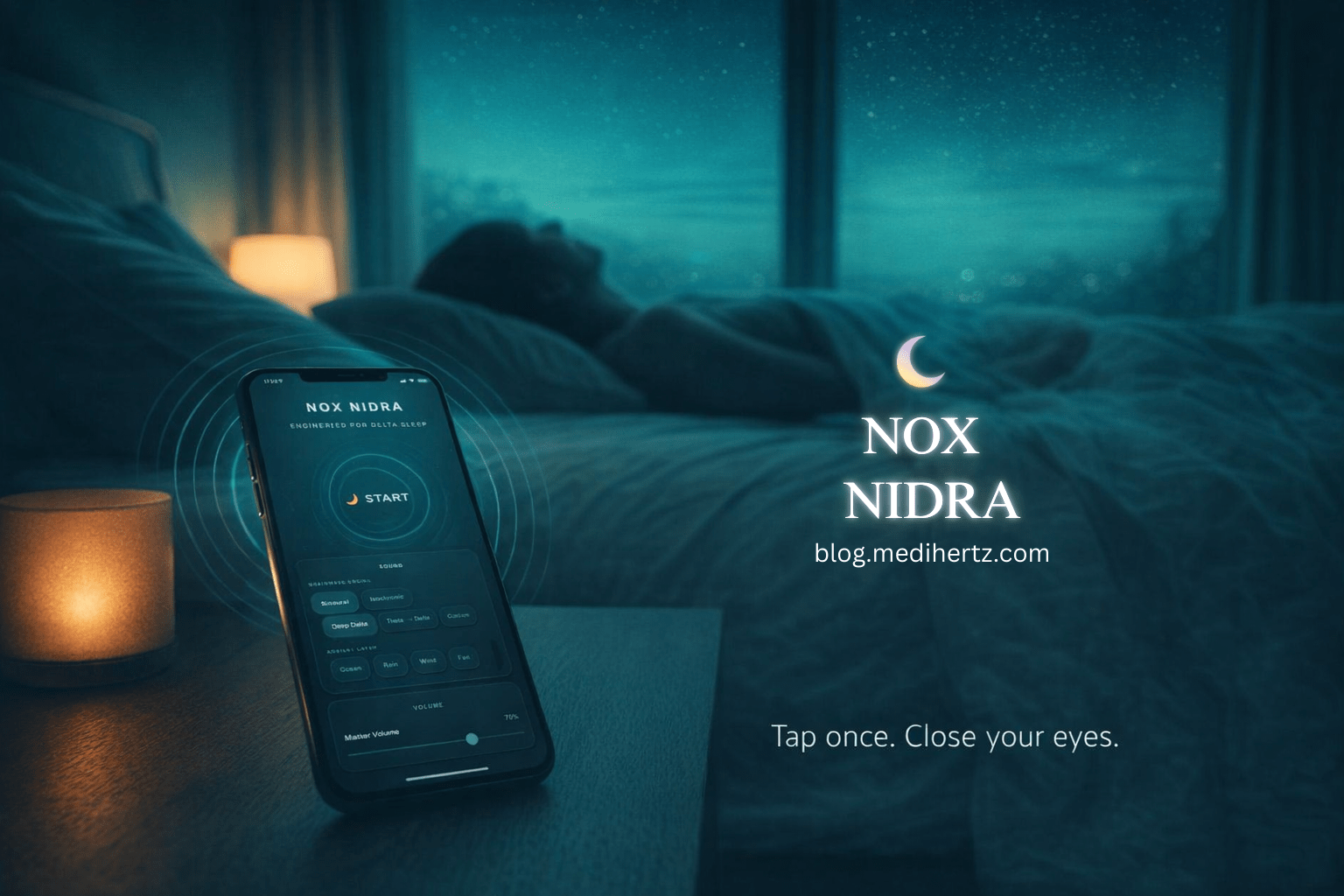
Then switch from the room ritual to Nox Nidra
Once your room feels ready, move to the second stage:
Nox Nidra — Engineered for Delta Sleep
Nox Nidra is Medihertz’s dedicated sleep-focused sound experience.
The tool combines:
- binaural beats
- isochronic tones
- delta-oriented presets
- Theta → Delta transitions
- ocean sounds
- rain
- wind
- fan ambience
- master volume control
The idea is simple:
Prepare the environment first. Then reduce mental stimulation and settle into a consistent audio routine.
What are binaural beats and isochronic tones?
Nox Nidra uses two different forms of rhythmic audio stimulation.
Binaural beats
Binaural beats are created when slightly different tones are presented separately to the two ears, producing a perceived rhythmic beat.
Nox Nidra uses binaural-style audio as one component of its sleep experience.
Isochronic tones
Isochronic tones use regularly spaced pulses of sound.
Nox Nidra provides this as another optional sound mode.
Delta-oriented sound
Delta activity is associated with slow-wave sleep.
However, it is important not to interpret a 3 Hz or 4 Hz audio setting as though you are literally hearing a 3 Hz or 4 Hz audible tone.
Human hearing generally begins around 20 Hz, so very-low-frequency brainwave targets used in binaural or rhythmic audio are typically represented through auditory techniques rather than simply playing an audible 3 Hz tone.
Medihertz’s own sleep-frequency article explains this distinction.
Why combine the two tools?
The two tools have different jobs.
| Stage | Tool | Purpose |
|---|---|---|
| 1 | Physical room reset | Remove clutter and unnecessary distractions |
| 2 | Light reduction | Create a darker sleep environment |
| 3 | Room Energy Reset | Sound + frequency-inspired visual transition |
| 4 | Nox Nidra | Sleep-focused calming audio experience |
| 5 | Darkness | Remove visual stimulation |
| 6 | Sleep | Allow the body to transition naturally |
This isn’t a medical treatment protocol.
It is a personal bedtime ritual designed around environmental preparation, relaxation and consistent sleep habits.
What if your environment is noisy?
This is where sound can become particularly interesting.
Complete silence isn’t comfortable for everyone.
Traffic, fans, neighbors, household activity and unpredictable environmental sounds can make some people more aware of their surroundings.
Nox Nidra includes ambient layers such as:
Ocean · Rain · Wind · Fan
These can provide a more consistent background sound environment instead of leaving you listening for every unpredictable sound around you.
For someone living in a noisy environment, the goal doesn’t have to be:
“Make the entire world silent.”
It can instead be:
“Create a more predictable and comfortable sound environment.”
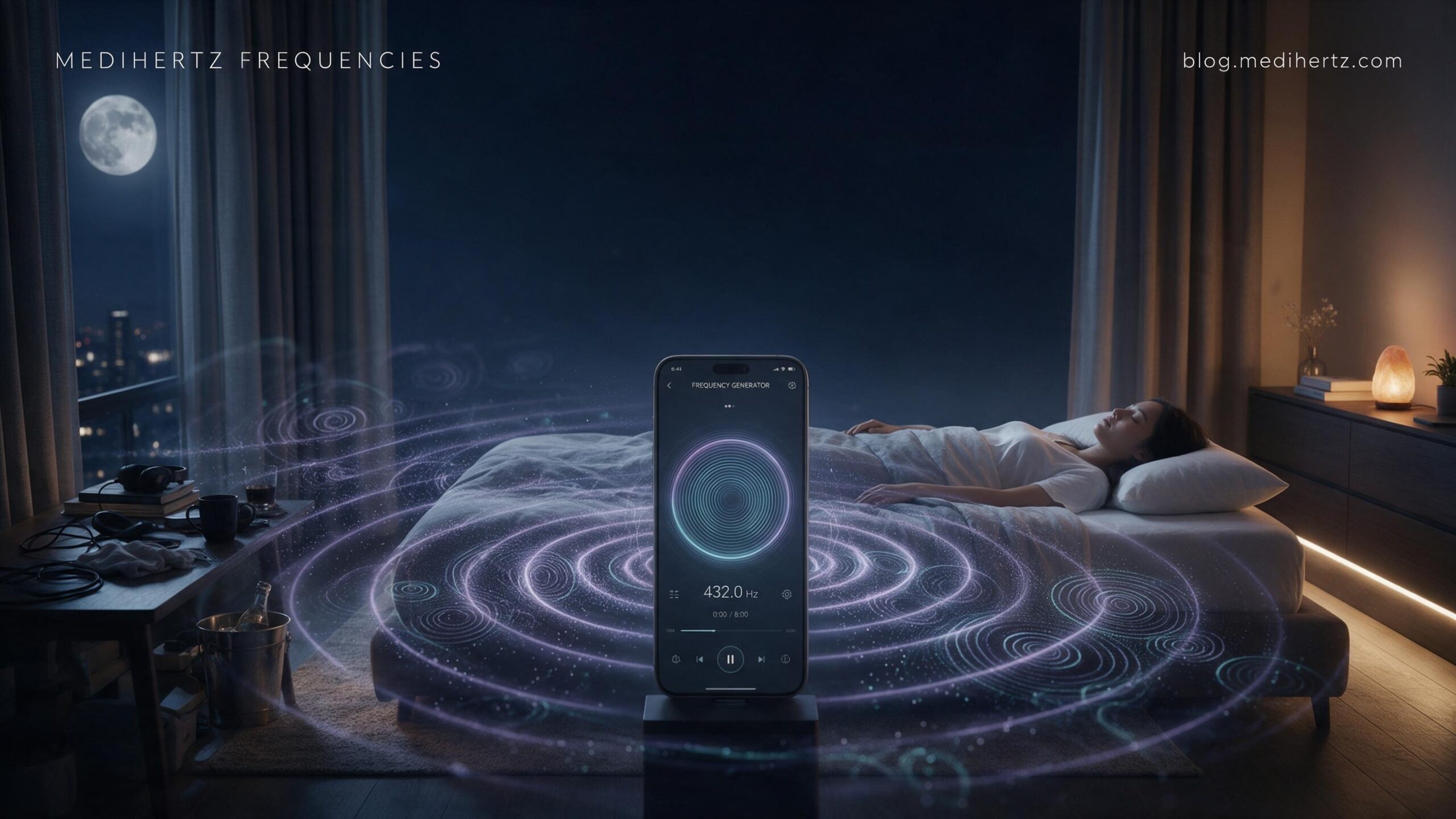
The Medihertz Night Reset Ritual
Here is a simple version you can try.
🌙 30-minute wind-down
00:00 — Reset the space
Clean the immediate area and remove distractions.
02:00 — Reduce light
Turn off unnecessary lights and reduce screen exposure.
05:00 — Room Energy Reset
Use a comfortable sound/frequency and explore the visual experience for a few minutes.
10:00 — Close the visual experience
The goal now changes from visual exploration to relaxation.
10:00–30:00 — Nox Nidra
Choose:
- Binaural
- Isochronic
- Deep Delta
- Theta → Delta
Add an optional ambient layer such as rain, ocean, wind or fan.
Keep the volume comfortable and low.
After starting: close your eyes, stop browsing and let the sound become background rather than something you actively concentrate on.
Nox Nidra itself recommends using it in a dark environment and avoiding screen exposure after starting, with a suggested 20–45 minute pre-sleep use period.

What about stress before sleep?
Stress and sleep can form an unpleasant cycle.
You may be physically tired but mentally active.
You may lie down and immediately start thinking about:
- tomorrow’s work
- money
- relationships
- unfinished tasks
- social media
- messages
- news
- problems from the day
A sound ritual doesn’t have to “switch off” your nervous system.
A more realistic goal is to create fewer reasons to remain mentally stimulated.
Dim the room.
Put the phone away.
Reduce visual stimulation.
Choose comfortable sound.
Slow your breathing naturally.
Repeat the same routine.
Over time, the routine itself can become a recognizable transition toward sleep.
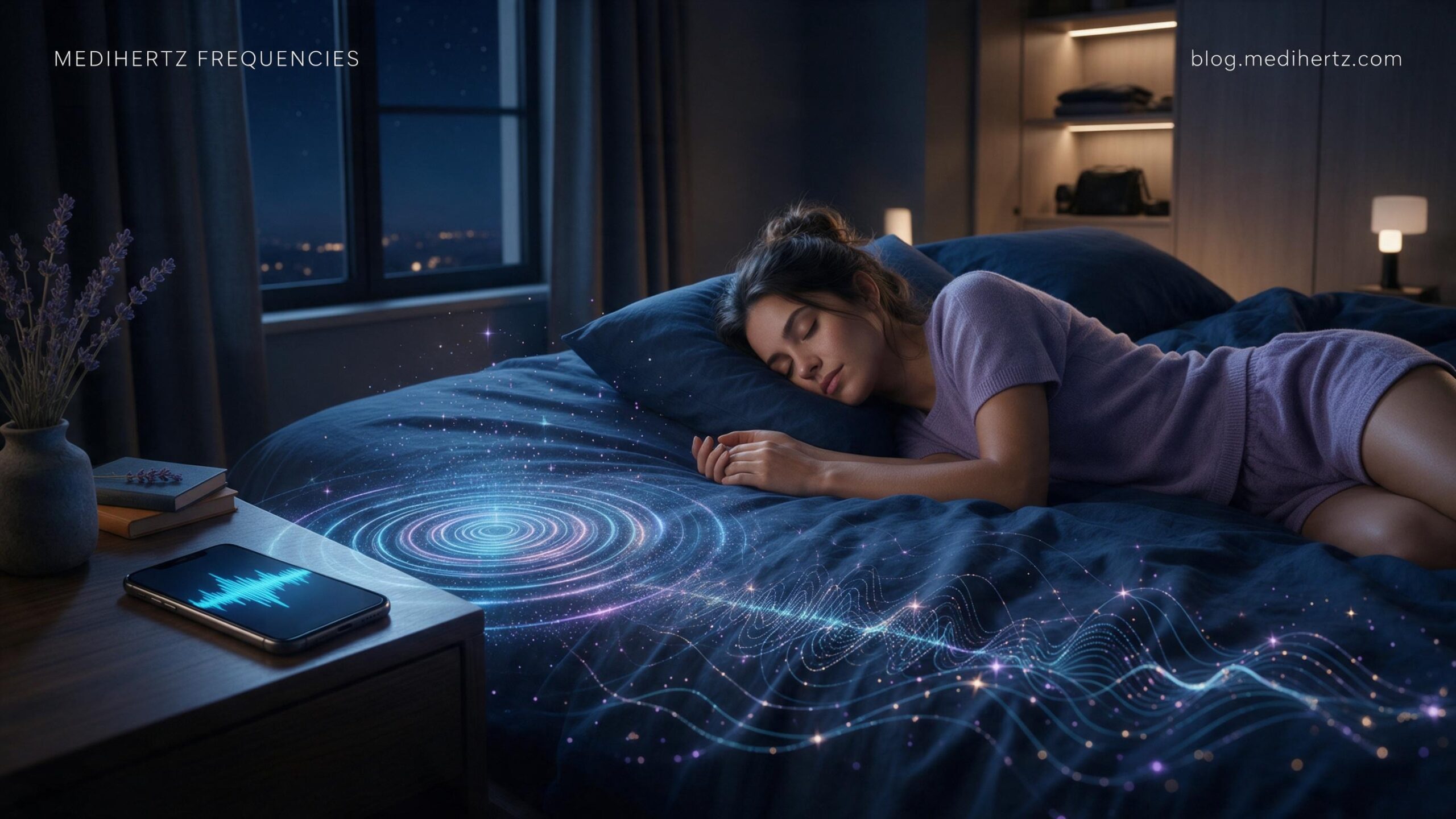
Can frequency sounds make you sleep deeply?
This needs a careful answer.
There is ongoing research into music, rhythmic auditory stimulation, binaural beats and other sound-based approaches for relaxation and sleep. But evidence varies depending on the technique, study design and population.
Therefore, Nox Nidra should be presented as a sleep and relaxation audio tool, not as a clinically proven treatment for insomnia or other medical conditions.
The experience is designed to help users create a calmer audio environment and bedtime routine. Individual responses can differ.
That distinction is especially important when discussing delta frequencies, binaural beats and “brainwave entrainment.”
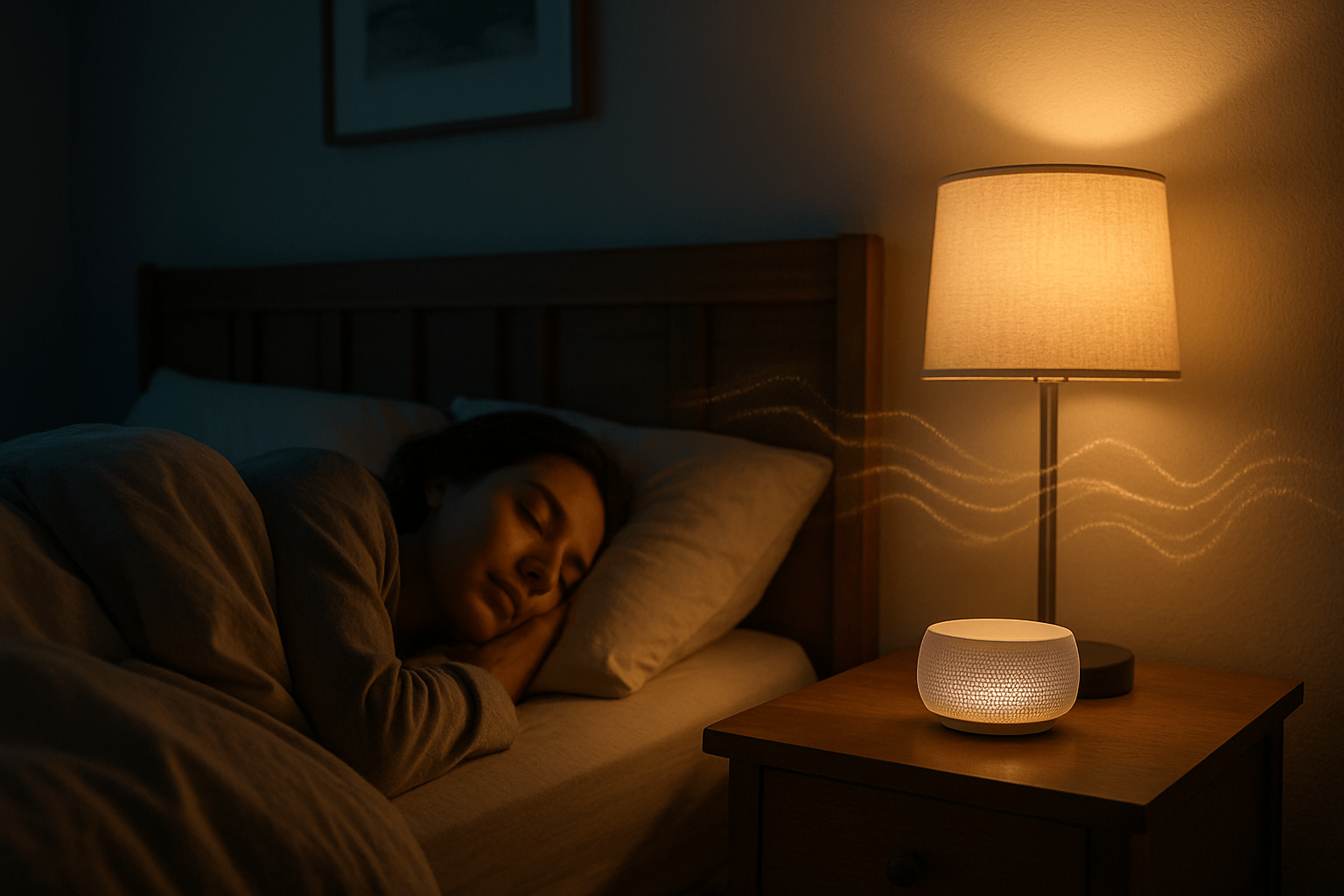
What about the nervous system and body?
You may see sleep-frequency content online claiming that certain sounds:
- reset the nervous system
- balance body fluids
- repair the brain
- detox the body
- heal insomnia
- cure anxiety
These claims should be treated carefully.
There isn’t enough evidence to claim that Nox Nidra or a particular frequency physically “balances the fluids of the body” or treats a medical disorder.
A more accurate description is:
Nox Nidra is designed as a calming audio experience that can be incorporated into a personal relaxation and bedtime routine.
That keeps the experience interesting without turning a wellness tool into a medical claim.
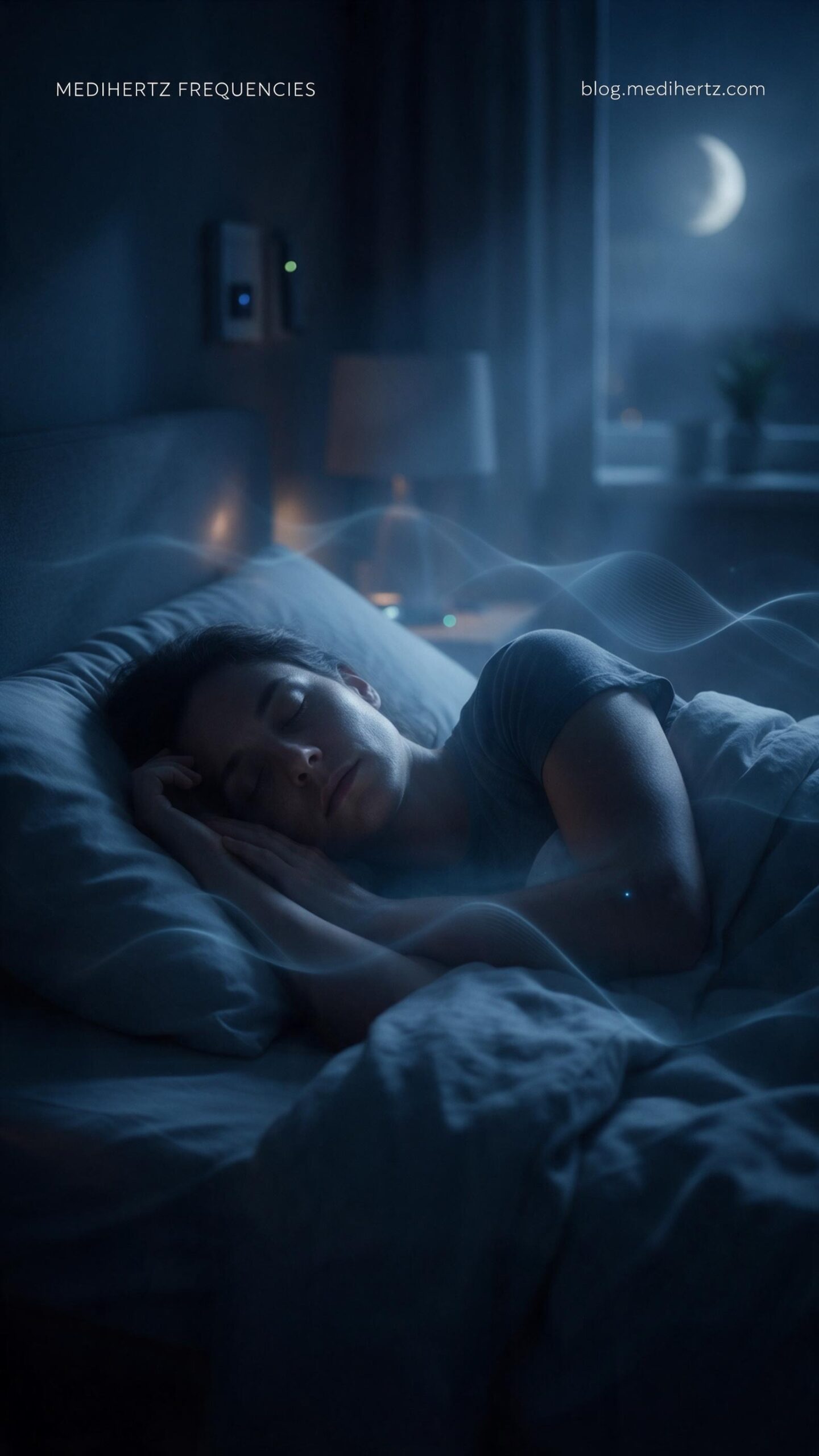
The bedroom itself can become part of your sleep routine
One of the biggest ideas behind this approach is simple:
Don’t wait until you’re already in bed and struggling to sleep before you start relaxing.
Start earlier.
Your routine can become:
Environment → Light → Sound → Breathing → Rest
Room Energy Reset fits into the environment and transition stage.
Nox Nidra fits into the sound and relaxation stage.
Sleep comes afterward.
A practical sleep environment checklist
Before starting your nighttime routine, ask:
💡 Light
- Is unnecessary light switched off?
- Is the room dark enough?
- Are screens still active?
🔊 Sound
- Is the environment unpredictable or noisy?
- Would consistent ambient sound feel more comfortable?
🧹 Environment
- Is the room cluttered?
- Is the temperature comfortable?
- Is the bed ready?
📱 Technology
- Are notifications disabled?
- Will you continue scrolling after starting your sleep audio?
🧘 Mind
- Are you still working?
- Are you intentionally transitioning into rest?
These simple questions may matter more than finding a supposedly “magic” frequency.
Room Energy Reset + Nox Nidra: One complete ritual
The two tools can therefore be used as a sequence rather than competing products.
ROOM ENERGY RESET
Prepare the environment.
Use sound, frequency-inspired visuals and your own intention to create a deliberate transition.
↓
NOX NIDRA
Prepare for rest.
Move into a darker environment and use a comfortable sleep-focused sound experience.
↓
SLEEP
Put the screen away.
Close your eyes.
Let the environment become quiet and predictable.
And sleep naturally.
Frequently Asked Questions
Does nighttime light affect sleep?
Research shows that light is an important environmental cue for the circadian system, and recent research in 225 adults with schizophrenia found that higher nighttime light exposure was associated with poorer objectively measured sleep. The study was observational and does not prove causation.
Should my bedroom be completely dark?
A dark sleep environment is generally recommended because light is an important signal for the circadian system. Expert recommendations for healthy adults suggest keeping nighttime light exposure very low.
What is Room Energy Reset?
Room Energy Reset is a browser-based sound and visualization experience that combines frequency-inspired sound, camera effects and cymatics-style visualizations. It is intended as a wellness, mindfulness and creative visualization experience rather than a scientific energy detector.
Does Room Energy Reset detect negative energy?
No. It does not scientifically detect negative energy, spiritual energy, auras or supernatural activity. Its camera effects are digital visualizations inspired by vibration and frequency patterns.
What is Nox Nidra?
Nox Nidra is a Medihertz sleep-focused sound generator using binaural beats, isochronic tones, delta-oriented presets and optional ambient sounds such as rain, ocean, wind and fan.
What frequency is best for sleep?
There is no single scientifically established frequency that is universally “best” for sleep. Nox Nidra provides different sleep-oriented sound modes so users can find an audio experience that feels comfortable to them.
Can I use Nox Nidra in a noisy environment?
Yes. Nox Nidra includes ambient layers such as rain, ocean, wind and fan sounds that can provide a consistent background listening environment.
Should I use headphones?
Binaural-beat experiences generally require separate signals reaching each ear, so headphones or suitable stereo listening equipment may be useful for that mode. If using speakers, choose an audio mode that is appropriate for speaker playback.
Can I use Room Energy Reset before Nox Nidra?
Yes. You can use Room Energy Reset as the room-preparation and transition stage, then switch to Nox Nidra for the sleep-focused audio stage.
Can these tools treat insomnia or schizophrenia?
No. They should not be presented as treatments for schizophrenia, insomnia or other medical conditions. Anyone with persistent or severe sleep problems should discuss them with an appropriate healthcare professional.
Final thought: change the environment before you chase the frequency
The most useful lesson from the recent nighttime-light research may not be about finding a magical number of Hertz.
It may be about paying attention to the environment in which we sleep.
Light matters.
Noise matters.
Screens matter.
Stress matters.
Routine matters.
And sound can become one component of that routine.
So rather than searching endlessly for a single “best sleep frequency,” try building a complete wind-down environment:
Dim the lights.
Prepare the room.
Reset the atmosphere.
Reduce stimulation.
Choose comfortable sound.
Put the screen away.
Let yourself rest.
Start with Room Energy Reset, then transition into Nox Nidra.
Room Energy Reset → Prepare Your Space
Nox Nidra → Begin Your Sleep Sound Experience
Medihertz Frequencies — Your Frequency Hub for Mind & Awareness.
☸
